Last Updated on June 9, 2025
Director Laurent Pelly triumphs with La Voix Humaine and Les Mamelles de Tirésias:
Francis Poulenc’s rather disheartening opera La Voix Humaine, based on Jean Cocteau’s play of the same name, felt more than a little out of place in the blistering East Sussex sun on Saturday. Still, an opera about a woman on the phone, and connectivity problems (literally), seems like the perfect way to bid a tentative farewell to endless lockdown zoom meetings – although it didn’t stop the Glyndebourne crowd from appearing slightly relieved it was over. The promise of a good picnic and the rollicking Les Mamelles de Tirésias was the reward.
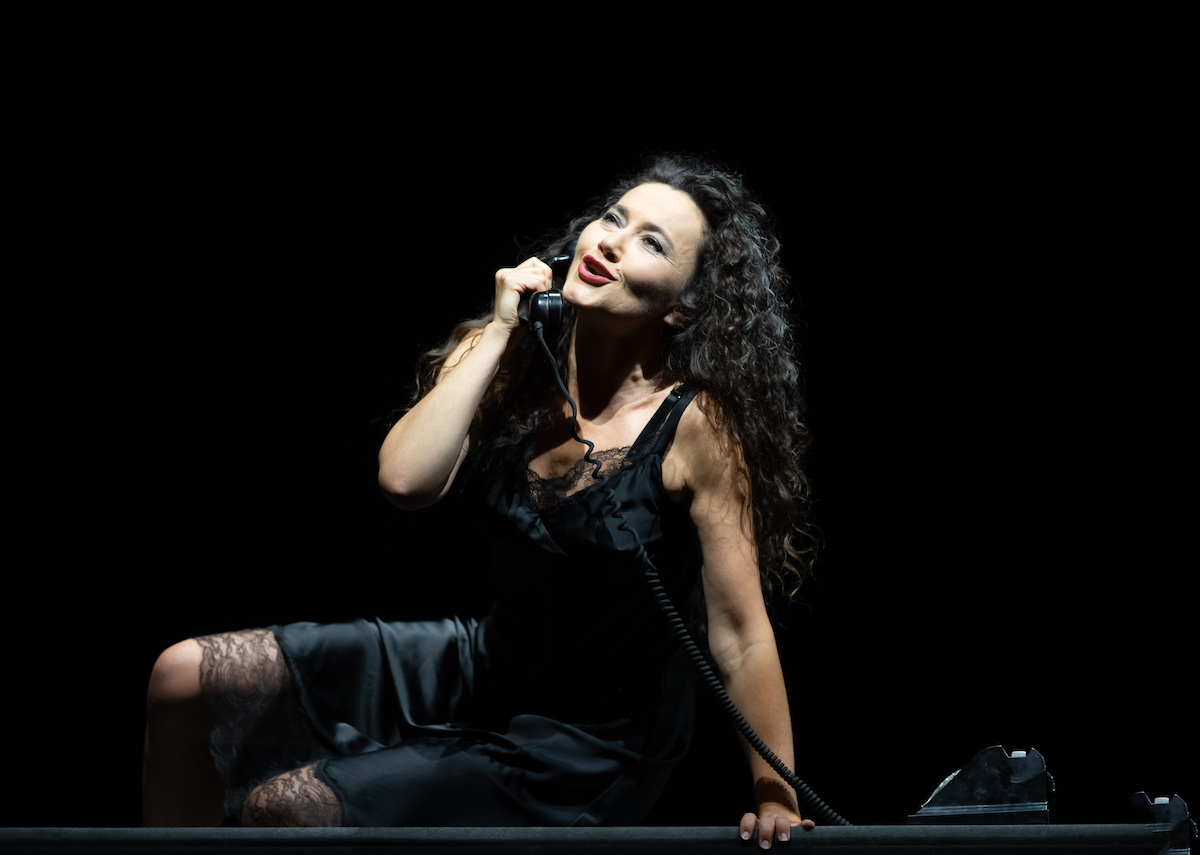
Don’t get me wrong, La Voix Humaine is excellent, just by nature not very enjoyable. Poulenc’s one-act opera is one half of the final conversation between ‘Elle’ and her lover before she throws in the towel and asphyxiates herself by wrapping the phone cord around her neck. The ambiguity of Cocteau’s prose combines with Poulenc’s fragmentary and neo-classical score, creating an intense, dark and desperate piece. Directed by Laurent Pelly and designed by Caroline Ginet, the set resembles a giant see-saw, with Stephanie d’Oustrac as Elle, balanced in the centre and clutching a telephone. Contracting and dilating outer frames that resemble giant irises, gaze upon Elle’s desperate figure, as she tosses and turns with every lost connection and pleading lament.
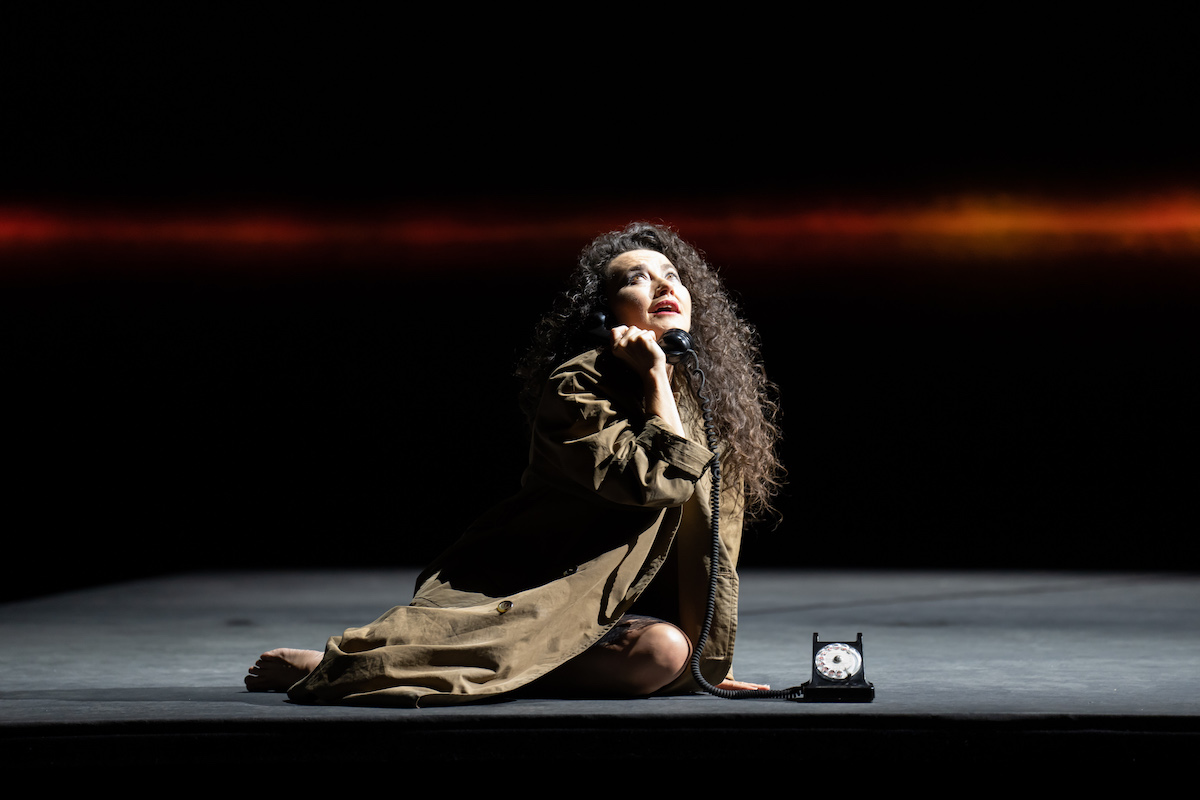
Stephanie d’Oustrac is uniquely qualified to sing Elle, not only is she Poulenc’s great-grandniece but her frenzied energy matches the score perfectly. d’Oustrac involves us in the drama from the outset. Unlike a controlling Carmen, a commanding Tosca, or even a delicate Mimi, Elle is uniquely self-destructive, and d’Oustrac plays her as if a bird decided to rip out its feathers one by one. Sparkling soprano notes punctuate the opera’s drama, and d’Oustrac tears through these effortlessly, with her voice finding rest right within your heart. For this particular monologue to come close to being powerful you need a brilliant performer to see it through and d’Oustrac does just that.
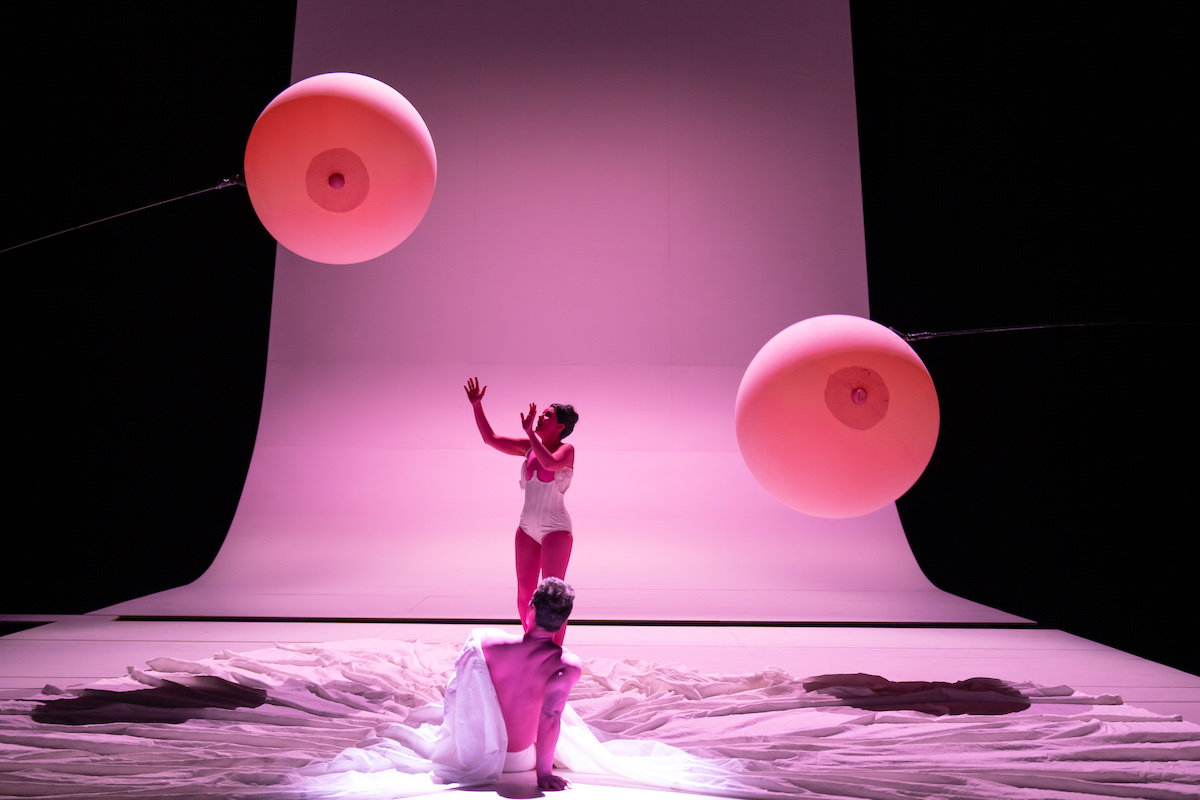
After Poulenc’s rather depressing monologue, the hysterical and inexplicable Les Mamelles de Tirésias was a breath of fresh air. Pelly clearly had an absolute ball with this one. Les Mamelles de Tirésias was borrowed directly from Guillaume Apollinaire’s play of the same name. It follows the story of Thérèse, a housewife who is fed up with her husband’s tyranny. Her breasts conveniently float away (popping them both triumphantly) and she decides to campaign against the cruelty of childbirth by becoming the military general Tirésias. Both the original story and Pelly’s production can be summed up by the quintessentially British phrase, completely bloody bonkers.
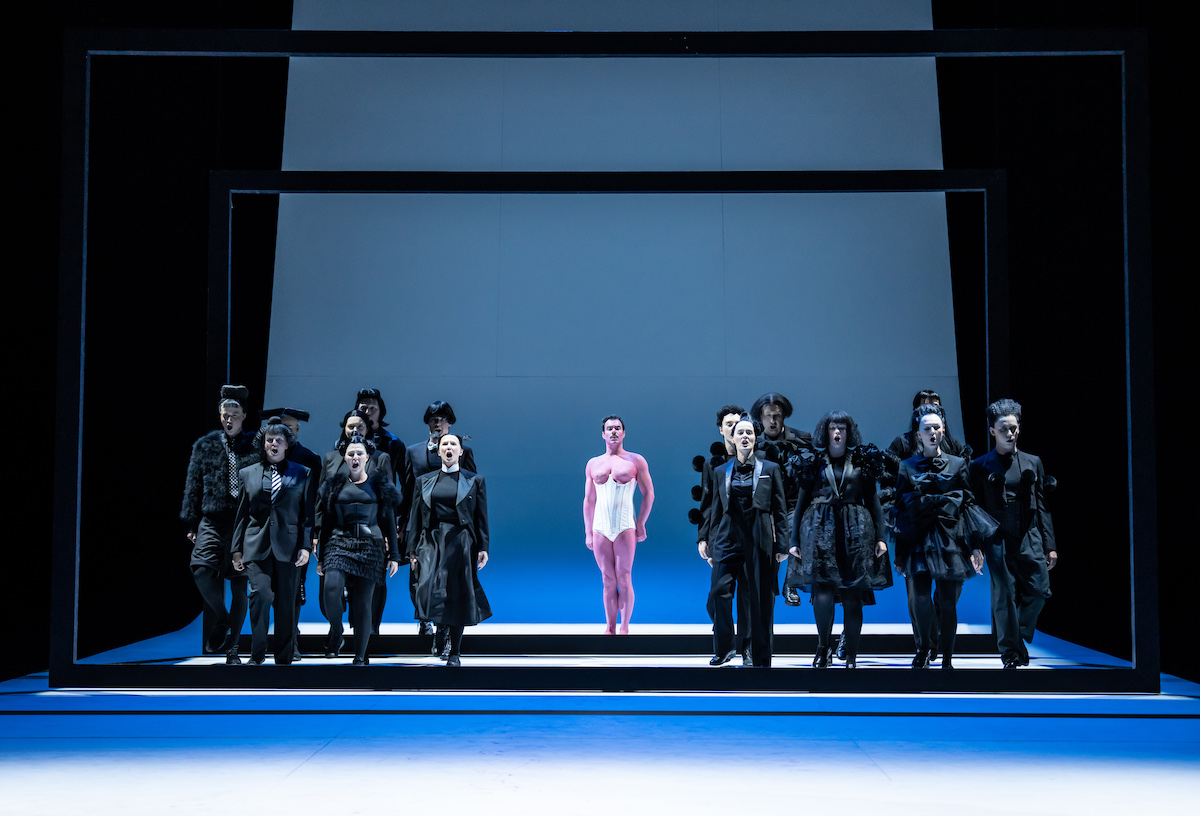
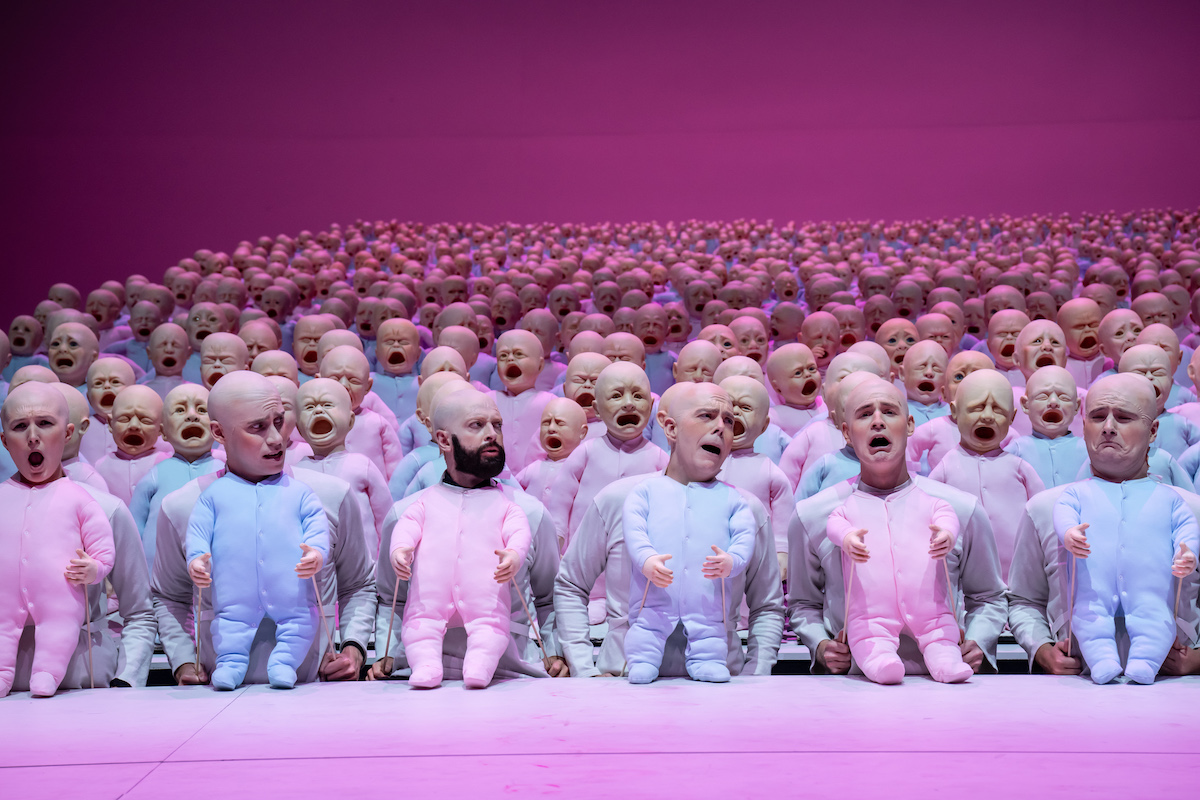
Never in all my life did I think I would see a lead singer at Glyndebourne fling a chicken cutlet at the wall, but here we are! Elsa Benoit makes for an explosive Thérèse, elegant, revenge-driven, and even a tad malicious, her voice soars over the orchestra as she grows into the revered General. Benoit is matched superbly by Régis Mengus as The Husband, whose physical performance could rival those given by a Lecoq master. They are supported by several other brilliant cast members, including Gyula Orendt as the Gendarme, and an exceptional chorus dressed up to the nines in Tim Burton-esque suits.

Pelly and Ginet are both in their element in Tirésias, neither too sparse nor too fussy, they achieve a fantastical state without breaking with natural comedy. From the 40,049 babies to Tirésias’s bright pink dress with protruding hands, everything is meticulously executed, and beautifully barmy. Conductor Robin Ticciati carries the life of the production in his hands, and lightly dictates its gaiety. Poulenc’s final message of ‘go forth and procreate’ is more farcical now than it was in post-war France, taking away from the piece’s original complexity. Nevertheless, or even in spite of it, this fluffy Poulenc landed on two feet with deliberately bold gender-based fun.
La Voix Humaine and Les Mamelles de Tirésias are only the start of Glyndebourne’s journey into Poulenc’s operas. Next year Glyndebourne will play host to Poulenc’s longest and (probably) best-known opera, Dialogues des Carmélites, directed by Barry Kosky – even a year in advance I’m on the edge of my seat.
Not what you’re looking for? Our review of La Boheme at Glyndebourne can be read here.
Poulenc Double Bill at Glyndebourne:
Glyndebourne, Lewes, East Sussex, BN8 5UU
Performance Dates: 6th-28th August
Book Tickets Here

Leave a Reply