Last Updated on February 23, 2025
The Theatre of War
Murder, obsessive jealousy and the trauma of the military experience. What could be more visceral and timely than Deborah Warner’s new production of Alban Berg’s operatic masterpiece Wozzeck? Thirty years ago Wozzeck was the first opera that Warner ever produced and this production is the third of her trilogy of disturbed male anti-heroes for the Royal Opera House, alongside her acclaimed Billy Budd (2019) and Peter Grimes (2022).
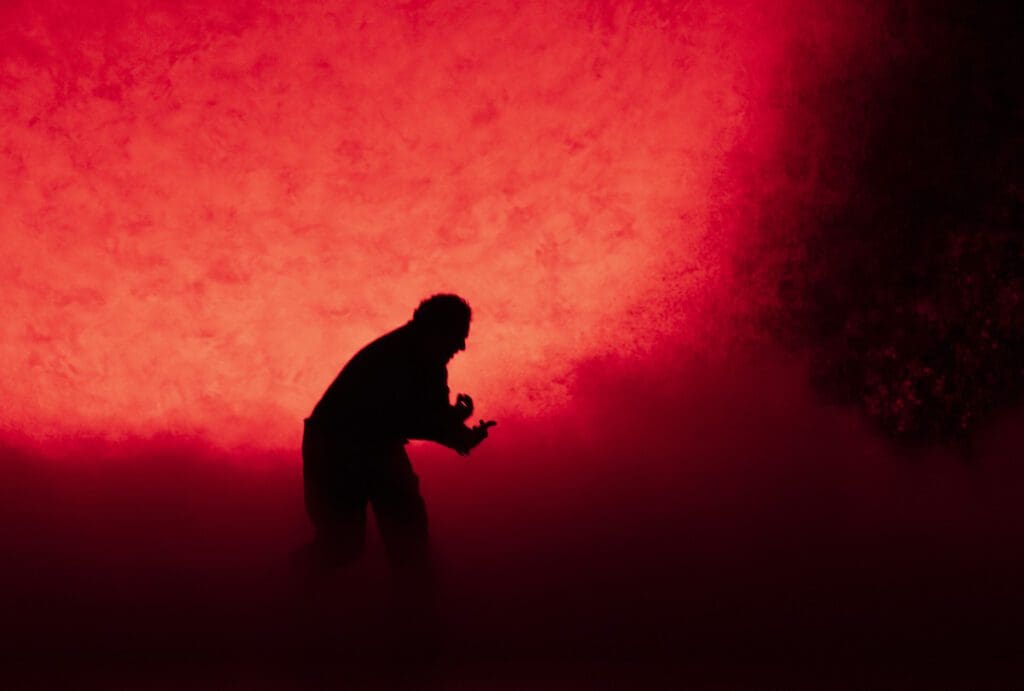
With a libretto by the composer, The 29-year-old Berg started composing Wozzeck just before hostilities commenced in the First World War. Its completion was delayed because of Berg’s call-up to the army with the premiere at Berlin State Opera not taking place until 1925. The opera became enough of a hit to fund Berg for the next 10 years until it was branded as being ‘degenerate’ by the Nazis and so taken out of the repertoire.
Berg built the libretto for the opera out of the unfinished sketches of playwright Georg Büchner’s unfinished play Woyzeck, often regarded as the first working-class drama. It is constructed in three acts with cinematic, episodic scenes linked by musical interludes as the dark humour of this drama plays out. The opera reflects Berg’s own experience as a soldier with military references being articulated through bugle and snare drum flourishes in the score. The piece also embodies the composer’s own sense of powerlessness and frustration with the stupidity and cruelty of the military bureaucracy and officer classes.

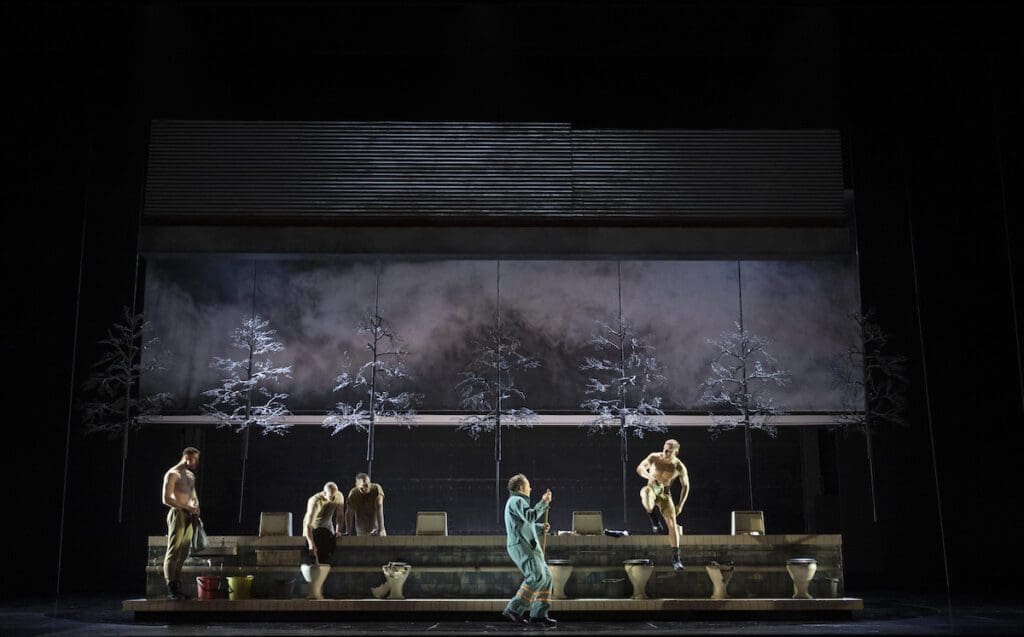
The opera’s opening is set rather unprepossessingly in a military latrine. Probably a bit posher than in reality, it’s peopled by some rather hench, topless soldiers who smoke, pee and get their kicks by bullying Wozzeck who is tasked with keeping the loos clean.
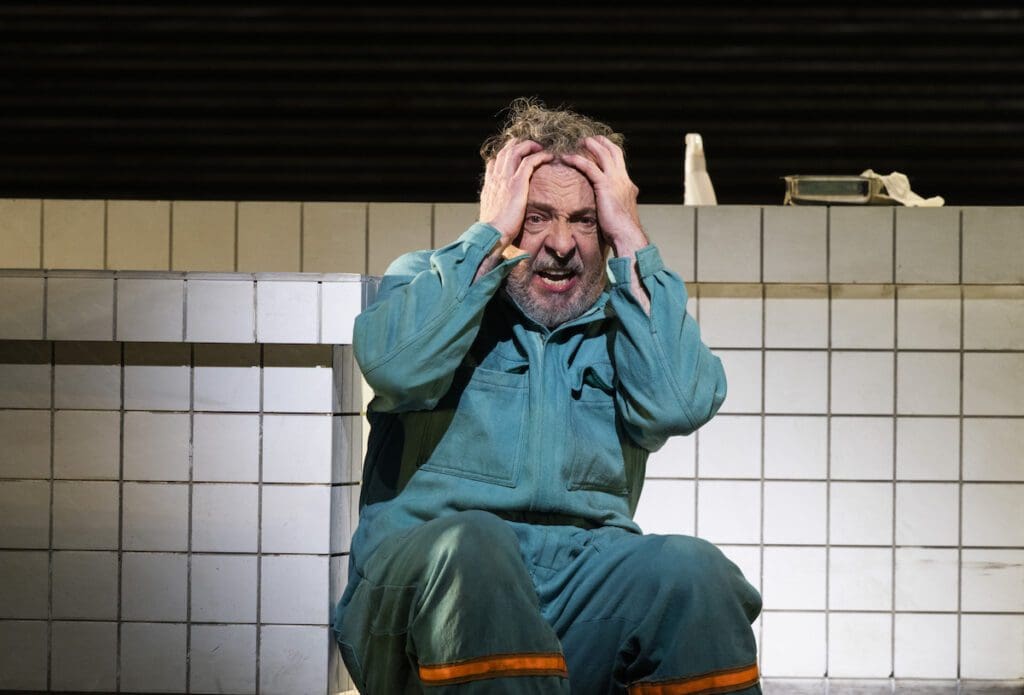
German baritone Christian Gerhaher as the eponymous hero is decked out in costume designer Nicky Gillibrand’s fetching aquamarine boiler suit with orange hoops around the legs which was a little more fashion-forward than it might have been. Gerhaher is a powerful presence with a voice to match. He doesn’t need to indulge in histrionics to capture Wozzeck’s inner turmoil with the emotion being carried in the grain of his vocal tone.

Wozzeck’s boss is the Captain, a grotesque cartoonish character played Bradford’s own Peter Hoare, who excels in this buffo (comic) tenor role. Hoare has terrific diction and he spits out his character’s absurdist observations – ‘south-northerly wind’ – and handles the angular leaps of the cavorting melodies that Berg supplies for the character with ease. The Captain chastises Wozzeck for his lack of morality – he has a child born out of wedlock – but as Wozzeck sings, ‘It must be nice to be virtuous Captain’, highlighting Berg’s interest in class issues. Wozzeck is a classic tragic hero, but his flaw is to be trapped in poverty and ‘to think too much’ – he is too sensitive and intelligent for his position, an echo of Berg’s own experience.
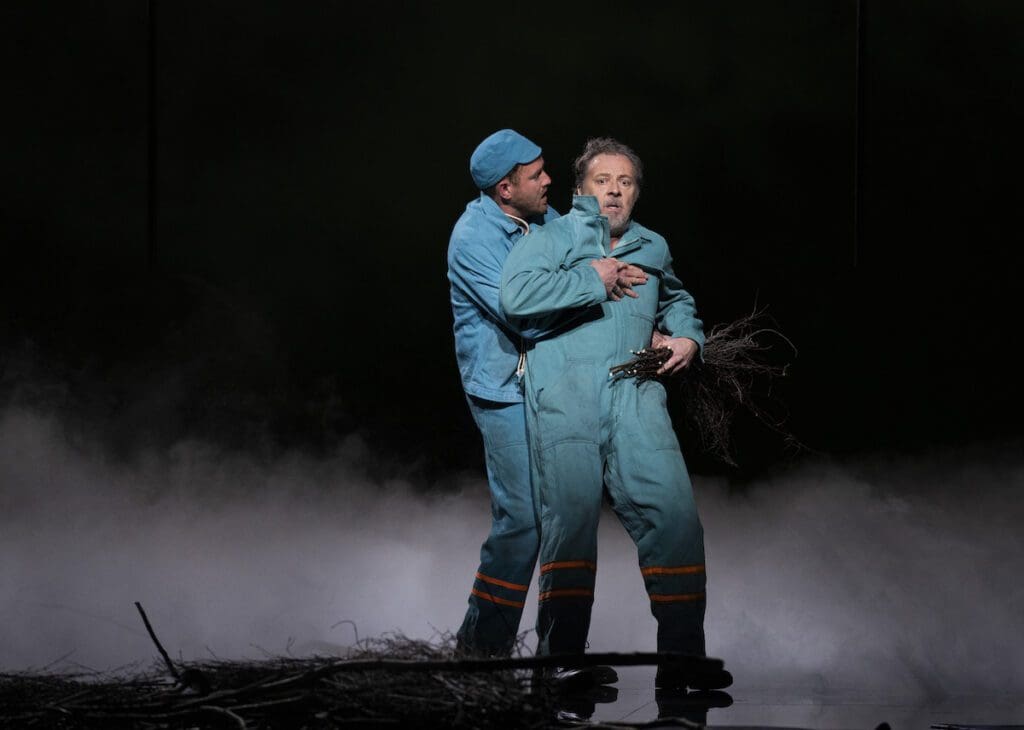
In the 2nd scene of Act 1 Wozzeck is collecting and preparing wood with his fellow soldier Andres, sung beautifully by Welsh lyric tenor Sam Furness. Wozzeck has a vision of flames, brought to life by Adam Silverman’s terrific lighting design, and suffers an existential crisis – ‘It’s all a hollow, bottomless pit’ – as Pappano brings out Berg’s lush string atonalities punctuated by burbling woodwinds and crashing timpani.
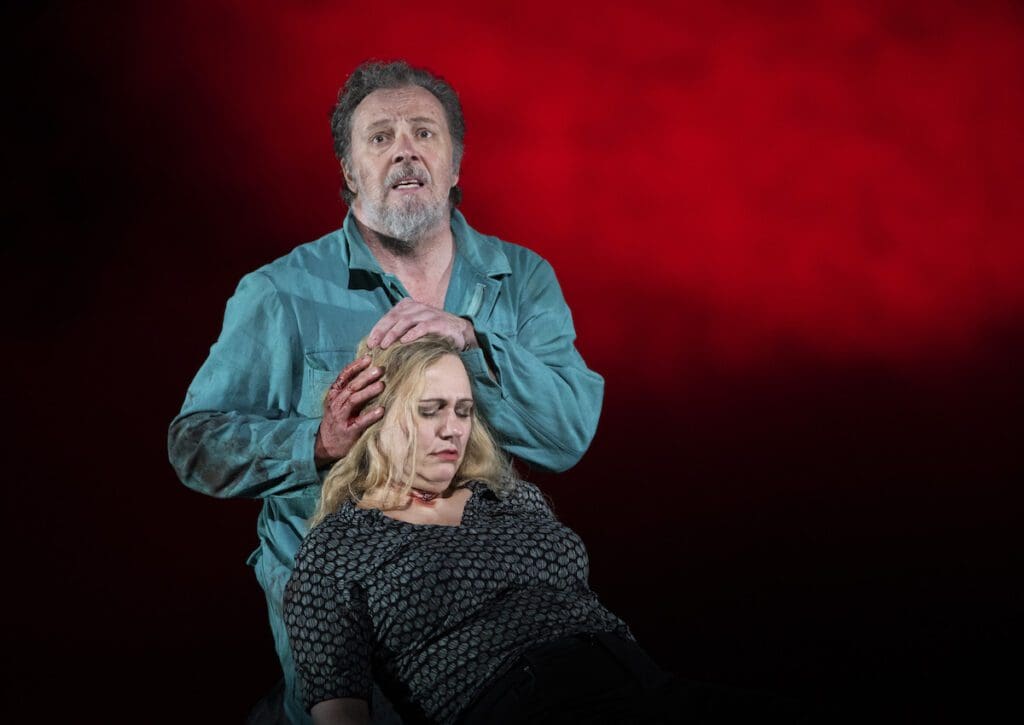
We don’t meet Wozzeck’s partner Marie, mellifluous-toned German soprano and Wagner specialist Anja Kampe, until the 3rd scene of Act 1 . But there is real power in that voice and she handles Berg’s sometimes jagged atonality with impressive ease. Kampe is particularly impressive in the final act when her character seeks solace from the Bible in stories of fallen women being ‘saved’. She is plangent-toned to the backdrop of Berg’s gorgeously romantic string writing. Kampe and Gerhaher certainly make a convincingly dysfunctional couple, crushed by poverty with Wozzeck clearly under her libidinous spell.
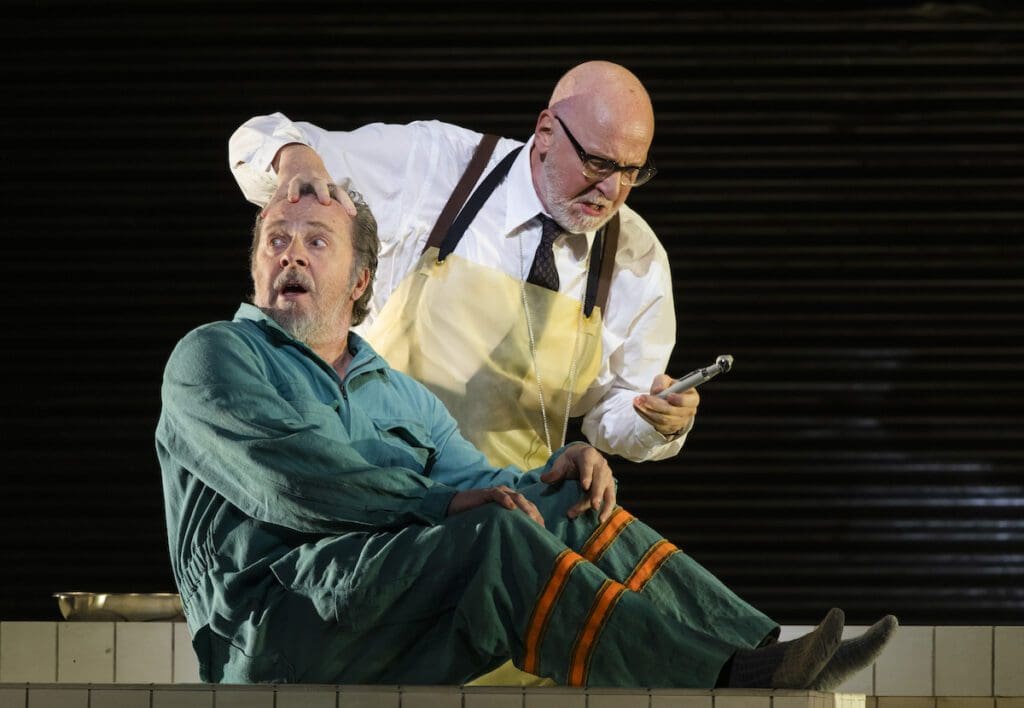
In the 4th act we meet, the Doctor played by house favourite Brindley Sherratt. With his resonant and dominant buffo bass his is a very grim humour – think Dr Mengele with tunes – with Sherratt bringing out the character’s narcissistic obsessions with his crackpot theories. The Doctor is experimenting on Wozzeck seeing him not as an individual but as a physical specimen whom he has placed on a diet of beans. When Wozzeck says that he might ‘hang himself’ the best response the doctor can come up with is ‘He’s a phenomenon!’

The final lead character is American powerhouse tenor Clay Hilley’s Drum Major who forcefully and initially against her wishes – ‘don’t touch me’ – seduces Maria. He has a brassy quality to his voice that helps it cut through and, with his arrogant swagger, he pulls off the part with aplomb.

Amongst the supporting roles John Findon shines the Fool, conjuring up an eerie falsetto as he sings ‘I smell blood’ presaging the inevitable deaths of Wozzeck and Marie. And young Jonah Elijah McGovern does a fine turn as Marie’s son. I was close to tears in the final scene as a group of children taunt him about the death of his mother. He feigns indifference but the circularity of Büchner’s unremittingly bleak vision is highlighted.

Hyemi Shin’s design is an exercise in rectangles with white sheets demarcating the different scenes. There are constructions of brick, concrete, rusty corrugated iron and tiles There is also a row of hanging silver trees at the back of the stage that maybe symbolise the natural world hanging by a thread.
Berg’s score is brilliantly constructed, pioneering in that it was the first wholly atonal opera, although it teases us with tonal references to military music, folk songs and dances. As with Wagner, there are musical leitmotifs that signal particular characters or situations. The music directly reflects the psychopathologies of the protagonists using a series of archaic and innovative compositional forms that combine to give the work a surprising coherence. Antonio Pappano conducts with splendid precision clearly revelling in a score that has so much variety of dynamic, texture and rhythm and the band responded in kind, giving the singers plenty of headroom to be heard. The drama is so intertwined with the music that tempi have to be spot on so as to not lose impetus and Pappano is the master of this.

There is an interesting comparison to be made with Korngold’s The Dead City, another ‘degenerate’ work, which opened five years earlier than the Berg. Both works feature men going through a psychotic episode and coincidentally a love interest called Marie! But Korngold’s world is bourgeois, Freudian and tonal whereas Berg’s work has a pre-Brechtian feel to it, questioning not only the social order but also the ‘constraints’ and rules of tonality.
 This production with its fantastic cast paints Berg’s masterpiece in primary colours and if you are a fan or are looking for something darker and grittier than much of what is on offer, then you should fight for a ticket!
19 May – 7 June 2023
Royal Opera House
Bow Street
London
WC2E 9DD

Good review. Thanks. But you muddle up acts and scenes. For example, Marie first appears in scene three (in act one) not in act three.