Last Updated on January 23, 2025
Is She Really Going Out With Him?
4.5 out of 5.0 stars
Alexander Pushkin’s 19th-century verse novel Eugene Onegin is a tale of male desire, jealousy and violence. It inspired the eponymous Tchaikovsky opera, the 1999 film Onegin starring Ralph Fiennes and South African choreographer John Cranko’s ballet of the same name created for the Stuttgart Ballet where he was the Artistic Director which was first performed in 1965.
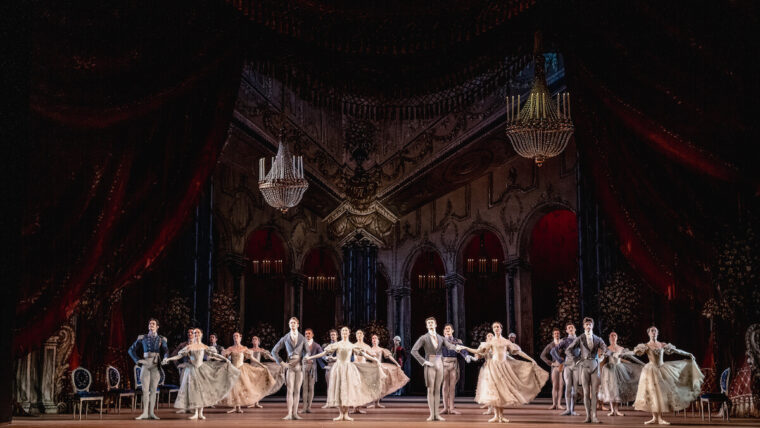
Pushkin has a revered position as the father of modern Russian literature that is jealously defended by his admirers. This led to George Balanchine’s waspish comment about Cranko’s work “How can one do something like that to Pushkin, Tchaikovsky, Onegin…and no one is put in jail?” However, Cranko’s plot-driven vision, divested of much of the divertissement elements of classical ballet is a lean drama that highlights narrative and character in a way that is appealing to 20th/21st-century audiences with the ballet’s June 1969 American debut at the Metropolitan Opera House in New York City being dubbed “The Stuttgart Ballet Miracle” by the New York Times. There is still plenty of charm and romance but a grittier and more realistic emotional landscape than in the classical repertoire.
Cranko had become acquainted with Pushkin’s work while choreographing three dances for the Royal Opera’s production of the Tchaikovsky’s opera in 1952. He was forbidden by the intendant of the Wurttemberg State Theatre in Stuttgart to use Tchaikovsky’s opera music, so composer Kurt-Heinz Stolze created the score from an amalgam of Tchaikovsky’s compositions; selections from The Seasons, the opera Cherevichki and the symphonic fantasy Francesca da Rimini. The ballet’s structure is similar to that of the opera, with seven lyric scenes over the course of three acts, with the drama being played out through a series of pas de deux punctuated by ensemble dances at the two party scenes. Cranko uses classical ballet techniques alongside modern and folk elements in what can be seen as a modernisation of classical ballet that leads on to the works of Kenneth MacMillan.
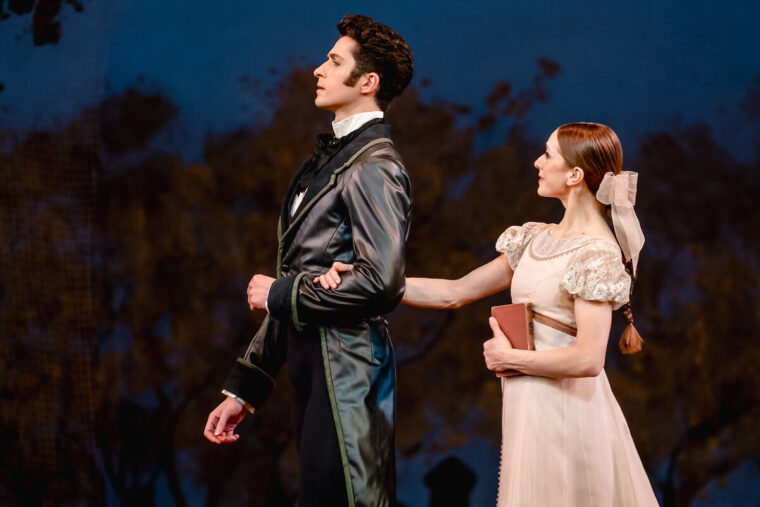
The story follows the life of the bored aristocrat Eugene Onegin, who moves from St. Petersburg to the countryside. There, he befriends the young poet Vladimir Lensky and meets Lensky’s fiancée Olga and her sister Tatyana. Tatyana, a lover of romantic literature, falls in love with Onegin sending him a love letter. Onegin rejects Tatyana’s advances at her birthday ball, Onegin flirts with Olga to spite Lensky leading to a duel in which Onegin kills his friend. Years later, Onegin returns to St. Petersburg and encounters Tatyana again, now married to Prince Gremin. Onegin realises he has fallen in love with Tatyana and begs her to leave the Prince, but it is too late as Tatyana remains faithful to her husband.
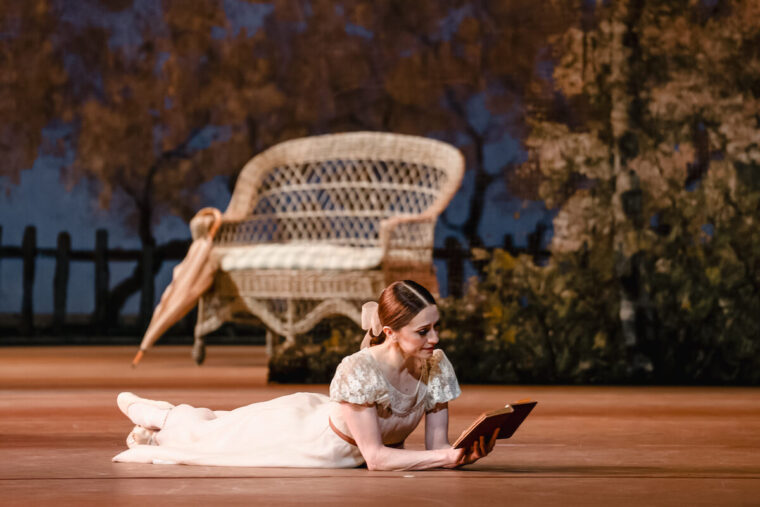
Marianela Nuñez reprises the role of Tatiana which she danced in the 2015 production. Nuñez makes a confident transition from bookish, country ingénue to a woman of the world. She moves through a series of pas de deux that form the skeleton of the narrative; from the passion of the dream pas de deux with a fantasy Onegin who steps out of the mirror, through a classical stately and affectionate formality with Lukas Bjørneboe Brændsrød as her husband Prince Gremin, ending with the finale duet with a now desperate Onegin.
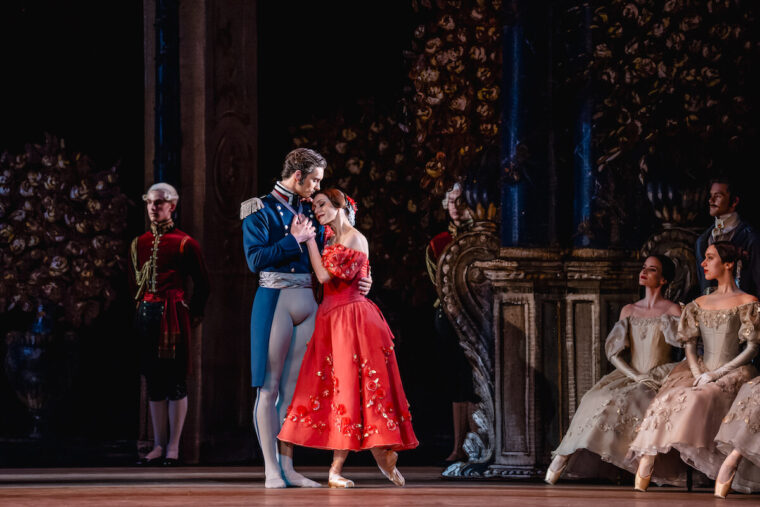
But by this point, Nuñez, as Tatiana, is in control as she acknowledges but eventually resists her sexual attraction to Onegin. Nuñez is a joy to watch, a heady combination of fluidity and formality and makes for a powerful Tatania.
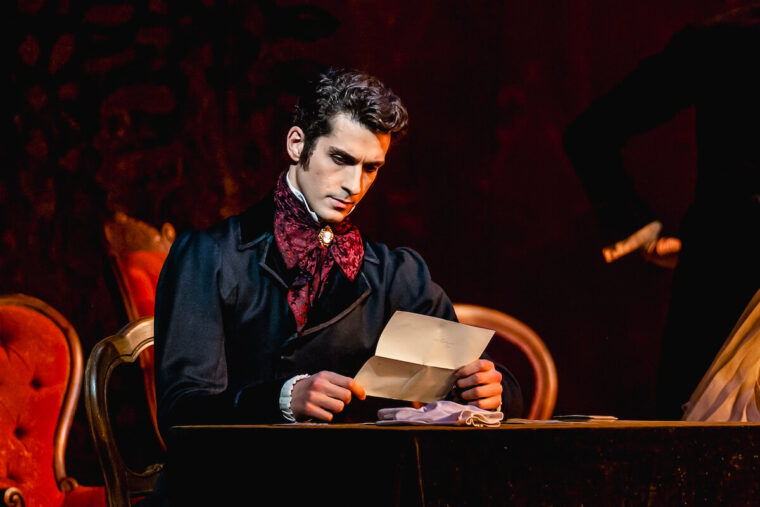
As the man-in-black Eugene Onegin, Reece Clarke is a wonderful foil for Nuñez. He danced the role in 2020 and brings a hyper-controlled elegance and strength to his portrayal of this brittle, haughty man of the world. Clarke’s footwork in the dream pas de deux is excellent and he uses his height to good effect lifting up Nuñez from behind with his arms under hers as she drapes herself over his body.
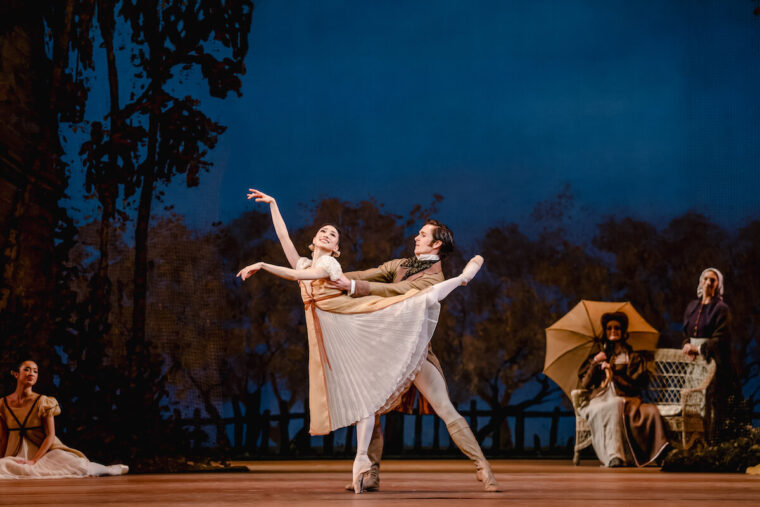
Akane Takada’s Olga is pleasingly gamine. She performed the role in the 2013 production and her pas de deux with her fiancée Lensky’s pas de deux is charming and light-hearted with some delicious pointe work. This contrasts with Olga’s black scarfed, emotionally charged duet with Tatiana before the duel. Olga is in some ways an annoying character, unable to see that her teasing of Lensky, through flirting with the much less benign Onegin, can only lead to trouble within the codified moral framework of the time. But Takada brings such an air of innocence to the stage that I have to forgive her! William Bracewell as the naïve poet Lensky steals the show in his Act2 solo, encoding his moves with an air of melancholic desperation in a tremendously moving performance.
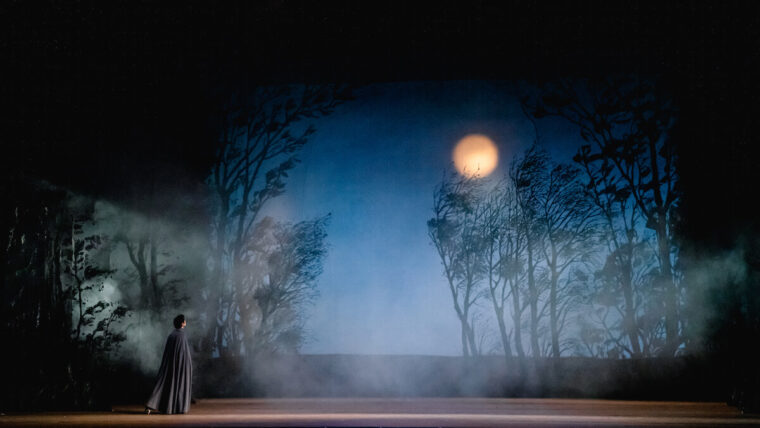
Jürgen Rose’s original designs are stunning. Evoking the style of Imperial Russia with gorgeous fabrics and drapes, Aubrey Beardsley-style trees and all illuminated by Steen Bjarke’s subtle lighting design that adds emotional texture to each scene with with subtle washes of pink and amber.
Conductor Wolfgang Heinz made a pretty good fist at delivering Tchaikovsky’s sweeping melodies and the potent folk rhythms, but there were occasional moments of ensemble raggedness as well as some tuning issues in the horns and winds that took a little shine off the performance.
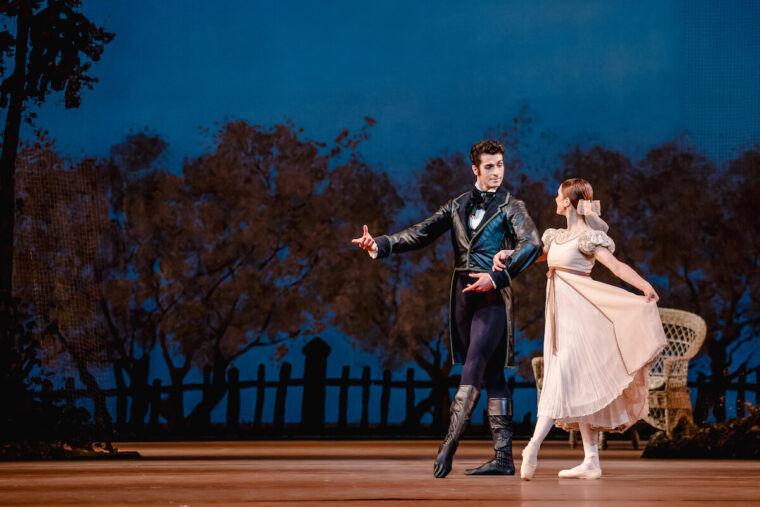
This is a top-class production full of passion and fire that you should see. As it moves through the season there will be role debuts from Matthew Ball and Cesar Corrales as Onegin, Francesca Hayward and Lauren Cuthbertson as Tatiana, and Viola Pantuso and Mayara Magri as Olga which will be worth catching.
Onegin
22 January–12 June 2025
Royal Opera House
Bow Street
London
WC2E 9DD

Leave a Reply