Last Updated on December 10, 2025
The Academy of St Martin in the Fields returns home with an opulent tone
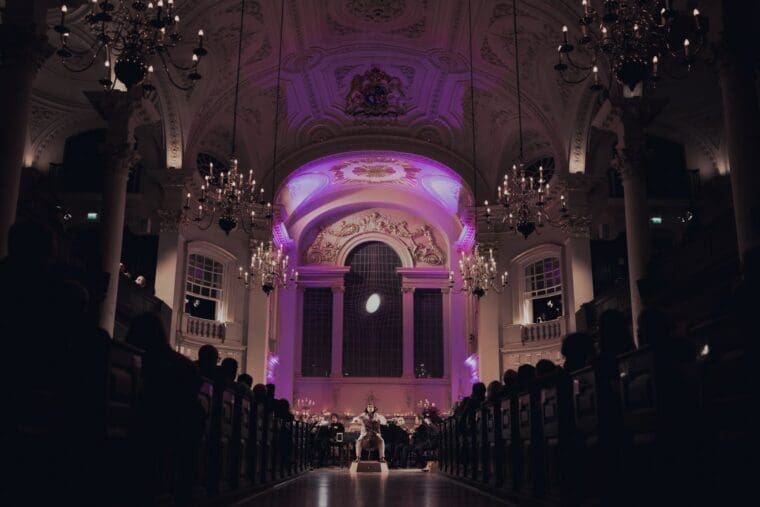
The Academy of St Martin in the Fields (ASMF) opened their 24/25 season with a return to their namesake home. The concert also served to announce their “Front Row” scheme for under 30’s and full-time students. The Front Row scheme offers £5 concert tickets for those under 30 and full-time students as well as a host of other benefits. Seeing as it is free to sign up it seems like a no-brainer for anyone interested in seeing top-quality performance in London. The concert was made up of baroque music and music which used baroque styles. None of the works were conducted, all being player-led.
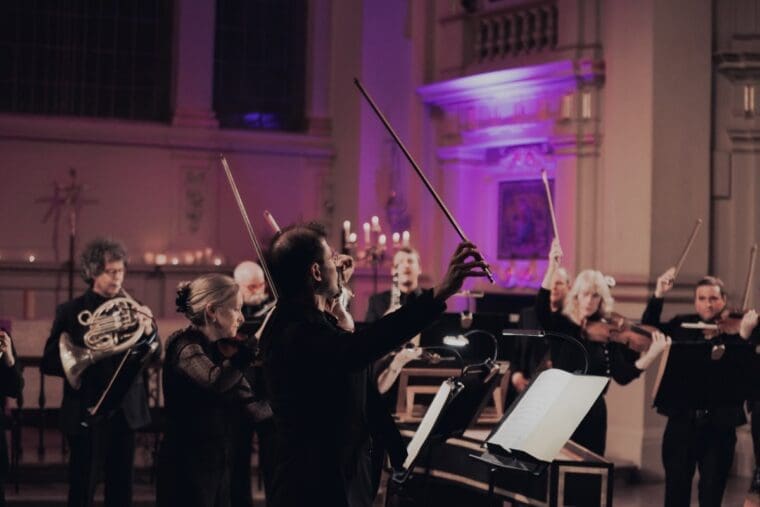
The first piece was Stravinsky’s concerto in E flat, aka Dumbarton Oaks. Stravinsky hinted that one of his themes may have been a borrowing from Bach’s Brandenburg concertos. Beyond this borrowed theme though there is not much of the baroque in the concerto. Played by ASMF with typical technical brilliance, each of the movements oozed Stravinsky’s shadowy dancelike style. Towards the end of the second movement the main repeated theme dropped away to a slower more heartfelt rhythm, the orchestra came through at this stage with opulent richness and a gorgeous quality of tone.
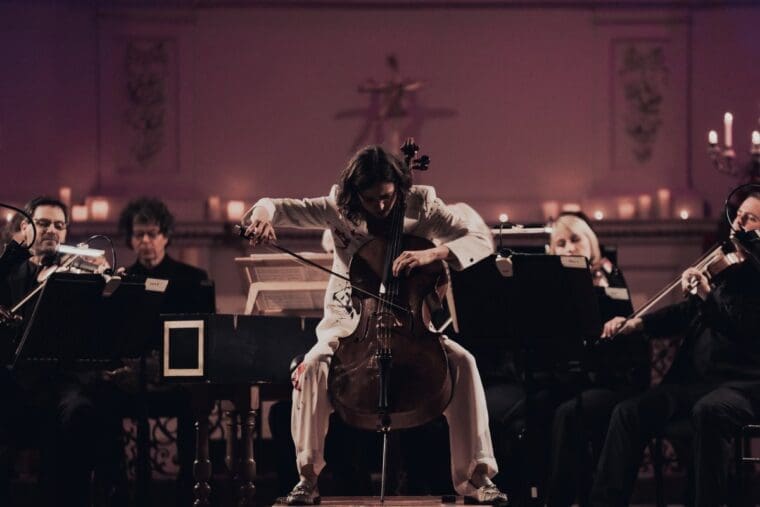
Next came Haydn’s C Major cello concerto with soloist Anastasia Kobekina. Re-discovered in the 1960s, this concerto features earworms on the scale of dune and a near-operatic solo line for the cello. Kobekina played passionately and imbued great character to her interpretation. Unfortunately, it was also a quiet interpretation made it a strain to hear towards the back of the hall. In dutifully matching Kobekina’s dynamics the orchestra also dropped their volume leaving the piece sapped of energy.
Ignaz Franz Von Biber’s Battalia à 10 is not a common repertory piece but was ideal for the era-spanning concert and a happy discovery for me. Although it was composed in 1673 there are moments which felt contemporary. The first movement, sonata, featured con legno rhythms and thunderous stamping as part of the music. The second movement The Rowdy Pub is outrageously dissonant for its time. A sound world Schoenberg wouldn’t start lapping at the shores of for another 200+ years.
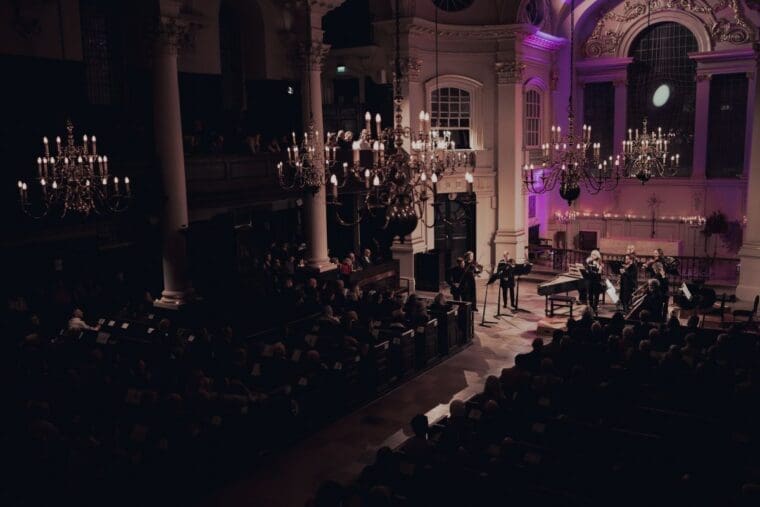
If Stravinsky’s Dumbarton Oaks contains hints of baroque hidden amongst a sea of modernism then his Suite Italienne is the converse. Selected from moments of his baroque ballet score Pulcinella, in which Stravinsky re-arranged and re-orchestrated baroque pieces into a new, modern opera. Appearing at first to be pure neo-baroque it soon develops into something richer.
This paired with Domenico Gallo’s Sonata no.12 in G minor “Follia.” Another less known composition, Gallo wasn’t recognised as the author until the 1950s following years of anonymity. One of the baroque composers mined for content for Pulcinella, Gallo’s sonata was a short piece of joy from the academy.
The Academy of St Martin in the Field’s next London concert is on 9th December at the Barbican and features one of Mozart’s most beloved piano concertos, number 20.
https://www.asmf.org/whats-on/asmf-khatia-buniatishvili/
St Martin in the Fields Trafalgar Sq, London WC2N 4JJ
Photos credit Matthew Johnson

Leave a Reply