Last Updated on November 7, 2026
A Dramatically Compelling Iphigénie en Tauride at the Coliseum
4.0 out of 5.0 starsFirst nights at the ENO always bring out the dandies. Philip Sallon looked dashing in his cavalier’s outfit, and Michael Portillo was taking a break from his train journeying in a striking plum jacket. But the real star last night was the music. It was the opening of Gluck’s four-act French ‘tragédie lyrique’ Iphigénie en Tauride with a libretto by Nicolas-François Guillard in a new production by Olivier Award-winning director Lyndsey Turner. This is the first time the opera, with its story taken from Euripides’s Iphigenia in Tauris, has been seen at the Coliseum and, unusually for the ENO, it was sung in French. After a less-than-stellar new production of Tosca just a handful of days ago, the company needed a win, and it got one.
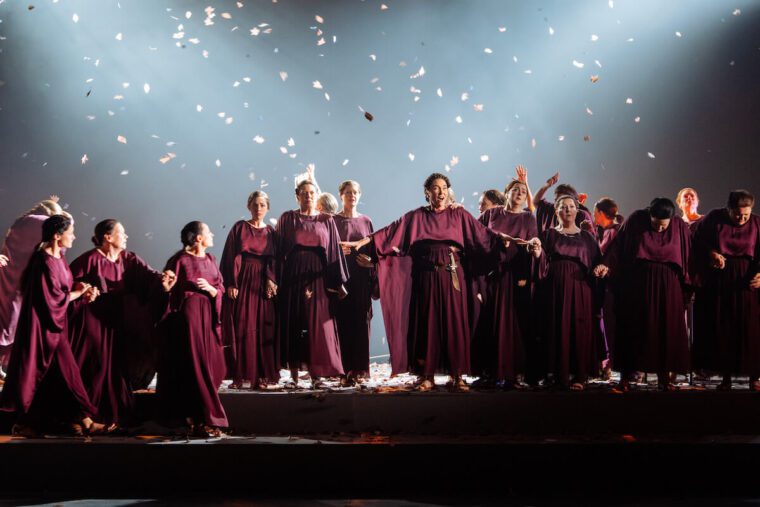
First performed by the Paris Opéra at the second Salle du Palais-Royal on 18 May 1779, Iphigénie en Tauride was an immediate success. The composer had come to Paris in 1774 at the invitation of his student Marie Antoinette, whom he had taught in Austria, adapting his musical language to the traditions of French lyric tragedy associated with Lully and Rameau. The opera is regarded as the culmination of Gluck’s operatic reforms; a return to the emotional immediacy of Ancient Greek drama, subordinating ornament to dramatic truth and creating a direct musical expression of fear, grief, and familial recognition.
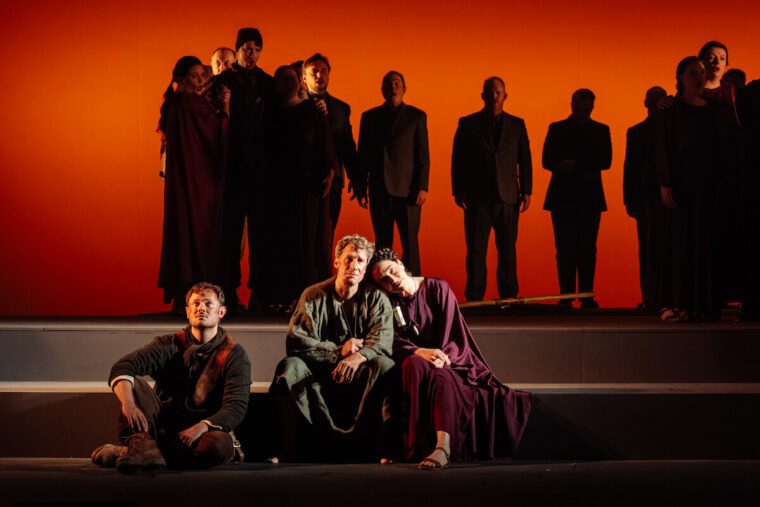
The drama is set in the temple of Diana on Tauris, fifteen years after Agamemnon’s apparent sacrifice of his daughter Iphigénie at Aulis. Diana secretly saved Iphigénie and made her a priestess in Tauris, but her family believes she is dead. Iphigénie opens the opera in anguish after dreaming that she killed her brother Oreste. King Thoas, plagued by oracles and nightmares, orders that every stranger landing on the island be sacrificed.
Two shipwrecked Greeks then arrive: Oreste, who has murdered his mother Clytemnestra and is pursued by guilt and the Furies, and his loyal friend Pylade. Iphigénie and Oreste do not recognise one another. She is ordered to prepare him for sacrifice, creating the opera’s central moral crisis: obey Thoas, or defy him to save a stranger who is, unknown to her, her brother.
Recognition finally comes, and the siblings plan to escape with Pylade. Thoas attempts to stop them, but divine intervention in the form of Diana resolves the violence: Iphigénie is freed from her priestly captivity, Oreste is released from torment, and the opera closes in divine reconciliation and mercy.
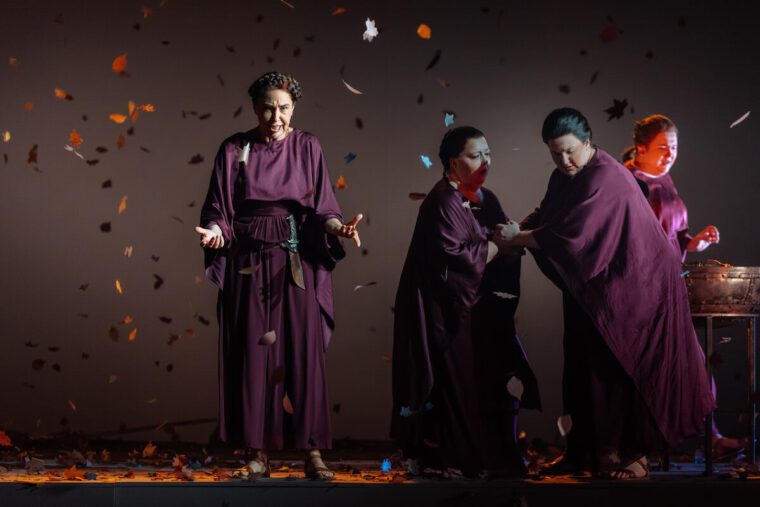
Designer Soutra Gilmour and director Lyndsey Turner have created a bare-bones one-set production which, in this case, unlike the ‘concert-hall’ Tosca, was a simple but effective response to the tight budget restrictions the company is under. Whether we were in the Temple of Diana or a prison cell, the stage was set up as an oblong box with a couple of plinths breaking up the space and lighting designer Tim Mitchell’s simple, evocative washes of colour setting the scene. Unfortunately, there was a lighting glitch in Act 1 leading to the performance being stopped and restarted, but it was handled with aplomb by conductor David Bates.
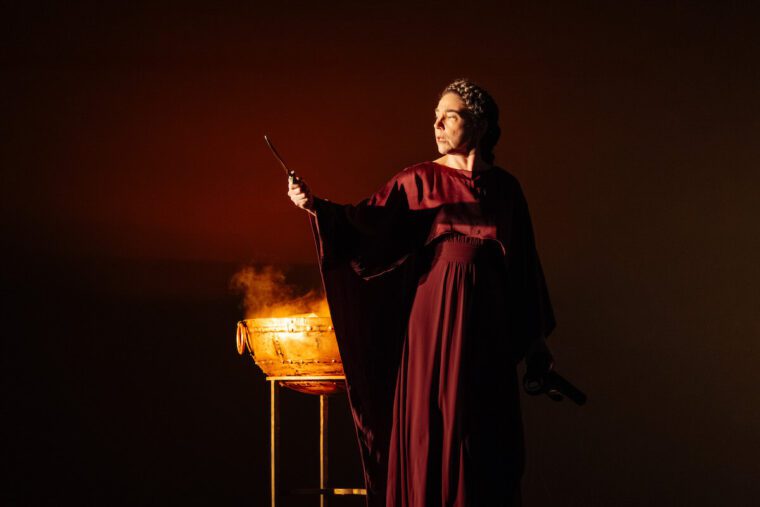
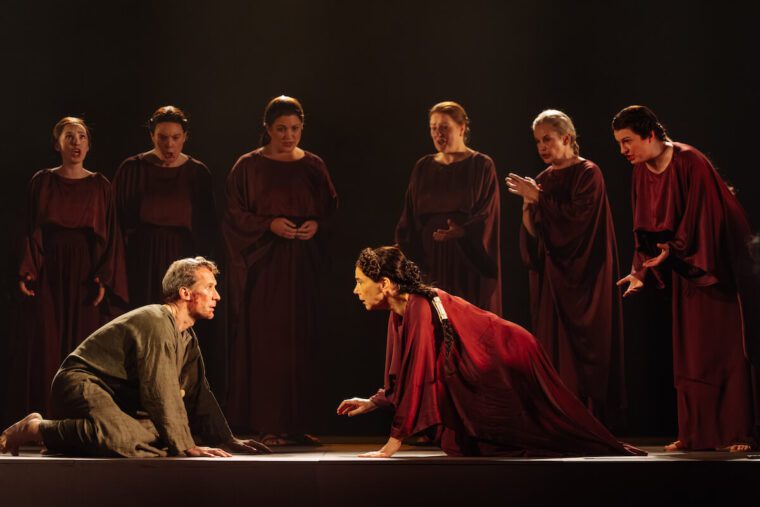
The great British mezzo-soprano Christine Rice took the title role of Iphigénie. Wearing a burgundy ancient Greek Peplos tunic and a belt with an annoyingly inauthentic metal buckle, Rice’s Iphigénie was world-weary and restrained. The performance was not without intensity, but it always sat within the dramatic tramlines of her status both as Princess and as a high priestess. Her Act 2 “O malheureuse Iphigénie” was both emotional and regal in delivery.
It was a very different performance to the warmth and humanity of her Sister Helen in Jake Heggie’s Dead Man Walking from a year ago and cements Rice’s position as one of the most dramatically flexible of our homegrown divas.
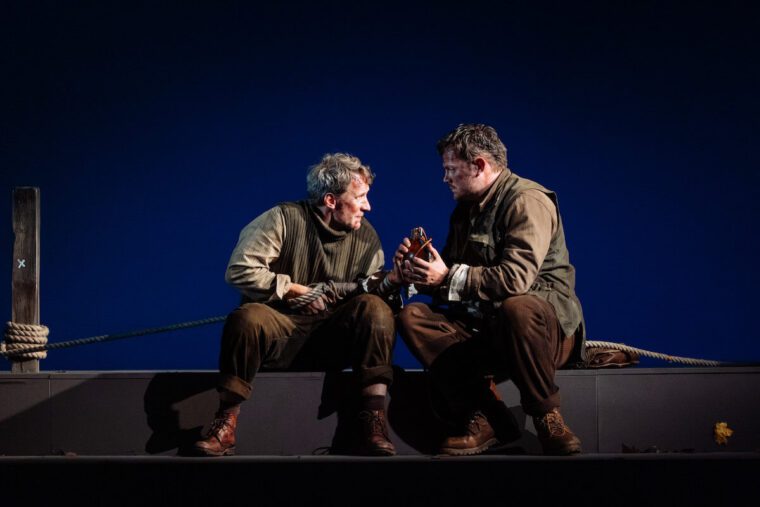
South African baritone Jacques Imbrailo, a track-suited wide boy Ned Keene opposite Christine Rice’s Mrs Sedley in Deborah Warner’s Peter Grimes at the Royal Opera, played Iphigénie’s unrecognised brother Oreste. Imbrailo brought a gruff masculine passion and power to his characterisation as in Act 2’s “Dieux qui me poursuivez” when he takes on his demons.
Oreste is seeking his own death to save his beloved friend Pylade, and the Oreste and Pylade relationship is one of the seminal gay love stories in the classical canon. Sussex-born tenor Nick Pritchard, a hand-wringingly insincere Funeral Director in Leonard Bernstein’s A Quiet Place at the Linbury Theatre, gave a sensitive and lyrical take on Pylade’s “Unis dès la plus tendre enfance”, and the couple’s duets had a sense of emotional veracity.
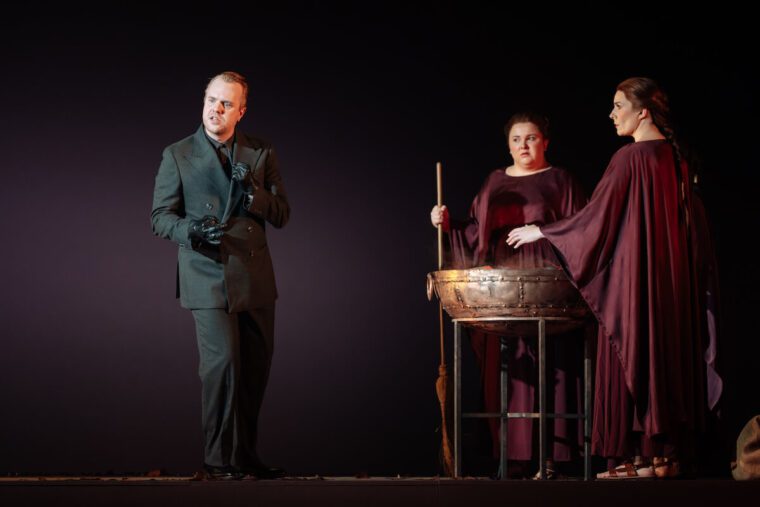
Black-suited and gloved, Australian baritone Morgan Pearse brought an immediate threat to the stage as barbarian King Thoas, with his punchy delivery, articulation and stage presence demanding attention.
Soprano Olivia Rose Tringham made a sparkling cameo as the First Priestess and is a young singer to watch out for.
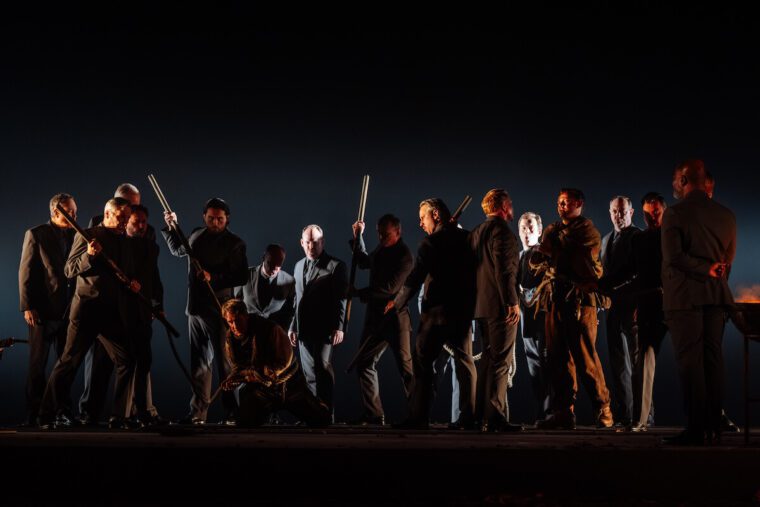
The stylised dance battle scene near the end of the opera felt uncomfortable and forced and at odds with the rest of the production. More realism please!
Baroque specialist David Bates did a fine job conducting in what was his ENO debut. From the stately opening of the overture, he managed the extremes of emotion very effectively without overpowering the singers in what was a dynamic and enthralling reading of the score.
It is so important to support the ENO when they do good work, especially in these strained times. This is a strong production carried on the backs of the performers that provides a dramatically compelling insight into the world of pre-Mozartian opera. Go and see it!
6 – 14 Nov 2026
English National Opera
London Coliseum, St Martin’s Lane, London WC2N 4ES
From £15
All photos © Helen Murray

Leave a Reply