Last Updated on November 24, 2025
Simba’s impact on my posture could be felt immediately – I’m a changed woman in the mornings.
Sleep itself didn’t trouble me, but I suspected the quality of sleep was a problem. Despite regularly getting six to eight hours of zeds, I’d feel dreadful upon waking: inertia, stiffness, lack of energy. Springing out of bed was tough. I blamed diminished efforts with my diet (not helped by a broken oven) and not bothering with my usual yoga routine. I’d had plenty to keep me awake this year: my son’s exams and university departure, chaos surrounding home decoration and long-drawn-out oven repairs, and a busy schedule. I was sleeping, but I wasn’t feeling the benefit of resting. It never occurred to me that replacing our mattress would impact my well-being enough to warrant bumping it up the to-do list.

Our former mattress had barely reached the suggested seven years before replacing it. A memory foam model ordered online was lower and marginally narrower than the previous traditional sprung one. It might only have been 5-6 centimetres less than a standard-width double mattress, but enough to notice. The old mattress wasn’t lumpy, but the edges sagged within a few months. I blamed myself – maybe not rotating it often enough. I wasn’t convinced that a solely memory foam design offered enough support, but with many other domestic expenses, it seemed less of a priority to update the mattress than to upgrade more visible things like threadbare carpets and dull paintwork.
When researching new mattresses, I was looking for a product that wasn’t just a slab of foam. Simba appealed as they were a hybrid design featuring 1900 microsprings combined with extra deep foam. The supportive layers are zoned around nine areas likely to incur greater pressure, such as hips or shoulders. Having pockets of air would mean less heat being trapped – which is very important when you wake most mornings mid-hot-flush! Breathable materials infused with graphite to move warmth away from the body might improve my temperature regulation. Simba Mattresses come in five different styles, from the lowest priced “essential” retailing from £499 through to “ultra” at up to £1699. I’d opted for the “hybrid” style, of which half a million have been sold. And for full confidence you’d not be making an ill-considered purchase, Simba offer a 200-night trial period and a 10-year guarantee against manufacturing faults. Payment plans to spread the cost are also an option.

Being impatient, next-day delivery was a boon. The cardboard box was maybe 3 feet high with several hand-sized holes to drag it into position. If your stairwell is as narrow as ours, you’d do best to get this giant Swiss roll out of the box, for the plastic wrap is easier to get a grip on to pull it upstairs. It’s a two-person job. Cartoon symbols on the box show how to position it on your bed frame. I carefully snipped the strong plastic cover to watch my Simba unroll itself. As the compressed foam expands, it makes a very satisfying noise whilst it grows before your eyes.
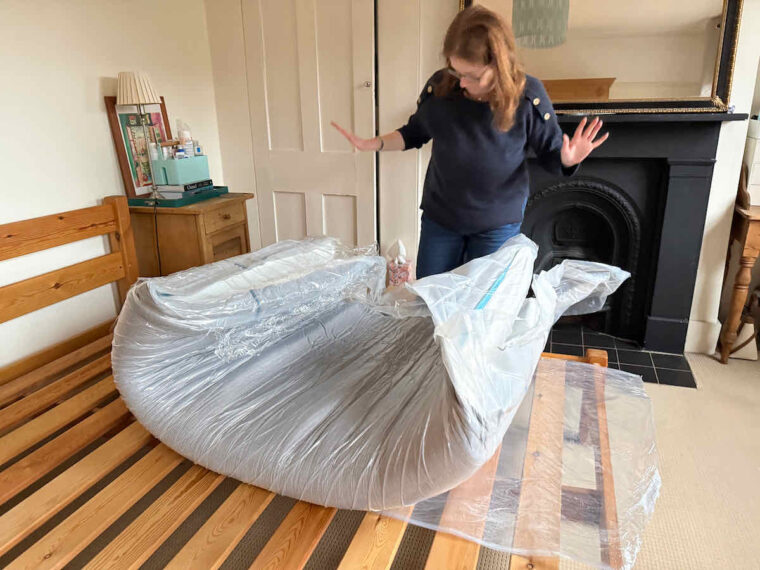
Immediately, we were delighted that at 25cm depth, the Simba was taller and met the full width of our 140cm bedframe, where the other one hadn’t. Although we were enthusiastic to lie on it immediately, you really must allow six hours or more before going to bed. I liked the breathable waffle texture cover that zips off for easy cleaning in the washing machine. I did give the mattress a little squeeze to test the medium-firm feel, and could tell straight away it had more robust support than our old one.

Ideally, you need to let the Simba carry on fully expanding for 72 hours, so for 3 days, we were stripping the bedding in the morning to make sure our tightly fitted bottom sheet wasn’t hampering its expansion. I’ve noted in my diary to rotate the mattress once a month for the first three months, then every three months thereafter. I’m taking no chances this time, and the four thick fabric handles down each side will make turning the mattress much easier.
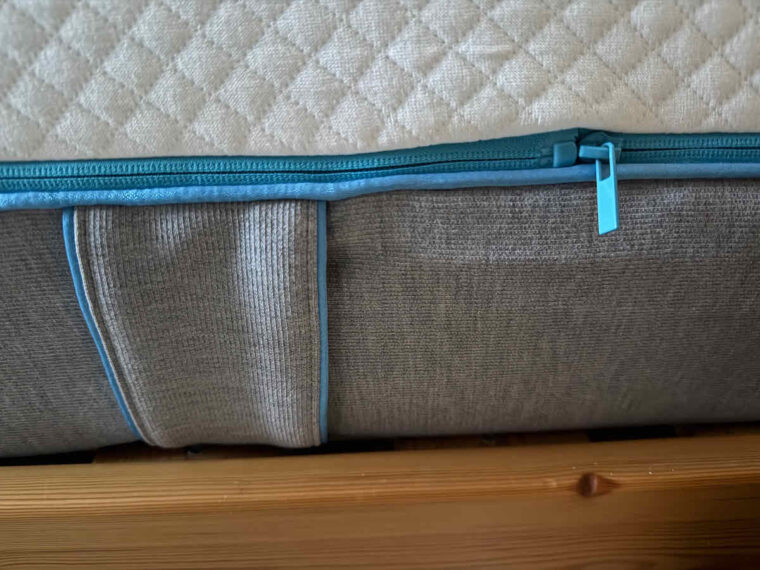
When bedtime arrived, we could tell the Simba mattress was a little bigger than when we’d left it after unpacking. Excitedly, we made up the bed and climbed in to see how the new hybrid mattress felt. It was a Goldilocks moment; firm but not too firm, soft enough to be comfortable but not marshmallow-like. Unlike traditional sprung models, the microsprings didn’t make any noise if you or your partner changed position. If my husband moved, I was less likely to be disturbed. The entire surface felt evenly supportive. I almost heard my bones sigh with relief. And just like that, I was out like the proverbial light for a full night of deep sleep. Even the urban foxes screaming didn’t interrupt my slumber.
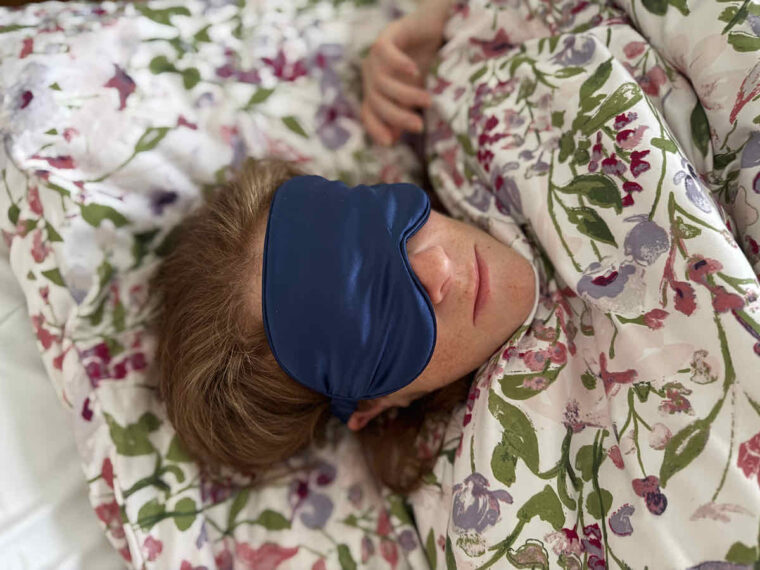
In the morning, instead of my mind racing through a list of upcoming commitments, my first thought was how much at ease I felt, with better body alignment, on the new mattress. Instead of procrastinating about getting up, I got to my feet without my plantar foot muscles complaining. I felt more upright with better posture. The annoying recent niggle in my hip seemed to have been gagged overnight. “Wow,” I thought, “I didn’t expect this”. On the second night, I spent the evening thinking about how much I was relishing going to bed. Later in the week, when I had to stay in a hotel, I was irked how the hotel bed was less comfortable than the one at home (normally for me it’s the opposite way round).

It’s still early days, but it’s remarkable how different I feel lying on the bed now – the support of the hybrid design feels like it’s holding me up in all the right places. I was worried I might have a stiff neck adjusting – I’m like one of those wooden beaded toy animals with elastic that go lopsided – but it’s been like wearing a perfect new pair of shoes, cushioning every step. Waking up on the Simba, I’ve felt more alert and refreshed. I’m pleased to say that the initial feeling of ease, when stepping out of bed and getting yourself upright, has continued since. Given we hadn’t been happy with the old mattress for some time, I wish we’d done this years ago.
At a time when I’d had a fair bit to keep me awake at night, I hadn’t factored in how physical aches and stresses in my body might have been worsened by a poor-quality mattress. The Simba has brought a feeling of being cradled and supported that was definitely lacking before. The advice that you spend nearly half of your life in bed, and ought to invest in a decent bed and mattress, is easily forgotten. If you do feel a bit rough lately, and your next mattress change is overdue, I can relate. The worry list might not have gone away, but at least I now feel I have more energy to cope with it.
Simba currently have Black Friday deals offering up to 30% off selected mattresses. They also sell a range of pillows, mattress toppers and bed frames to upgrade your entire bedtime experience. With thanks to Simba who provided a double hybrid mattress to review.
Leave a Reply