Last Updated on February 13, 2026
Anyone for Tea?
4.5 out of 5.0 stars
Visitors to the Samurai exhibition at the British Museum, expecting to see a fearsome collection of armour, swords, knives and other implements of warfare, bloody scenes of battle and death and destruction, won’t be disappointed. Yet this magnificent exhibition is so much more, delivering a myth-busting, eye-opening panoramic view of the life of Japan’s legendary warrior class that is a complete revelation. Who of us knew that many of the Samurai were women, or that they were also bureaucrats and government officials, or that they were diplomats and artists and scholars, and that they liked mastering the art of making tea – yes, tea – or that they lived in comparative peace for a considerable length of time? I certainly didn’t.

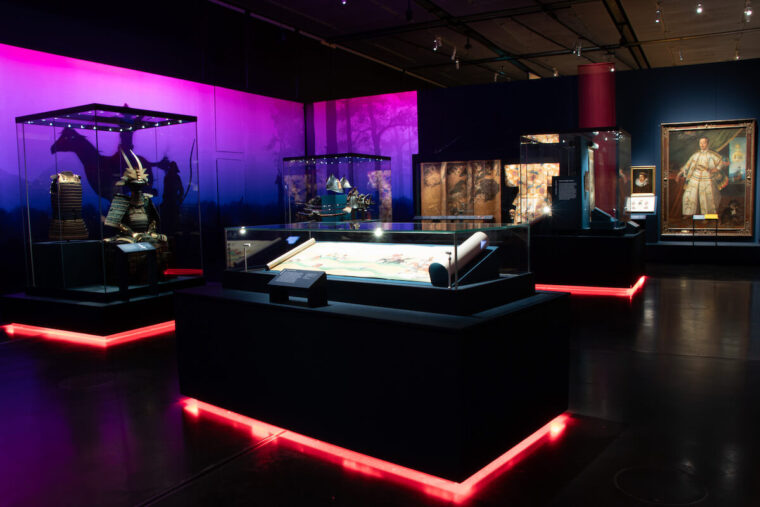
While the Samurai are among our most enduring and powerful images of Japanese culture, our knowledge of them has been limited. The Samurai exhibition seeks to correct that by tracing how the lives of the Samurai evolved from medieval times to today and how they have played multiple roles throughout their long history. All of the multifaceted life of the Samurai is on display here, along with the creations they inspired: fantastic suits of armour, sit alongside swords and guns, quivers and bows, saddles, lacquered screens, beautiful silk garments, decorated scrolls and paintings, ceramics, a fantastic litter, clothing, books, video games and modern art. What amazes is the sheer skill and artistry involved. Just look at the suit of armour that greets you when you enter the Samurai exhibition; dating from 1696, it’s an awe-inspiring marvel, guaranteed to terrify anyone, but delicately fashioned out of wool, silk, leather, gold and lacquer, with exquisite craftsmanship.
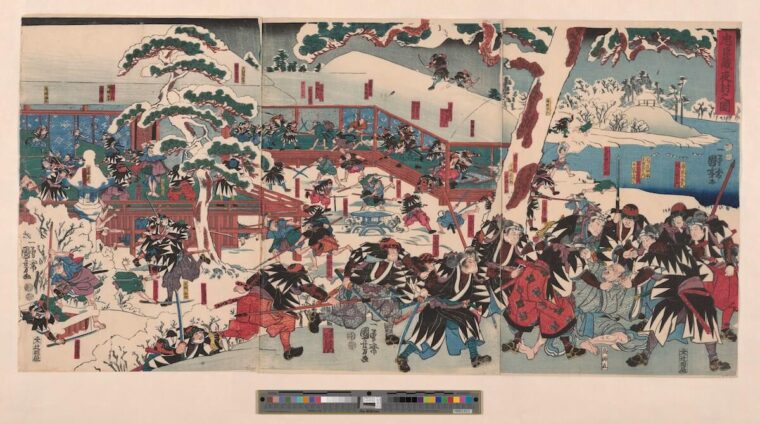
When the Samurai first emerged in the mid-AD 900s, they were mercenaries, serving the aristocracy. After a period of brutal civil wars, a shogunate, or warrior government, was established in 1185, which ruled until 1570. From 1603, one powerful shogunate emerged, unifying Japan and ushering in 250 years of peace and prosperity. The Samurai evolved into rural gentry, becoming government bureaucrats, land managers and tax collectors, and scholars who were active in intellectual life and supported the arts. The Samurai made up about 10% of the population, about half of them women. When American and European merchants arrived in the 1850s and forced foreign trade on Japan, the die was cast: after a decade of violence, the shogunate collapsed, and in 1871, the Samurai class was abolished. A new government ruled in the name of the emperor.
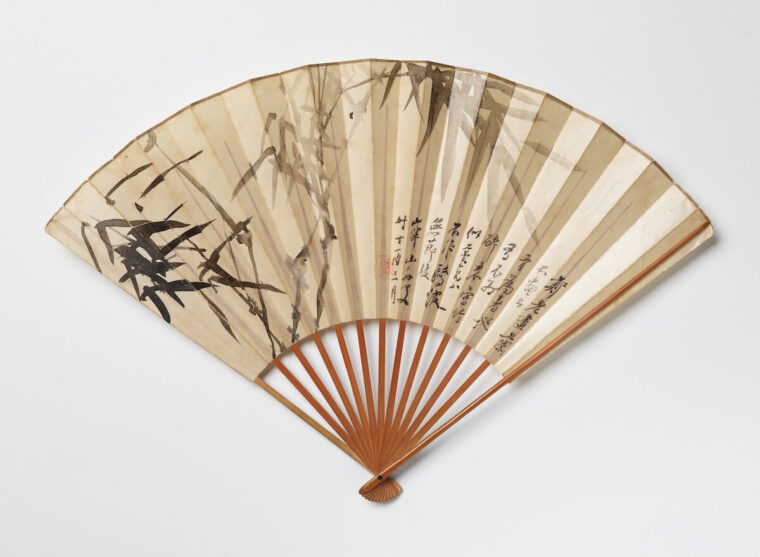
I follow the story – told with over 250 objects – through airy galleries in what is a fully immersive, multi-media experience delivered with enormous panache. In the first gallery, where the early, martial life of the Samurai is told, I’m mesmerised by an entire wall that displays a video in lush pinks and purples with warriors galloping across a landscape in silhouette, complete with battle cries and the whinnying of frenzied horses. A late 11th-century scroll shows a gruesome battle, with decapitated enemies and severed limbs and plenty of spurting blood, just in fact what you might expect. A later display of helmets is a delightful surprise, though: one features a coiled dragon, another a set of horns, and another is shaped like an aubergine.
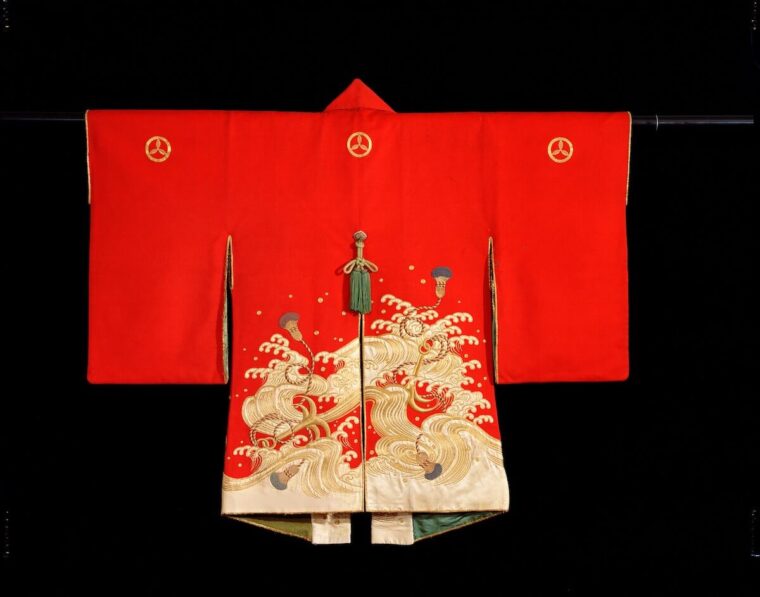
In the following galleries, the more peaceful aspect of the Samurai’s lives unfolds, and our perceptions are blown away. Inevitably, Christian missionaries arrived in Japan, and some Samurai were converted. In 1582, a delegation of Samurai boys was sent to the Vatican in Rome, and you can see its 13-year-old leader here, painted by Tintoretto. In the new era of peace, the Samurai were expected to be sophisticated. We see them in paintings and scrolls hosting social gatherings, making tea, and sponsoring dance and drama, along with their delicate pots, cups, and books. They had time off in the bedroom too, and one couple is shown in a tangle of sheets, taking a cat by surprise in an erotic print. Samurai women served in battle and defended their homes while the men were away. Some became national heroines, whose exploits were celebrated in books and paintings. Some were firefighters, and one of their red, peaked uniforms is here. Typically, they were multitaskers too, looking after the household and the children. They wore elegant silk kimonos and used delicate lacquered cosmetic sets. A gorgeous little boy’s outfit sits alongside some miniature armour.

If the Samurai were outlawed in the late 19th century, they certainly didn’t die. For a time, they were resented for the status they’d had, but then they became idealised, and their ethos was used to motivate Japanese soldiers in later conflicts. They lived on in the collective imagination as Japan’s noble warrior class, shaping our perceptions of Japanese culture – most particularly our notions of its martial character – and perpetuating the Samurai myth.
But they have been a lasting inspiration, too. In the later galleries of the Samurai Exhibition, I’m struck by just how hugely pervasive this has been. The Samurai became the subject of books, films, television dramas, video games and inspired modern sculptors and painters. Screens show excerpts from films and television programmes. Seven Samurai, the 1954 film, became a classic. Tom Cruise battled it out in The Last Samurai, and George Lucas has a lot to thank them for: there’s a Darth Vader costume here for Star Wars fans. In the last gallery, I find a yellow rubber Duckie, straddled by a Samurai warrior, the work of a modern Japanese artist.
This is a riveting, enlightening exhibition, and it’s big. Allow plenty of time to savour it. Having been taken by one of the videos on display, I’m off to find Last Samurai Standing on Netflix. I now know, though, that the Samurai weren’t just super-macho, testosterone-fuelled warriors: they were administrators, artists, peacemakers and liked having tea, and yes – a lot of them were women too.
Samurai
British Museum
3 February – 4 May, 2026
The Sainsbury Exhibition Gallery,
British Museum
Looking for more culture? Check our guide to the Best West End Theatre to catch in 2026
Leave a Reply