Last Updated on October 14, 2025
A Visceral and Vital Lucretia
The Royal Opera House’s new production of Benjamin Britten’s two-act opera The Rape of Lucretia with a libretto by Ronald Duncan and based on André Obey’s play Le Viol de Lucrèce has come at an apposite moment. Its central theme of violence against women within the context of warfare alongside the cultural legacy of the #MeToo movement puts pay to any fantasy about the cultural irrelevance of opera that might be lurking within the walls of Whitehall or the Arts Council.

With Oliver Mears directing and a cast drawn from the Jette Parker Artists Programme and the Britten Pears Young Artist Programme, the Linbury Theatre, Covent Garden’s intimate smaller performance space, is perfect for this chamber opera. In Britten’s operatic canon, The Rape of Lucretia sits between the larger scale Peter Grimes (1945) and Albert Herring (1947). The opera was first performed at Glyndebourne in 1946 with the title role created for the great English contralto Kathleen Ferrier. We loved Deborah Warner’s recent new production of Peter Grimes for the Royal Opera so were excited to see what the Royal Opera’s Director of Opera would deliver.
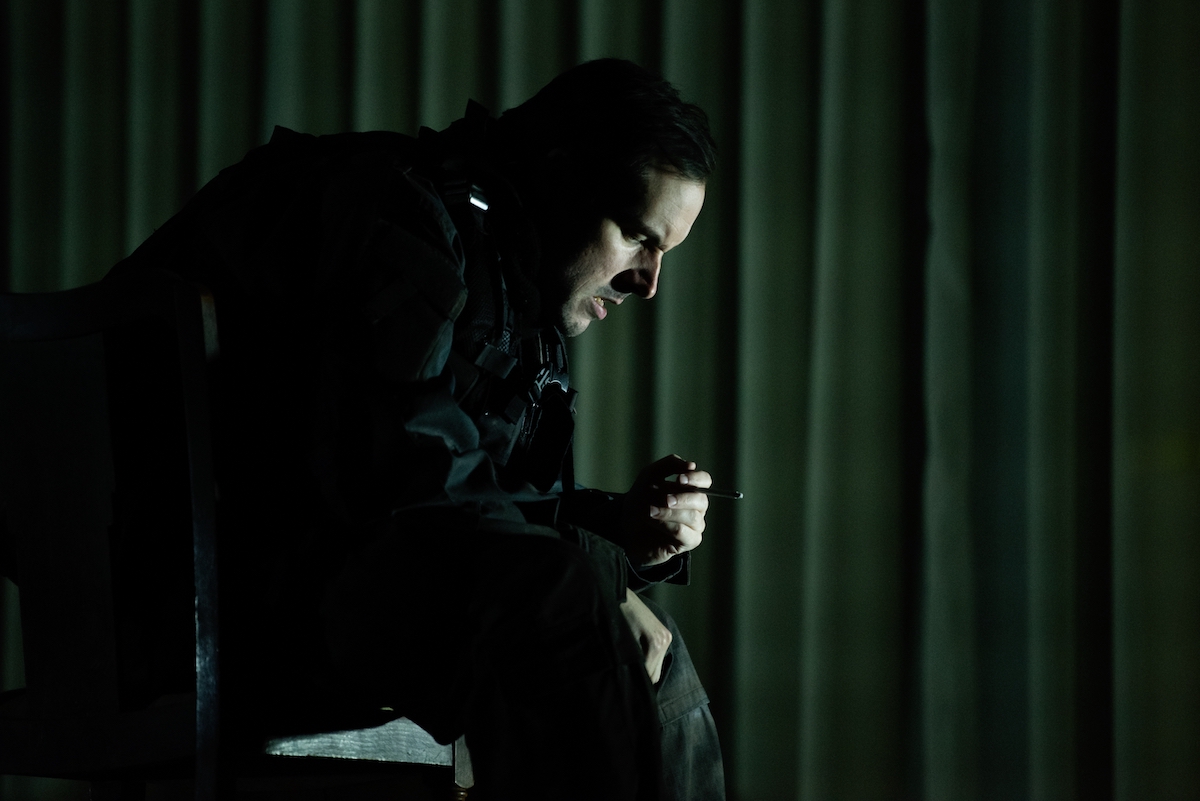 The narrative is set in Ancient Rome roughly 500 years before the birth of Christ. At this time the city was ruled by Tarquinius Superbus, the last of the seven Etruscan kings of Rome whose reign was ended by the founding of the Roman Republic. The Roman army is camped outside the city waiting to take on the invading Greeks. Three soldiers Tarquinius, the unmarried son of the king, Collatinus and Junius are drinking. The night before several soldiers including Junius had returned home to find out that their wives had been unfaithful, the exception being Collatinus’ wife Lucretia who is held up to be a paragon of beauty and virtue. Tarquinius is eaten up with desire for the chaste Lucretia and sneaks back to the city to Collatinus’ house with violent and tragic results.
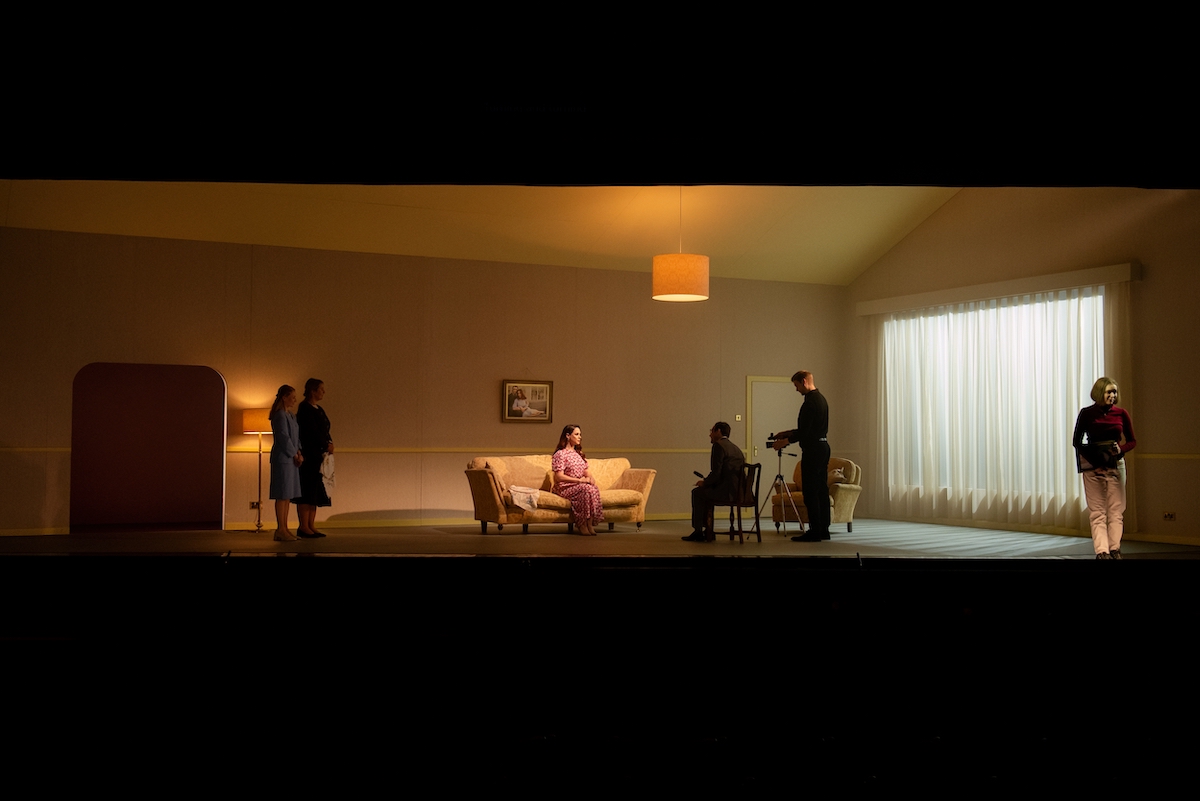
Oliver Mears and designer Annemarie Woods have set the piece in the present day. The set is a sparsely furnished contemporary sitting room which acts as a container for all the action. The opera uses the classical device of a chorus – a Gen Z male and female soloist dressed in white jeans and trainers – to articulate the thoughts of the protagonists and to create a moral context; however, the chorus’ point of view is mediated through a Christian perspective which given Britten’s sometimes turgid religiosity can get in the way of the drama. But this is a minor quibble in what is an extraordinary and visceral piece of musical theatre.

The violent opening atonal chords lead into a history lesson from Scottish tenor Michael Gibson as the Male Chorus. Gibson’s voice is light and agile with terrific diction and a beautiful tone. He brings a youthful sense of despair to the part which helps to make the piece feel contemporary. The Female Chorus is played by Canadian soprano Sydney Baedke who takes up the story – ‘It is an axiom among kings, to use a foreign threat to hide a local evil’ – and impresses with the richness of her voice.

The three soldiers in full combat gear and carrying their machine guns break into the space to the eerie sound of the lower strings and harp. This is the reality of modern urban warfare and feels very close to home. It’s the sort of visceral, intimate and gritty theatrical experience you might see at the Young Vic. There is a woman tied to a chair who they take it in turns to hit.
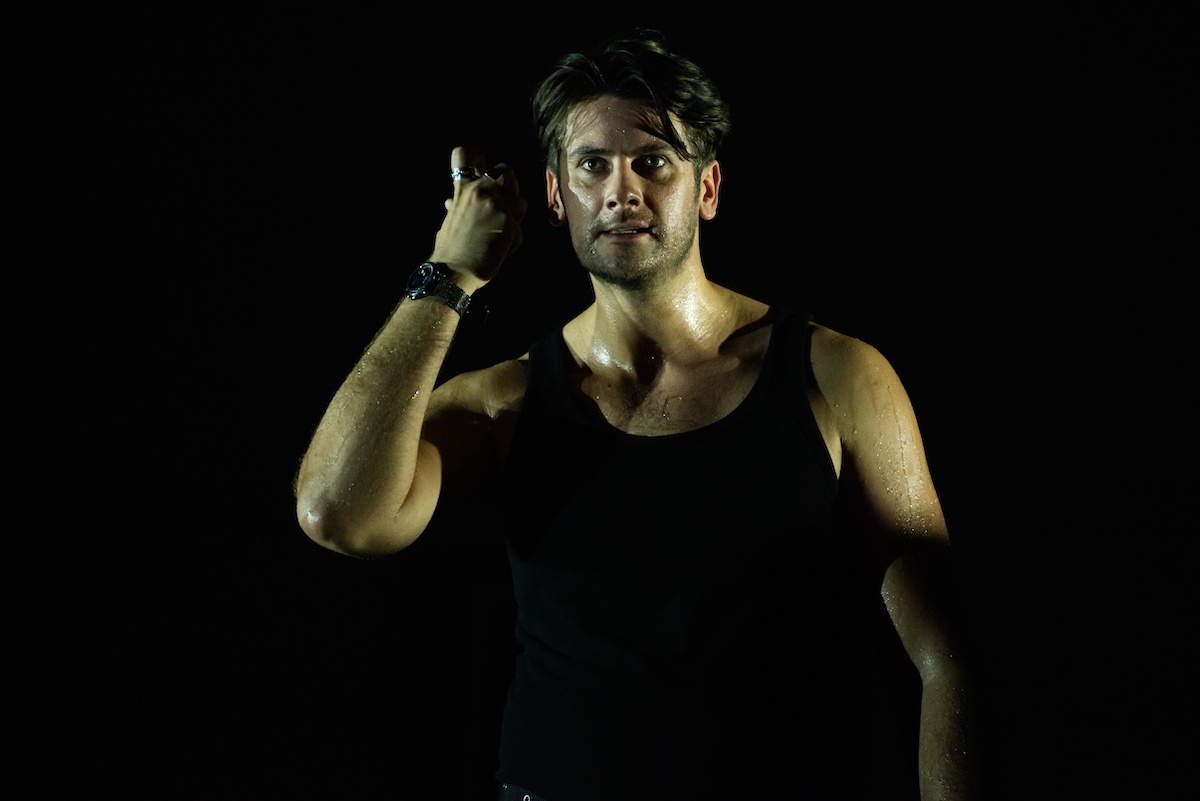
British baritone Jolyon Loy plays the immature and entitled Tarquinius. Loy is an imposing figure with a suitably threatening stage presence for whom women are either up on a pedestal or whores. His lyrical approach is at its best as he approaches the sleeping Lucretia – ‘Within this frail crucible of light – which allows him to display a more tender side to his character.
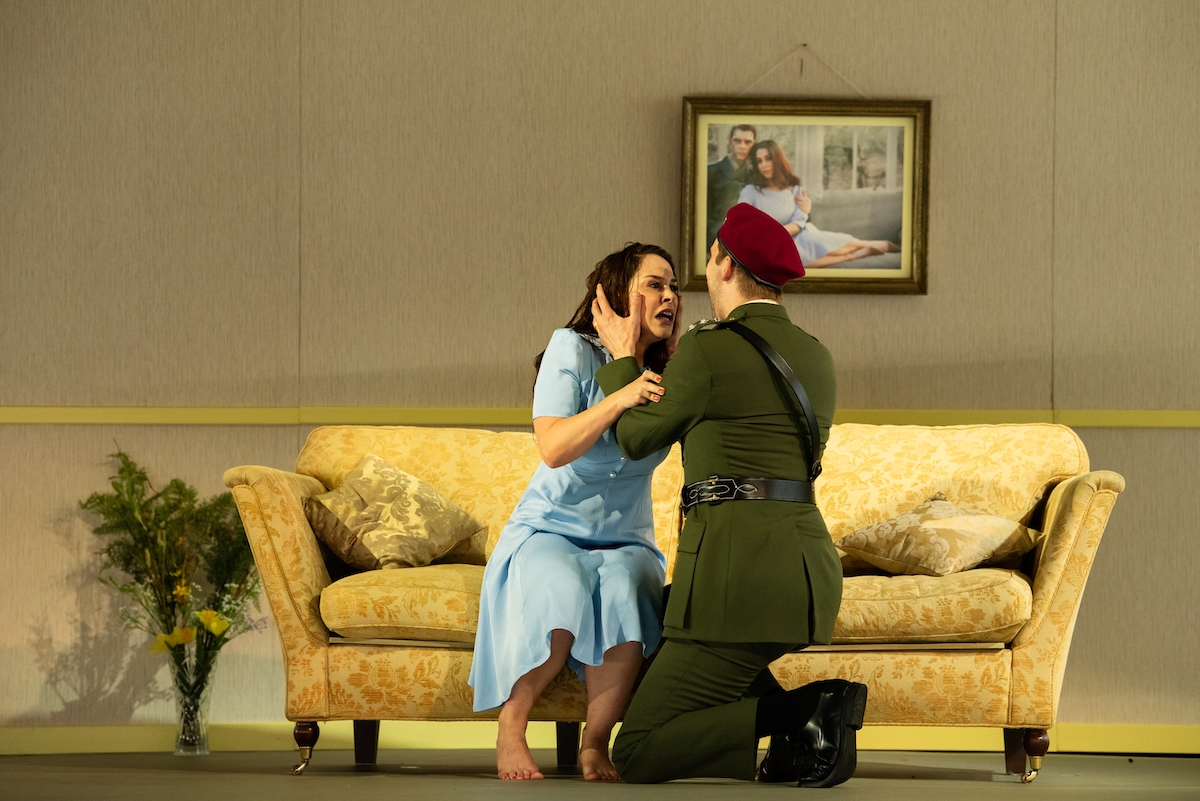
American bass Anthony Reed as Lucretia’s husband Collatinus has a fabulous and commanding resonant bass voice. He is a stern presence and the only adult in the room. After Lucretia’s death, Reed acts superbly, hands quivering, totally lost and trying to make sense of the senseless.

Kiwi baritone Kieran Rayner’s Junius is both jealous of and obsessed with Lucretia as well as being eaten up by his own wife’s infidelity. Rayner gives a strong account of the scheming character who wants to use Lucretia’s demise as a vehicle to promote his own power grab.

We first meet Lucretia, American mezzo-soprano Anne Marie Stanley, when she is being interviewed and photographed for a magazine. Stanley fully inhabits the role taking the audience on a dramatic journey from her initial privileged complacency to a deranged self-loathing.
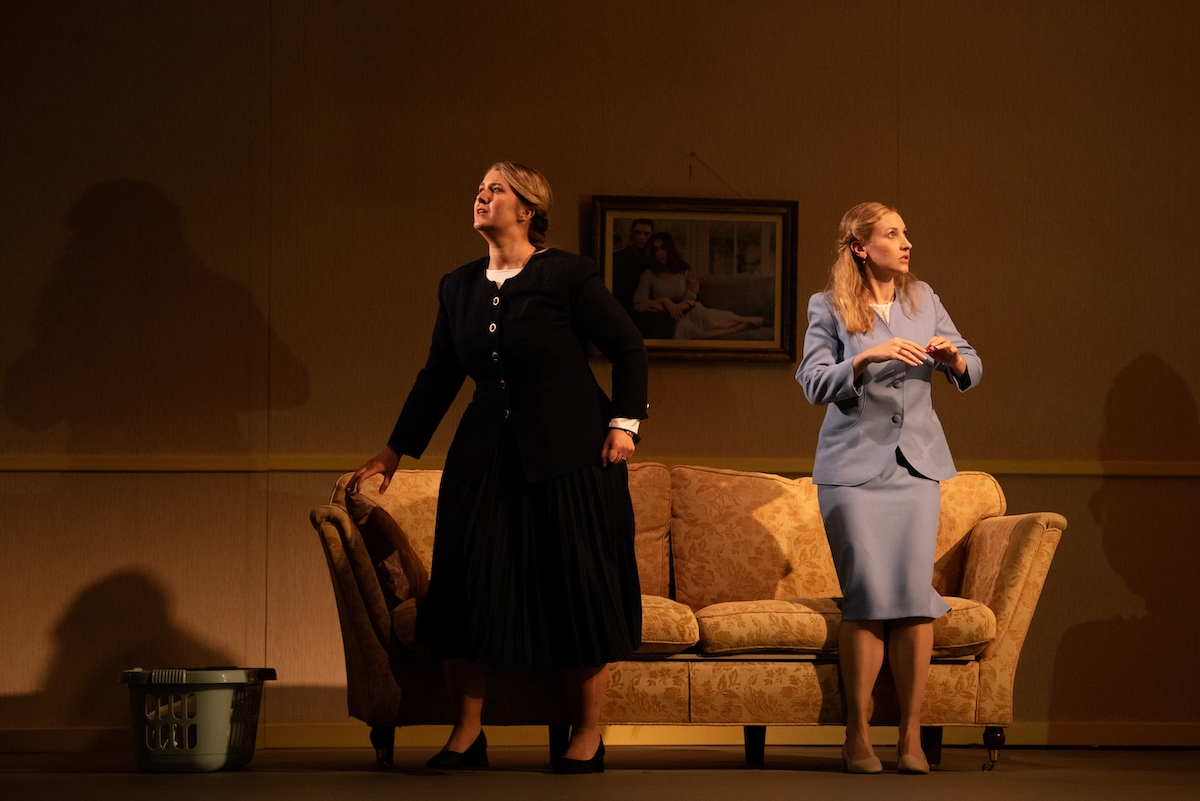
Playing Bianca, Lucretia’s old nurse, Irish mezzo-soprano Carolyn Holt is convincingly motherly with a powerful rich texture to her voice. And Canadian soprano Sarah Dufresne as the young maid Lucia displays a gorgeous crystalline tone. There was a lovely domestic scene as the three women fold billowing sheets as they contemplate their individual positions.
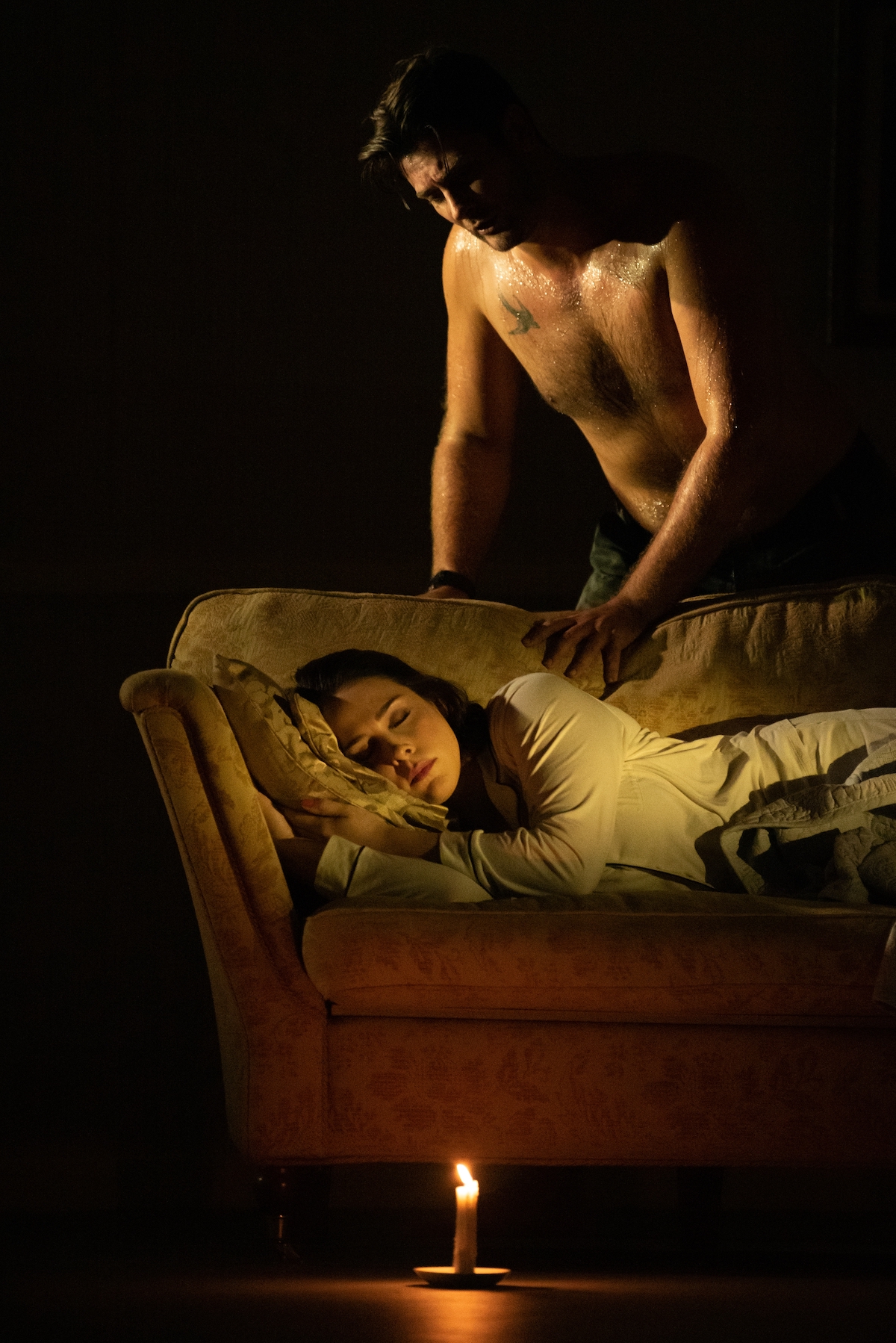
Britten’s own conflicts are well known. His homosexuality and his long relationship with tenor Peter Pears were kept out of public view. But in particular, his predilection for young boys has made him a controversial figure, rather like a classical Michael Jackson, with opposing camps suggesting that he was either a benign loving figure or a serial paederast. What is certain is that Britten is the master of conflicted desire and the score’s constant shifts between a transcendent tonality and the chromatic signifiers of emotional torment.
Corinna Niemeyer conducted The Aurora Orchestra with discipline and precision allowing the timbral shifts of Britten’s orchestration to shine and the voices to be heard with clarity. This is an important and resonant production with a strong young ensemble cast that makes the case for the artform’s continuing relevance and vitality.
Royal Opera House
Bow Street,
London WC2E 9DD
13–22 November 2022

Leave a Reply