Last Updated on October 30, 2026
Costa-Jackson Brings her Signature Swagger to Damiano Michieletto’s Carmen
5.0 out of 5.0 stars
Director Damiano Michieletto’s take on George Bizet’s Carmen opened last night for its third outing at Covent Garden. Italian-American mezzo-soprano Ginger Costa-Jackson as fiery Carmen and American tenor Russell Thomas as the jealous and despairing Don José are heading up a top-notch cast. Carmen is one of the most powerful operas in our cultural landscape, a combination of groundbreaking operatic ‘verismo’ (realism) set in the structural frame of ‘Opera Comique’, yet infused with the spirit of the Zarzuela, the Spanish musical theatre style that helped define the country’s national identity.
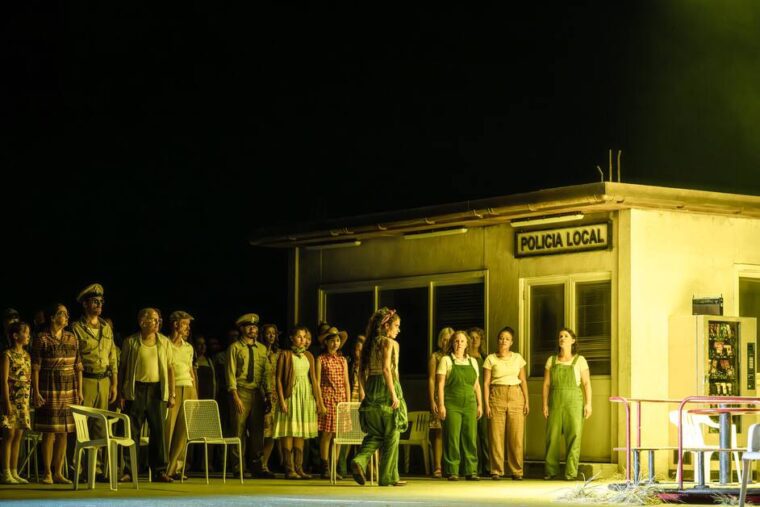
Taken from Prosper Mérimée’s novella then turned into a libretto written by Henri Meilhac and Ludovic Halévy, Carmen received its premiere in 1875 at the Opéra-Comique in Paris and was not immediately successful. Tragically Bizet didn’t live long enough to see the opera become a central pillar of the repertoire.
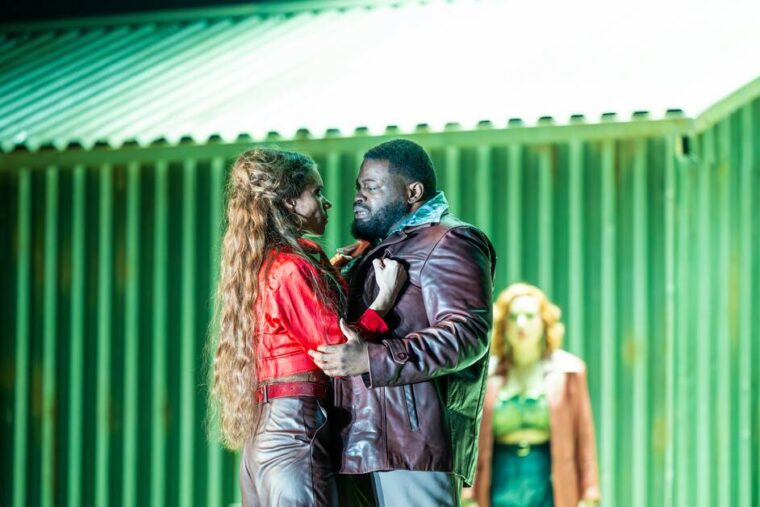
Set in the sultry heat of Seville, the opera’s narrative is constructed around the tragic love affair between Carmen, a gypsy, and Don José, a lower-ranking soldier. He is imprisoned for helping Carmen to escape incarceration for her part in a fight. On his release she convinces the naïve soldier to run off with her and join a band of smugglers. The other two main protagonists are Don José’s childhood sweetheart Micaëla, an orphan who has been brought up by his mother and who acts as the maternal mouthpiece, and Escamillo, the local star bullfighter who has the hots for Carmen. She leaves Don José for Escamillo and the inevitable tragedy ensues.
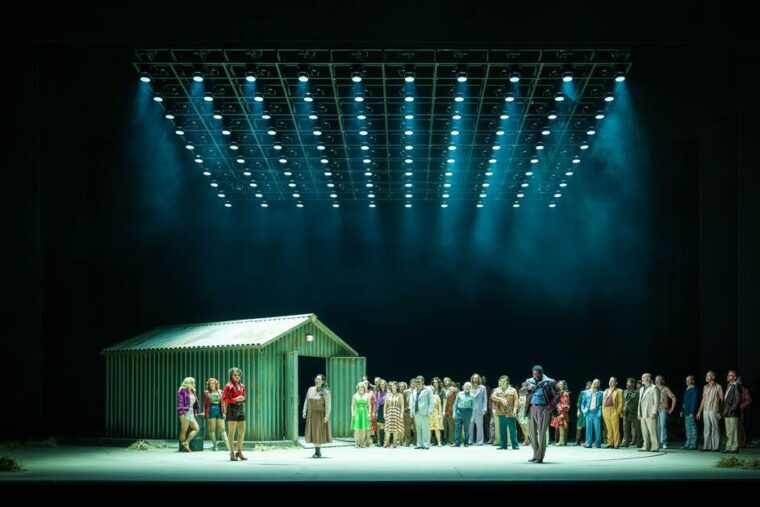
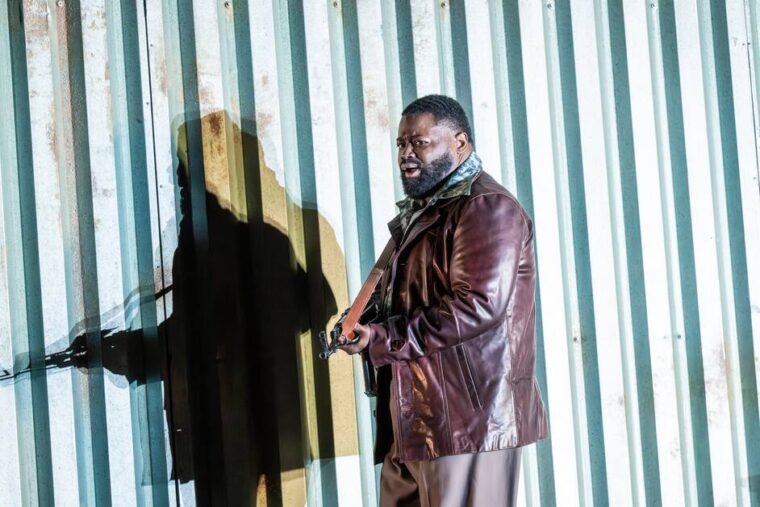
Michieletto and set designer Paolo Fantin have located the drama in a deracinated fantasy 1970s world that’s a million miles away from the Andalusian elegance of Seville and the gloomy high-ceilinged grandeur of the city’s real tobacco factory. There are kids riding choppers and playing cowboys and Indians, the buildings are single storey concrete or corrugated iron sheds. A listless, dusty yellow heat is generated by lighting designer Alessandro Carletti’s kinetic lighting array of a hundred parcans. It could be Spain, it could be Southern California – but really it’s opera design world – a transparent conceptual frame to give the production dramatic coherence.
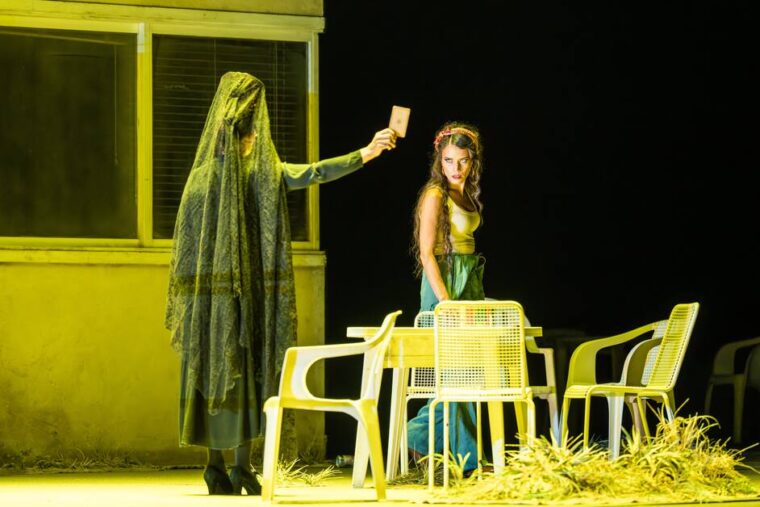
Michieletto’s prime dramatic innovation is to integrate Don José’s mother as a central (mostly) non-speaking role into the drama. Ruth Alfie Adams floats around wraith-like in a black mantilla shuffling and brandishing tarot cards. The character creates a opposite pole of virtue and morality to the wayward Carmen. Don José never stands a chance, crushed between these two powerful women and was always going to run back to his mummy like a good Catholic boy, killing his chances with the wayward Carmen.
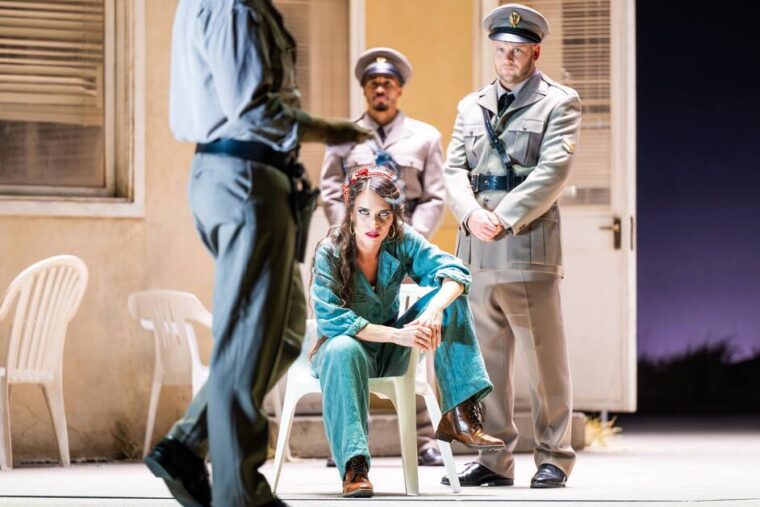
The issues that Carmen faces feel just as real. She is oppressed by her ethnicity, gender and class and can only assert herself through an oppositional stance to authority, whether it be state or patriarchal. The first two iterations of this production saw Russian mezzo-soprano Aigul Akmetshina in the role. Akmetshina was sensational and I described her as being “the defining Carmen of her generation.” Ginger Costa-Jackson is older than Akmetshina and is another singer whose career has been shaped by the role. Costa-Jackson looks fantastic and brings a more contemporary edge to her performance than Akmetshina, seemingly channelling Amy Winehouse and Winehouse’s inspiration Ronnie Spector. Initially decked out in designer Carla Teti’s viridian boiler suit, Costa-Jackson brings a masculine swagger to the part whilst offering a profound sexual threat. Her voice is warm and focused but with plenty of power in its upper register. Unafraid to stretch the rhythm in the habanera “L’amour est un oiseau rebelle” and the seguidilla “Près des remparts de Séville” this was a complete performance that made both dramatic and musical sense.

The casting of Russell Thomas as Don José was a masterstroke. His Don José has both passion and self-knowledge and there is a real sense of his toxic and fatal attraction to Carmen. Thomas’s voice has a profound lyricism as in his signature Act 2 aria “La fleur que tu m’as jétée” but there is also vocal power which makes sense of the character’s trajectory.
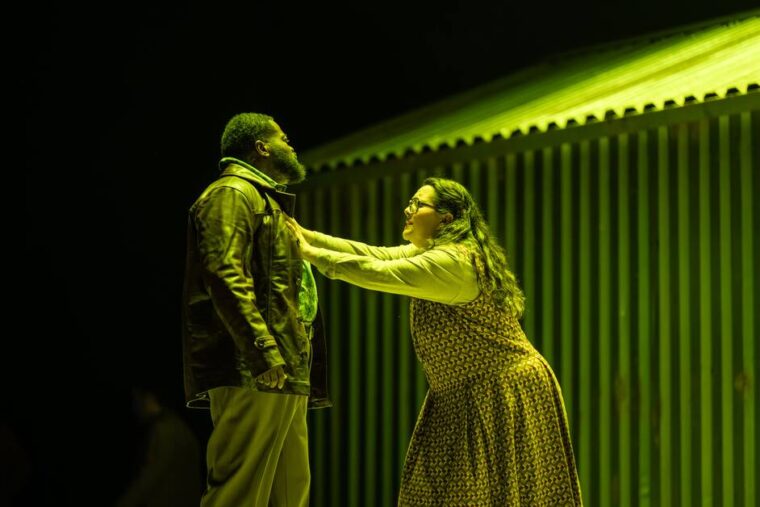
Guatemalan soprano Adriana González became the diva of dowdy in the role of Micaëla, Don Jose’s pious homegirl. It’s not a glamour part and González gives her all, literally dragging Don Jose away from the temptations of Carmen. However, Bizet writes some fabulous tunes for the character and González has a ravishing lyric soprano voice that glistens in its top register in her duet with Don José “Parle-moi de ma mère!”.
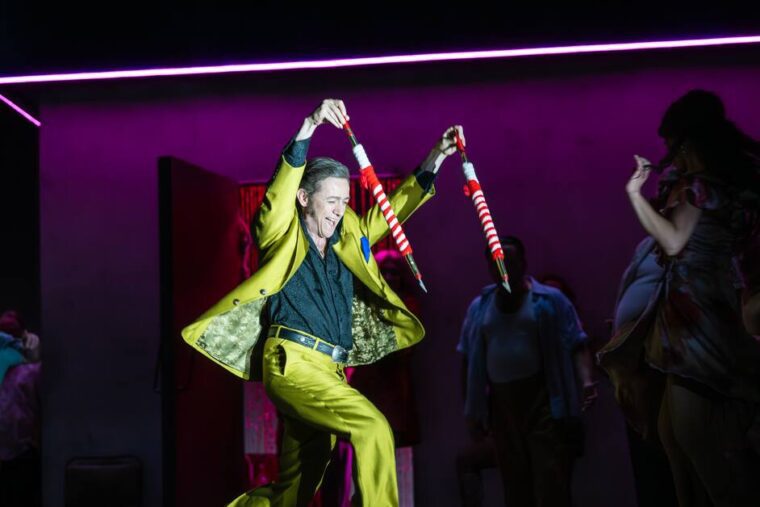
Russian bass Alexander Vinogradov oozes self-confidence as Escamillo. He is the grown-up in the room, completely in control and able to manage Carmen in a way no-one else can. Vinogradov’s voice is rich and resonant and his trademark “Toreador Song” is a celebration of his macho cool.
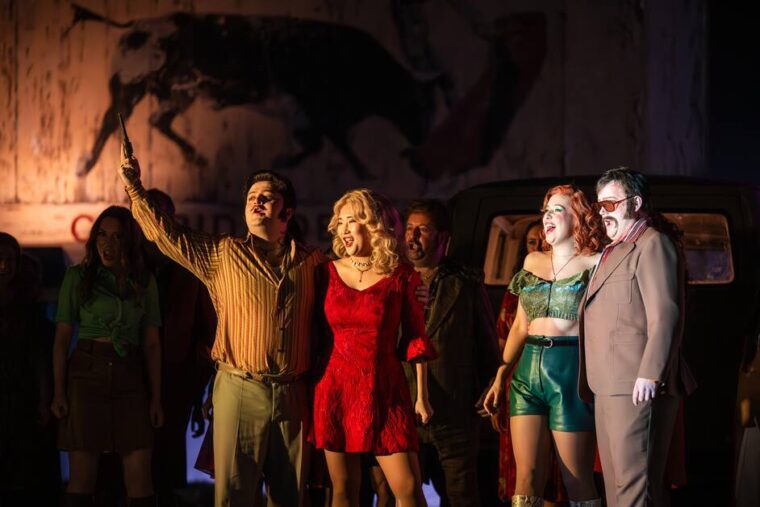
Jette Parker Artists South Korean soprano Seohyun Go and British mezzo-soprano Ellen Pearson sparkle in hot-pants as Carmen’s girlfriends Frasquita and Mercédès. Their trio “Les tringles des sistres tintaient” is a vocal highlight and their flamenco-disco dancing adds value. A special mention is necessary for British bass Barnaby Rea who brings his strong physical presence and warmth of tone to the role of Captain Zuniga.
Sesto Quatrini conducts Bizet’s electrifying and sensual score at an energetic pace with the Prelude taken at a breakneck tempo, but the band sound tight and well balanced and rehearsed with the singers given room to breathe.
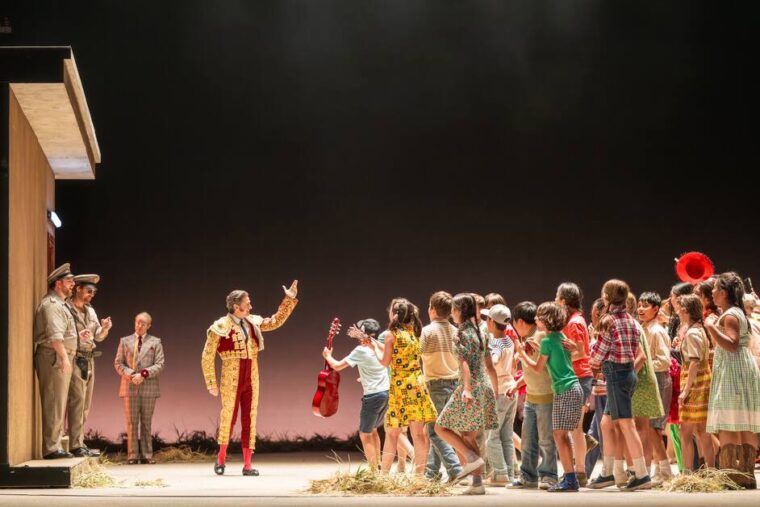
A special mention must go to the children’s chorus who were well-drilled, vocally secure and charming.
This is a top-class Carmen that is worth seeing with an ensemble cast singing and acting its socks off. With Ramona Zaharia and Valentyn Dytiuk taking over the lead roles later in the run I might have to go twice!
Carmen
29 October – 21 November 2026
Royal Opera House, Bow Street, WC2E 9DD
Check out our guide to the 2026 autumn/winter opera season.
All photos ©2026 Mihaela Bodlovic

Leave a Reply