Last Updated on October 12, 2025
Mary’s stage rule is as short as her real one
The rarely performed Mary, Queen of Scots (1973) made its London debut at ENO’s Coliseum. The Opera followed Mary’s short-lived reign as Scottish queen. Something of a synthesis between Shakespearean period drama and contemporary opera, betrayal, lust and schemes were centre stage.

Based on Amelia Elguera’s Moray, the plot followed intrigues in Mary’s court following her return to Scotland. A prelude begins with Mary’s half-brother (illegitimate heir to the throne and protestant) James imprisoning Mary’s supporter Cardinal Beaton. Mary then returned from France, strolling onto stage in stylish sunnies, followed by a retinue of Rimowa rolling lackeys. Her Catholic supporter, the militant Bothwell warns Mary of James’ scheming.
Mary defuses the conflict and reminds both of who is the owner of the crown. Cut to a year later and Mary was dancing with the foppish English lord Darnley. James and Bothwell both tried to scare off Darnley but were unsuccessful. Another year passed and Darnley became a drunk, soon turning on his former friend the Italian musician Riccio. After thwarting James’ attempt at usurpation and Bothwell’s unwanted amorous advances, Mary was left with no option but to flee to England and Elizabeth’s protection.
Composer and Librettist Thea Musgrave’s score for Mary, Queen of Scots set a shimmering backdrop of orchestral tension against surges of raw percussive power. The dramatic developments on stage were perfectly complemented by music. Breaking up the milquetoast modernism were Renaissance dance themes placed into the courting scene of Act I. The music all felt competently created but the percussive shocks soon became repetitive, the lack of variety in the music lapsed into tedium and the drama followed suit. Pathos and awe were notably absent and not one memorable tune made its way into the piece.
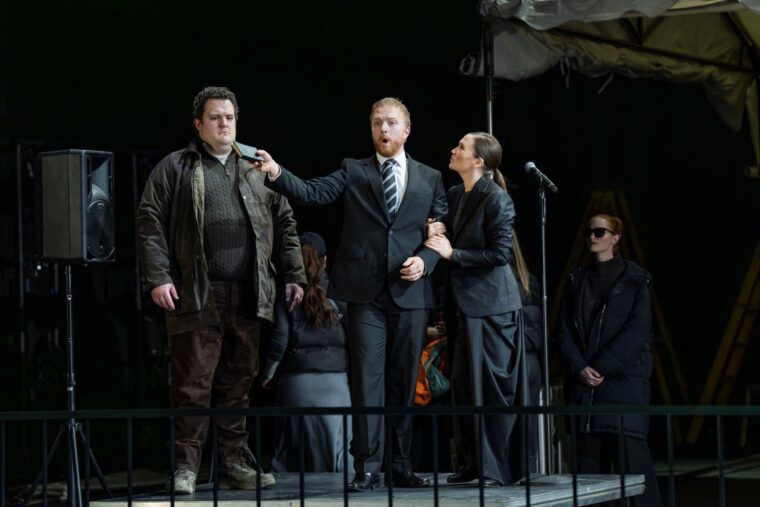
Co-produced with San Francisco Opera, Designer and Director Stewart Laing set contemporary costumes against a minimalist backdrop which consisted primarily of choreographed movement of the principals and seven stagehands steadily erecting a marquee. With little else to draw the eye and precious little attractive to watch it felt odd looking forward to and being comparatively exited by the competent assembly of a large tent. Some of the drama in Mary, Queen of Scots felt lacking in suspense as characters openly and plainly revealed their emotions prior to their actions. James’s attempt to secure power was preceded by a lengthy aria in which he declared his lust for power. Since the aria’s intentions were implicit in the latter attempt it seemed redundant.
Conductor Joana Carneiro held all the orchestral pieces in perfect balance with the vocalists on stage, making the large Coliseum Auditorium feel like a chamber space. The music remained emotive throughout.
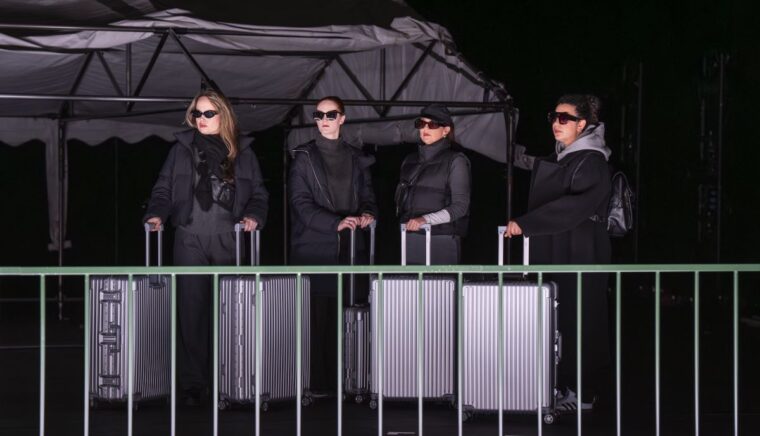
Making her debut along with the opera was American Soprano Heidi Stober. Stober sang with eardrum-rattling vehemence, a laser focus which propelled the performance along and made each of her stage appearances a compelling thrill. Her stalwart defence of her power was backed up by the force of vocal cords to match.
Recent graduate of the ENO Harewood artist programme John Findon sang as the Earl of Bothwell. Findon’s imposing stage presence together with a clear and assertive voice made him measure up as the eminent Earl. Whether threatening to run poncy prospective partners through or stamping off into banishment, Findon felt in place.

The aforementioned poncy partner, AKA Lord Darnley was played with foppish flair by English Tenor Rupert Charlesworth. Charlesworth’s ringing voice made the most of his drunken rages and jealous fury.
While unable to capture the throne, Alex Otterburn certainly seemed to have captured the role of James Stewart.
The ENO chorus was on typically stellar form with each piece ringing out loud and perfectly in time.
Mary, Queen of Scots runs until the 18th of Feb
English National Opera
London Coliseum,
St Martin’s Lane,
London WC2N 4ES
Missed this? Here’s our preview of Opera in London for 2025

My first operatic experience – and my last.
No effort put into costumes or stage sets. This was not an inexpensive night out. We followed many people out during the interval who like us did not return since many declined the token required for re-entry.. individual actors performances were clearly enacted with enthusiasm but frankly given the costumes and the set seemed as though someone had left the stage door open and people had wandered on to the set expecting a garden party..
This was described as a ‘modern retelling’. Why then use medieval prose throughout? I think this opera should go the way of Mary Queen of Scot’s herself.
It’s a shame that this your ‘last’ operatic experience. I didn’t catch this production but I’d suggest trying something better known and well established before you write off a great art form on the basis of one relatively unknown and very new opera. Try Magic Flute or Madama Butterfly for something more accessible.