Last Updated on September 7, 2025
A Rapturous Proms Return for Anoushka Shankar
4.0 out of 5.0 starsThe Radio 3 digital promotional banner at the back of the Royal Albert Hall last night proclaimed ‘Music to Unwind Your Mind’. It was a fitting headline for the return to the BBC Proms of Anoushka Shankar, sitar virtuoso, composer, and multi-Grammy nominee, for her 5th Prom and the world premiere orchestral presentation of her ‘Chapters’ trilogy. Alongside the disarmingly youthful and hippyish conductor Robert Ames and the London Contemporary Orchestra, the music’s new orchestral arrangements explored the boundaries between Indian classical music, electronica, and contemporary orchestral textures.
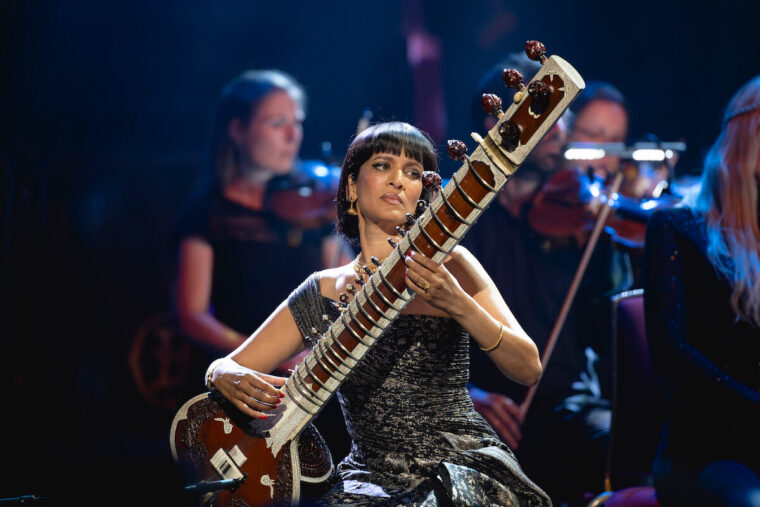
Celebrating and exploring her Indian heritage, Anglo-American artist Anoushka Shankar is the daughter of global classical sitar superstar Ravi Shankar, as well as being the sister of country-jazz singer Norah Jones, with whom she shares a similar gentle charm. A big cheer greeted her as she came on to the stage by an enthusiastic, younger, and more ethnically diverse audience than you see at a traditional classical Prom. With the hall’s lights turned down low, she and the musicians created a meditative and relaxed atmosphere, with the audience taking photos and videos. The young woman next to me felt so comfortable that she munched noisily on crisps throughout the performance and didn’t even offer me one!
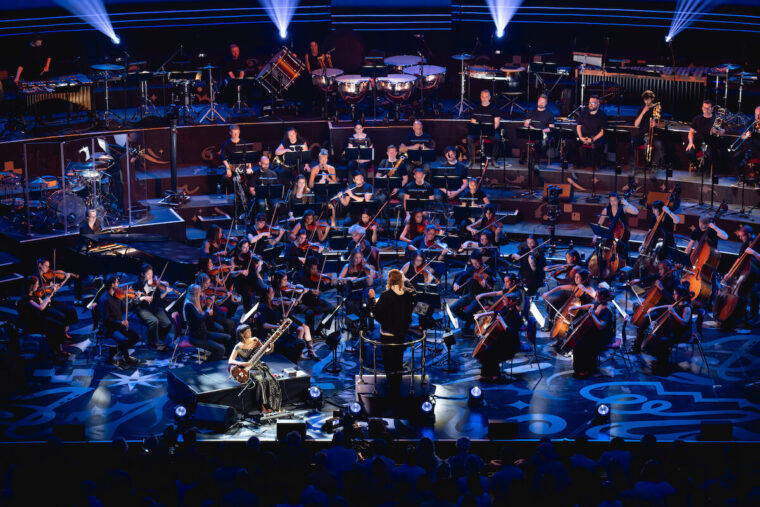
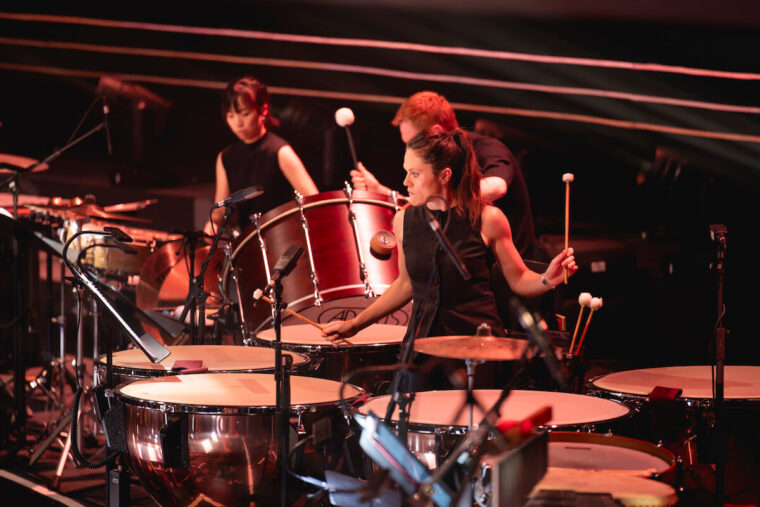
Shankar introduced the concert, explaining her creative journey through the three ‘Chapters’. The trilogy comprises music from the albums Forever, For Now, How Dark It Is Before Dawn, and We Return To Light, each made with different producers and collaborators. The stage was set with a full symphony orchestra with a battery of percussion, including a drum kit, with Shankar’s sitar perched on a low platform at the front.
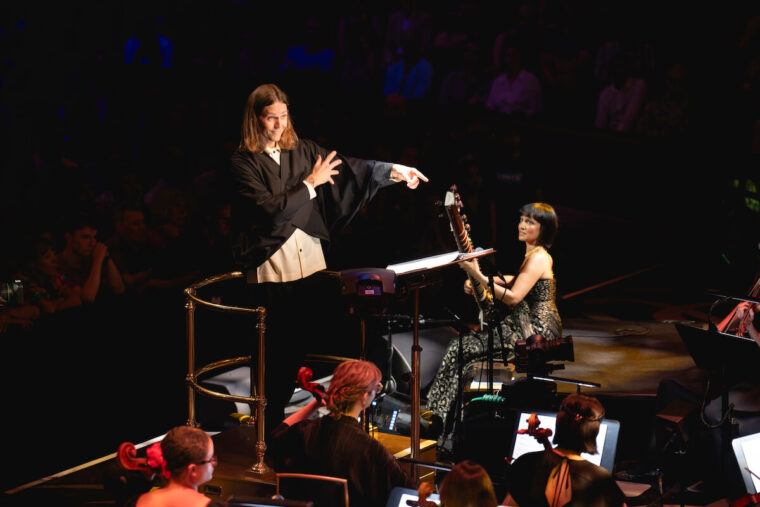
Shankar explained that Chapter 1, Forever, For Now, was her way of dealing with a painful event in her personal life, as she divorced British director Joe Wright in 2019. The music has New Age characteristics, with the orchestrations giving it a wider emotional palette and set of musical references than the original recordings. Opening with an ascending myxolydian mode scale and the woody tones of a marimba figure, the music soon moved to a darker minor space with the strings picking up the conversational sitar melodies. Much of the music has this sense of a dialogue between the soloist and the orchestra. Gradually, things became more intense as a tabla-like rhythmic figure was introduced, leading to a final section that almost resembled an American Bluegrass hoedown with a Bollywood twist.
Chapter 2, How Dark It Is Before Dawn, represents nighttime, for Shankar, a place of safety and solace. Opening with a pensive sitar motif sitting over a set of harmonies that wouldn’t be out of place on a Coldplay record, the music has much more inner tension than a straight pop record, with the sitarist’s swooping microtonal lines and use of dissonance building to a filmic climax.
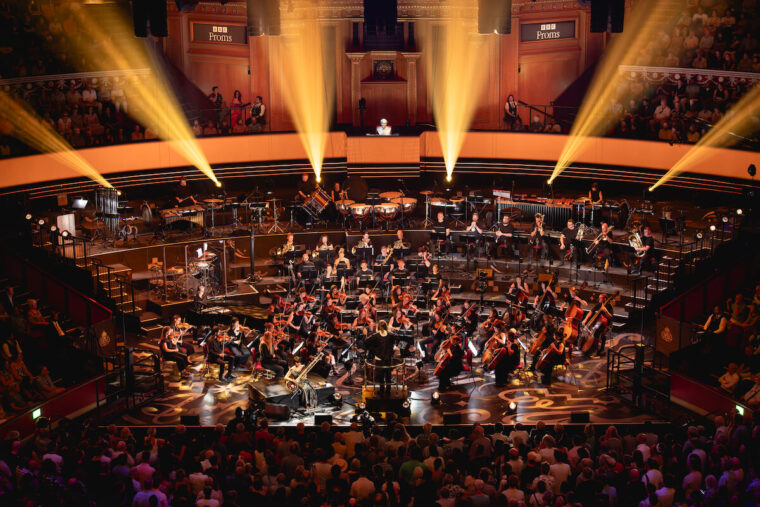
Chapter 3 , We Return To Light, opened with a folky flute tune with an insinuating sitar countermelody weaving around it. With an ascending arpeggiated marimba figure that then moved to the strings, I was reminded of Shankar’s layered episodic approach of Mike Oldfield’s Tubular Bells. A fat brass riff developed into a drum kit-driven 6/8 then 4/4 feel, building into a Keith Moon-esque frenzy with Shankar laying into the sitar like an Indian rock goddess.
Indian music was heard for the first time at the Proms in 1971 with sitarist Imran Khan and tabla player Latif Ahmed Khan playing two ragas, but Shankar’s Prom felt like a representation of where the Indian diaspora has reached. Able to honour its own heritage but unafraid to blend with other cultures and traditions. The audience gave her a rapturous reception reflective of the powerful emotional journey delivered.
Evenings like this are what the Proms should be about. If you have never been to one, there is a wide diversity of programming with something for everyone, and it is a magical experience. Or you can always listen live on Radio 3, and you’ll find Anoushka Shankar – ‘Chapters’ on BBC Sounds for the next two months
For the full Proms programme, check here
Anoushka Shankar – ‘Chapters’
BBC Proms
Royal Albert Hall
Kensington Gore,
South Kensington,
London SW7 2AP
Looking for something different? Check our review of Brigadoon, currently showing at Regent’s Park Open Air Theatre

Anoushka and conductor Robert Ames with the London Contemporary Orchestra created the most beautiful and freshly original performance I have seen for a long time. We were enraptured from the start and mesmerised by the enigmatic stars of the show. I was transfixed the magic and by the professionalism and generosity of all the performers. Anoushka’s virtuosity and Roberts smooth guidance enabled the transfer of the highly creative composition and arrangement to our hearts and minds. I pay my sincerest homage to all the artists involved.
Thank you.