Last Updated on June 13, 2026
A Fabulous Frolic, Magnificent Vocals and a Deeper Message
4.0 out of 5.0 starsTravelling to Garsington for a summer opera spectacular is always a treat. The stunning setting, together with an evening of exemplary opera, seldom disappoints. Der Rosenkavalier, a late-Romantic opera by Richard Strauss, has a fairytale storyline perfect for an idyllic evening in the country. This production, directed by Bruno Ravella with design by Gary McCann, was originally staged in 2021 to critical acclaim, but to a limited audience following lockdown. Set in decadent post-war 1950s Vienna, where fading aristocratic traditions stand in contrast to a rapidly modernising world, the work’s underlying messages seem particularly powerful.

The story of Der Rosenkavalier follows the Marschallin (Matilda Sterby, making her Garsington debut) and her young lover, Octavian (Niamh O’Sullivan). Blending farce, romance, and wisdom, this opera is a tribute to the beauty and power of the female voice, with three female leads (one in a trouser role). The Marschallin, an older aristocratic lady, is one of the most challenging roles for a lyric-dramatic soprano. While Sterby delivered beautiful and technically accomplished vocals, her Marilyn Monroesque Marschallin somehow seemed a little too young for the role (although the Marschallin is actually meant to be an ancient 32 years old). The monologue ‘Da geht er hin’ and her following aria, both key moments in Der Rosenkavalier, lacked emotional depth for me. But perhaps I’m setting the bar too high.
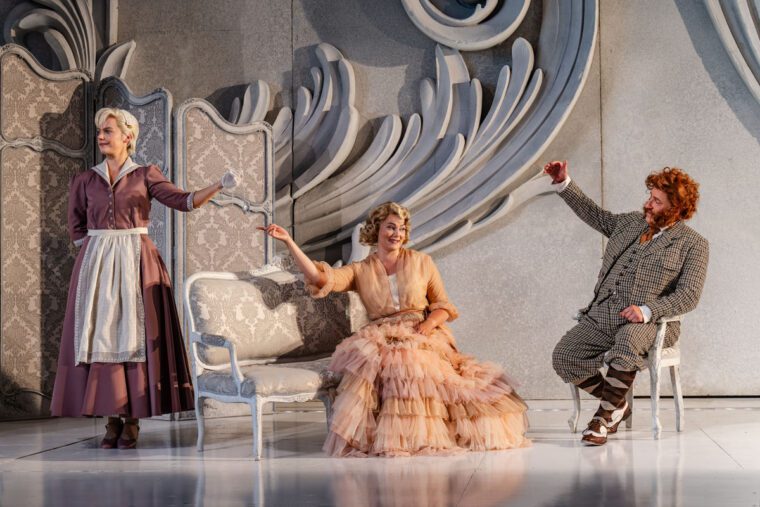
When I first saw Der Rosenkavalier in 2016, I was looking after some American friends. They’d tried and failed to get tickets to see Renée Fleming in what was one of her best-known roles at the Met. The same production was staged at the Royal Opera House, and we managed to find three seats in the Side Stalls Circle. Not the best place in the house to see or hear opera, but in this classic and iconic production, Renée Fleming (who must have been around 55 at the time) sang with such brilliance that one of my American friends, normally cheerful and outgoing, was visibly moved to tears, and the pivotal sentiment of the opera ‘Die Zeit, die ist ein sonderbar Ding’ was crystal clear.
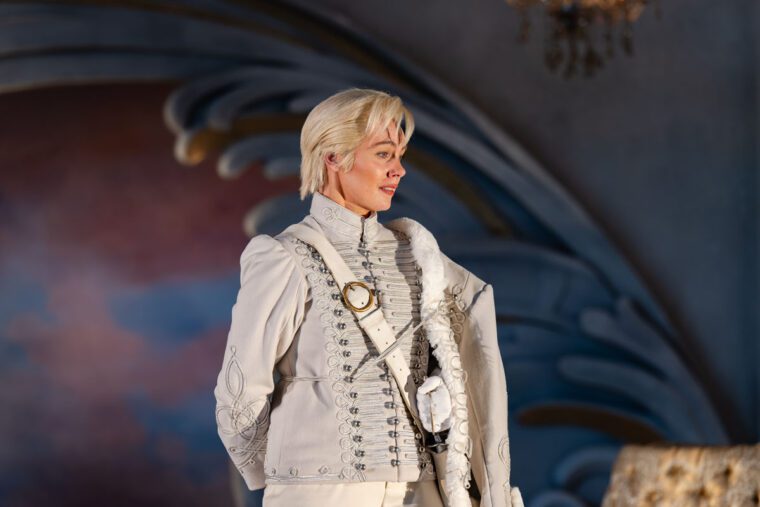
Octavian, the Marschallin’s 17-year-old lover, was adorable both in trousers and as a wickedly coy and flirtatious Mariandel. A mellifluous richness of tone, brilliantly contrasted with a highly characterised maid from the country when Mariandel was seducing Baron Ochs.
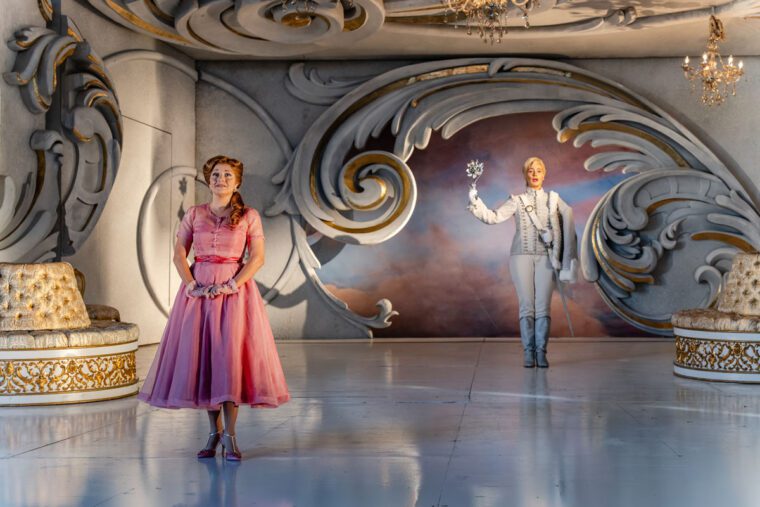
Soraya Mafi’s Sophie was charming and perfectly positioned, with light, floating top notes and a glorious lyricism throughout.
The role of Baron Ochs was brilliantly performed by Andreas Bauer Kanabas, with vocals that offered a superb range and immaculate characterisation of the philandering, boorish aristocrat. Although the original opera was set in 1740s Vienna, the swaggering Viennese waltzes that Ochs performs are more of a musical nostalgia machine, something that audiences at the time of the first performance would perhaps have heard as contemporary music of their childhood. This Garsington production made excellent use of the musical structure, with exaggerated rhythmic hesitations and orchestral flourishes, emphasised by the (as always) brilliant blocking by the chorus and soloists.
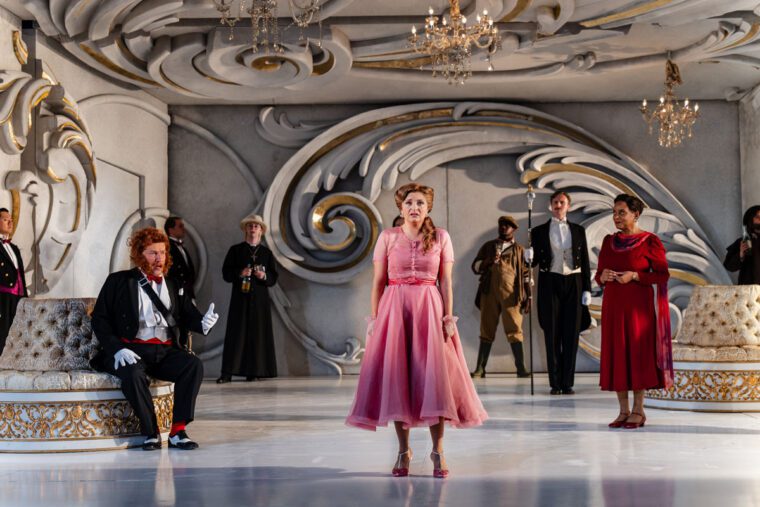
A master orchestrator, even these comforting numbers from Strauss often have a bittersweet undercurrent, and they provide a striking punctuation to the rich, late romantic arias, duets and trios from the three female leads.
The central theme of Der Rosenkavalier is the passage of time. From the opening bedroom scene, where Octavian and the Marschallin are immersed in a fleeting love affair, the opera moves toward his first encounter with Sophie. The Marschallin, though, already knows that Octavian will leave her. In the magical Presentation of the Rose, Strauss’s shimmering orchestration surrounds two bright, youthful voices as they intertwine. The scene captures ‘love at first sight’, expressed not through action but through the beauty of the vocal lines themselves. When Baron Ochs appears, on paper an aristocrat who will improve the social standing of Sophie’s nouveau-riche family, but nevertheless a crude and vulgar oaf, Octavian and Sophie pledge themselves to each other.
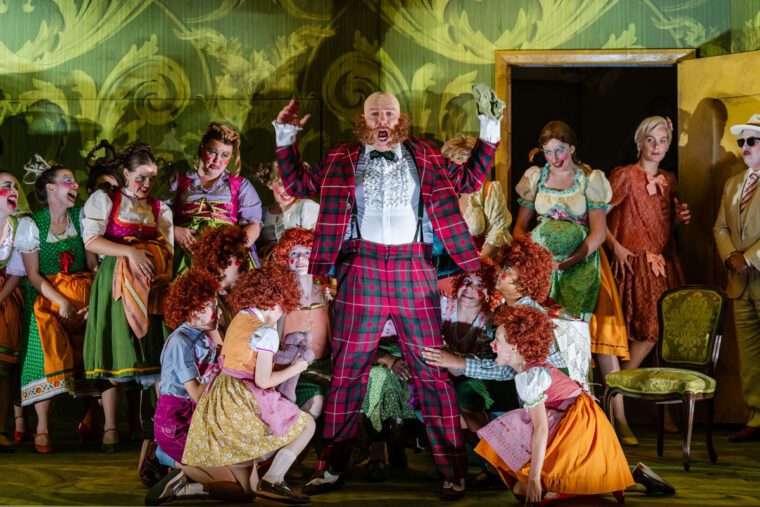
Ochs is trapped by Octavian, disguising himself again as Mariandel and bringing along a whole consort of pregnant lovers, wives and children to challenge the Baron. When the Marschallin appears, she instantly understands that Octavian truly loves Sophie, and gracefully relinquishes him. Both the final trio, with music of tremendous emotional depth, and Octavian and Sophie’s luminous closing duet were brilliant moments in an evening that successfully married pure entertainment with deeper underlying messages.
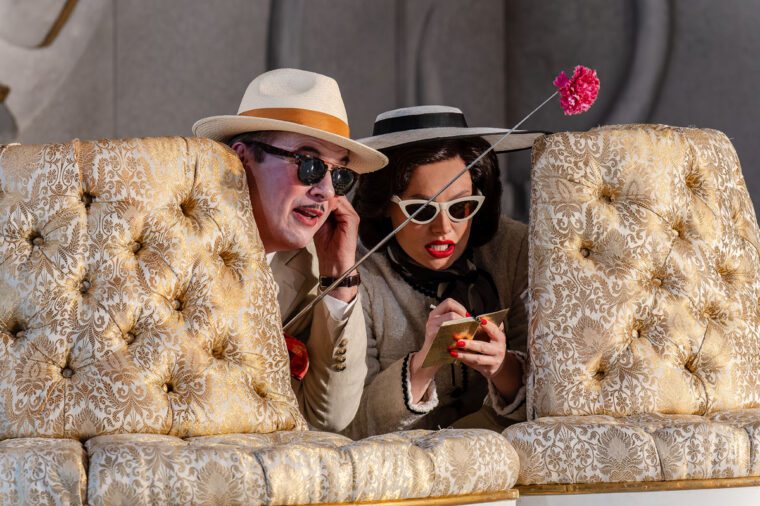
The Philharmonia Orchestra, conducted by Finnegan Downie Dear, for the most part, made an excellent job of Strauss’ complex and technically challenging score. Both Garsington’s adult and youth choruses performed stunningly, with some charming characterisation and supporting roles throughout the opera were immaculate. I’m sure everyone left just a little bit in love with Kamari J’siah Robinson, the charismatic cupid who popped up whenever love was in the air. The Garsington magic is very much still there.
We also had the pleasure of dining during the long interval in the Boundary Room Restaurant. While the weather turned out to be excellent last night, I’m always cautious early in the season, and the catered option at Garsington, with chef Will Devlin of Acre now running the kitchen, offered an excellent range of starters, mains, and desserts, all served in comfort. We thoroughly enjoyed our meal and can genuinely recommend it if you prefer not to picnic.
Rosenkavalier runs from 28 May to 29 June 2026
Wormsley Estate, Stokenchurch, Buckinghamshire, HP14 3YG
For more summer opera in and around London, do check our Summer Opera Festival Previews

Leave a Reply