Last Updated on December 27, 2021
How to make an Authentic Greek Moussaka
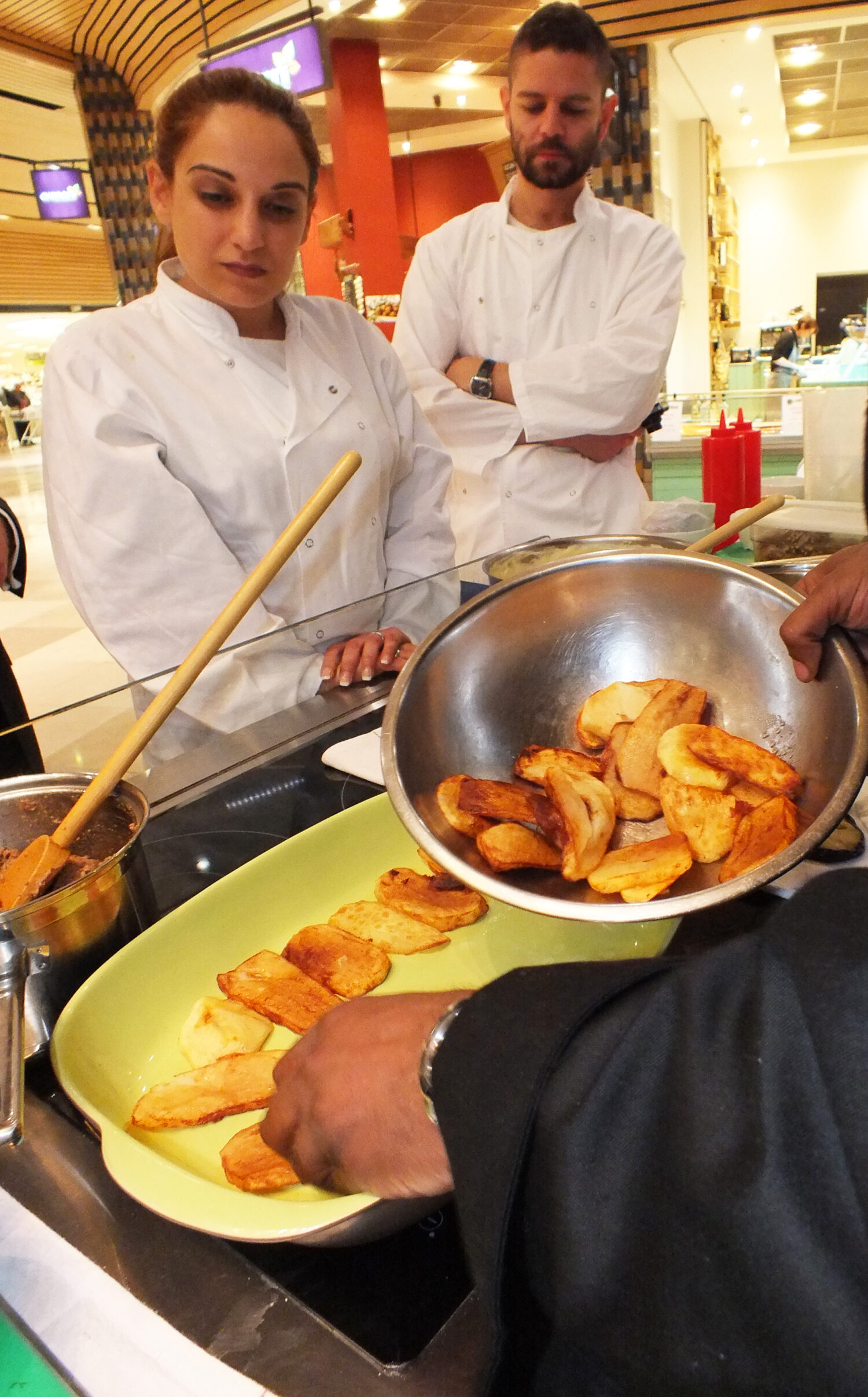
The Real Greek is a group of restaurants in London serving authentic Greek food. The first restaurant opened in Hoxton and since then the group has changed hands a couple of times and expanded so that there are now seven restaurants in London including one in each of the Westfield Shopping Centres. I was invited to try making moussaka with them at Westfield Stratford and was curious enough to go along!
Our evening started, not with Moussaka but by learning to make taramasalata and a beetroot and orange salad. And, alongside the chef, Alan and his assistant Monika was fellow blogger Sophia from Digital Scullery who kept us all amused by her animated discussions with the (Greek), operations director, Christos of the Real Greek about what was and what was not authentic Greek cookery. She’s much more of an expert than me…and you can read her blog post about the event here. It was, if I am honest, a pretty good Anglicisation of a scene from ‘My Big Fat Greek Wedding’. And Giulia from Mondo Mulia, a lovely Italian blogger.
The end results were really very good.
Taramasalata, made from scratch was simply smoked cod’s roe, lemon juice, soaked bread and olive oil, beaten to a smooth paste and garnished with some herbs.
The Moussaka was delicious, very rich, deep flavoured meat with fabulous smokey aubergines topped with a bechamel that really didn’t need the cheese you sometimes see added to moussaka. Apparently, Moussaka is a dish that every Greek thinks they know how to cook in the best way. Recipes are handed down through families…and are kept a guarded secret. We were lucky that ‘The Real Greek’ chose to share their recipe with us.
I’ve made my own moussaka before and to be honest, this recipe is not so different to the one I use myself. I know Sophia thought the cinnamon was unusual, but, even though I am the Brit it’s something I HAVE always added (perhaps my Greek boyfriend’s mum got me doing that). I’ve never tried the addition of potatoes before, but they DID work very well, as a counter to the rich aubergine and meat mixture. And, because I thought it was ‘Greek’ my own version has always had copious amounts of garlic and oregano. But, I didn’t miss either ingredient.

Afterwards, we went to try some of the dishes at the main restaurant. I was particularly intrigued by the kamaiki ice-cream, which was made with mastic. It’s an ingredient I’ve seen discussed on other blogs. Added to the ice-cream it gave a piney scent and a gooey texture that was a bit like ice-cream toffee. Fabulous. But, I’ve been invited back to do a full review so I will save any further discussion till then.
Disclosure: I attended this event as a guest of The Real Greek restaurant

Hey Fiona! Thanks for the mention and the adorable pic 🙂
Lovely meeting you too by the way and I hope we’ll bump into each other again.
Thanks for the write up x
Really sorry you couldn’t make it Gill…hope to meet you at something else!
Mastixa is a very unusual product from the island of Chios in Greece. It is basically the gum from the bark of the Mastixa tree, and looks very much like pine gum. It is used in almost everything and you can buy it in the supermarkets in Greece in tubs. A spoonful of this “paste” is often added to a glass of water to make a refreshing drink, but is also used in many deserts and sweets. Believe it or not, but they even have mastixa flavoured cola!
the ice-cream was really good. But I’d read a blog post by someone a few weeks ago who tried to cook with Mastic and didn’t like it. so I was curious;)