“I would happily die with a bottle of white Burgundy in my mouth” – Julia Child
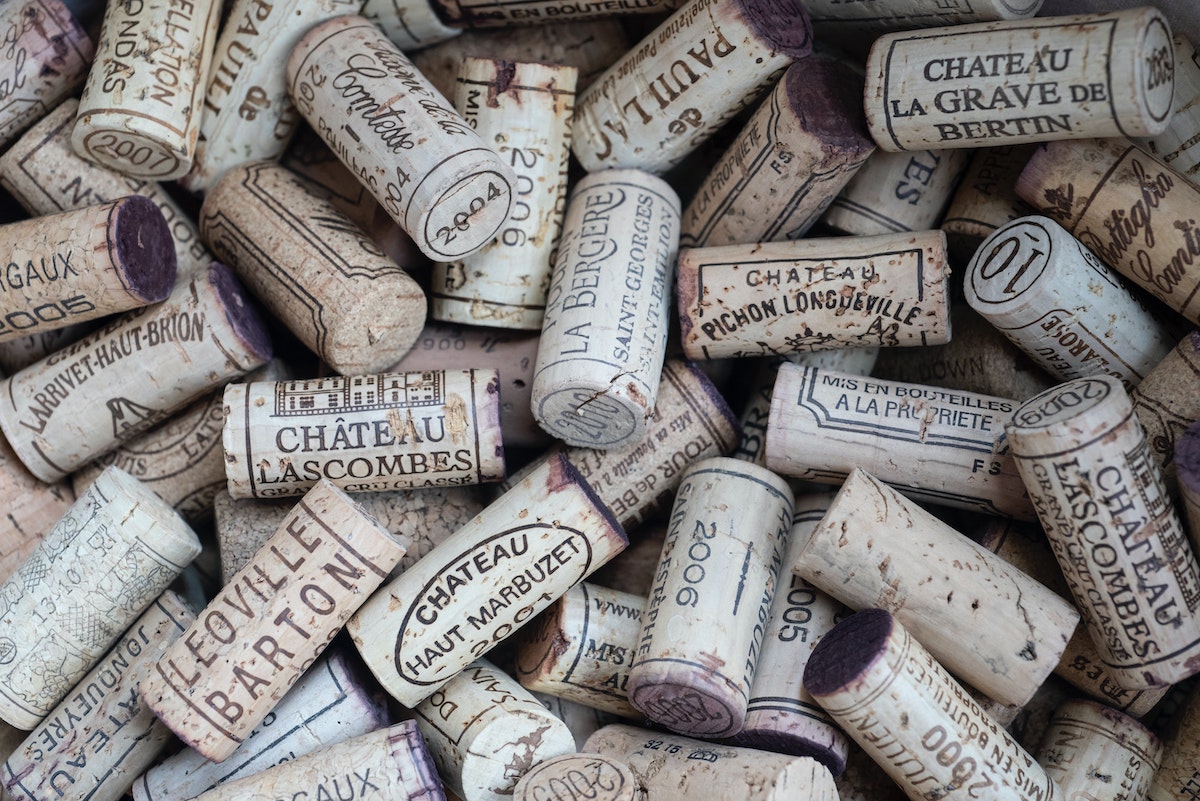
I started drinking Chardonnay in the 1980s. Big-flavoured, oaky, high alcohol wines from Australia and California that were branded by their grape variety rather than by region or terroir. No dinner or drinks party was complete without the consumption of multiple bottles and the popular soap Footballer’s Wives even had a character, Chardonnay Lane, a glamour model named after the grape. Like many people I hadn’t understood that the lean, elegant white wines from Burgundy’s Chablis region were also made with the Chardonnay grape. This realisation opened up a new world of vinous discovery as I started to explore the wider Burgundy wine region.
Contents
Geography, Weather and Terroir
Situated in eastern France it stretches from Auxerre in the north to Mâcon in the south and includes some of the world’s great white wine-growing areas. Most white Burgundy is made from the Chardonnay grape grown on limestone, although there are some wines that use the Sauvignon Blanc, Aligoté, Pinot Gris or Pinot Blanc varietals. The weather in the region is unpredictable with cold winters and warm summers and the danger of spring frosts and hailstorms in the summer. The changeable weather is reflected in the variable quality of the wines year-on-year. The growing season is long with the many south-eastern facing slopes catching the early morning sun.
Burgundy – History
Wine has been made in the Burgundy region from around the 1st century AD with evidence of commercial production from the 3rd century AD. By the Middle Ages, winemaking was controlled by Cistercian and Benedictine monks who became very skilled at the craft. They made the link between the ‘terroir’ (the quality of the land and surrounding environment) and the specific characteristics of the vines grown in those locations. They also started classifying the different ‘crus’, the hierarchical system that defines the quality of the various parcels of land within the Burgundian vineyards. There are four levels of classification within Burgundy which reflect the quality and potential of the ‘terroir’ rather than the wine itself. In the 14th century, the Papal Court moved to Avignon and Burgundy became established as the premier wine in Europe with the trade controlled by the Dukes of Burgundy and enabled by a better transport infrastructure.
By the 17th century, the vineyards had been bought up by local bourgeoisie merchant families but in time because of inheritance laws they were split up into smaller plots creating the fragmented ownership that is still the case today. In the 1930s the first wine co-operatives began to operate with much of the winemaking coming from ‘Domaines’, the Burgundian equivalent to the Chateau. Quality fell in the 1980s as production volume rose, but by the 1990s with a new generation of technically adept winemakers, Burgundy reestablished its position at the forefront of the wine market.
French Wine Classifications
French wines are labelled as belonging to one of three systems. The top wines fit into the AOC (or AOP) designation, (‘Appellation d’Origine Contrôlée’ which means ‘Controlled Designation of Origin’). They are guaranteed to have been grown and aged in specific locations using traditional methods. Wines falling into the IGP classification (‘Indication Geographique Protegee’ or ‘Protected Geographical Indication’) are also geographically focused and can be very well made and are often excellent value. Wines categorised as ‘Vin de France’ are only allowed to be marketed by their grape variety and their vintage but not by region and are the modern equivalent of ‘Table Wine’ or Vin de Table’.
Burgundy Classifications
Within Burgundy, wine classification is taken to another level! Grand Cru and Premier Cru are the top two levels with the wines assigned to specific vineyards (clos) or plots of land (lieu-dit). “Village” wines are next in the hierarchy with unoaked entry-level Bourgogne Blanc providing a generic introduction to the white Burgundy experience with its apple, lemon and saline notes. There are four major white-wine-producing regions in Burgundy with 100 appellations. Each has its own characteristics and terroir which creates a huge diversity of flavour and experience for wines coming from one region and made primarily from one grape.
Chablis
The most northern part of Burgundy is the Chablis wine region with a temperature that is cooler than the more southerly regions. The climate impacts the flavour profile of the Chablis wines which are less full-flavoured, more acidic, elegant and restrained than their southern counterparts. The Grand Crus and Premier Crus may be kept in oak barrels to add an extra element of toastiness whereas their minerality comes from the Kimmeridgean soil created by the old oyster beds on the banks of the River Serein. The less prestigious AOC Chablis and Petit Chablis wines from the more outlying areas are unoaked, less alcoholic and without the richness that their swankier cousins have. They are however still eminently drinkable! We have been quaffing the Chartron et Trebuchet Chablis 2020 (£15.89). With lemon and lime on the nose, it is deliciously clean tasting with a long-lasting steely minerality that is great with oysters, cheese or poultry.
Côte d’Or: The Côte de Nuits
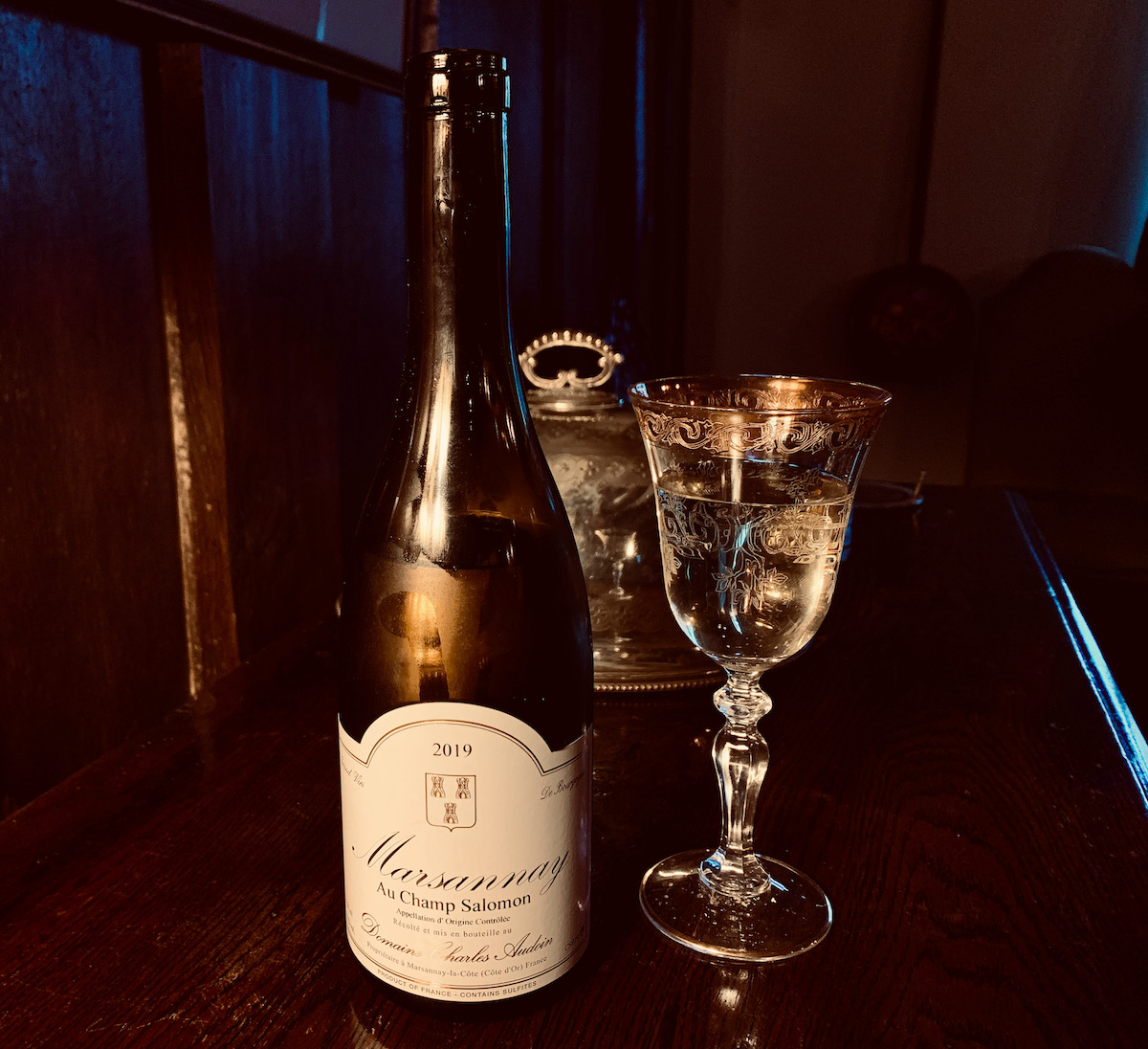
To the south-east of Chablis sits the Côte d’Or where some of the finest white wines in the world, with prices to match, are grown. The Côte d’Or is split into two sections; to the north is the Côte de Nuits where wonderful red wines are made with the Pinot Noir grape. Only 5% of wines from the region are white. The village of Marsannay, regarded as the ‘Golden Gate to the Côte de Nuits’, is the sole AOC village producing red, white and rosé wines. Over Christmas, we really enjoyed a bottle of Domaine Charles Audoin Marsannay Au Champ Salomon Blanc 2019 (£ 32.62). It’s big in the mouth, buttery with vanilla and oak notes and a long finish. Try it with chicken or pork in a mustard sauce or with Thai food.
Côte d’Or: The Côte de Beaune
To the south lies the Côte de Beaune based around the beautiful cobbled town of Beaune, the wine capital of Burgundy. This strip of land only 16 miles long and 3 miles wide houses seven out of the eight Grand Cru white Burgundy producers. Villages such as Meursault, Chassagne-Montrachet and Puligny-Montrachet create perfumed wines that are full-bodied with a balanced acidity and buttery apple and hazelnut notes. Domaine Michelot Meursault Les Narvaux 2016 (£55.74) is a wonderfully full-bodied expression of the Chardonnay grape with white peach, caramel, vanilla and citrus notes. This would make a perfect match with lobster bisque, mild cheese, cured meats or pasta.
The Côte Chalonnaise
The Côte Chalonnaise is further south and warmer than the Côte d’Or and is best known for its sparkling ‘Crémant de Bourgogne’ wines which are made using the same ‘methode traditionelle’ that is used for Champagne production. These wines are either ‘Blanc de Blanc’ (white grapes only), ‘Blanc’ (white and possibly red grapes) or Blanc de Noirs (white and black grapes). A terrific example of the local sparkler are the delicate bubbles of the Louis Bouillot Perle de Vigne Cremant de Bourgogne (£15.06). A blend of Chardonnay, Pinot Noir, Aligoté and Gamay it has a light straw colour, apple on the nose and a hint of sweetness with red berry and lychee notes. It’s a good value easy-drinking fizz with a touch of refinement.
Mâconnais
Mâconnais is the southernmost area in Burgundy with the warm climate and limestone soil creating well-structured and mostly unoaked wines with pineapple, peach and melon notes. Wines from the Mâconnais are amongst the best value white Burgundies with the best known being Pouilly-Fuissé where the first premier crus in the region have been approved. Chartron et Trebuchet Pouilly-Fuisse 2020 (£19.23) is a well balanced white full of white pear, grapefruit and stone notes and is perfect with roast salmon or roast chicken and poultry. Don’t drink it too cold!
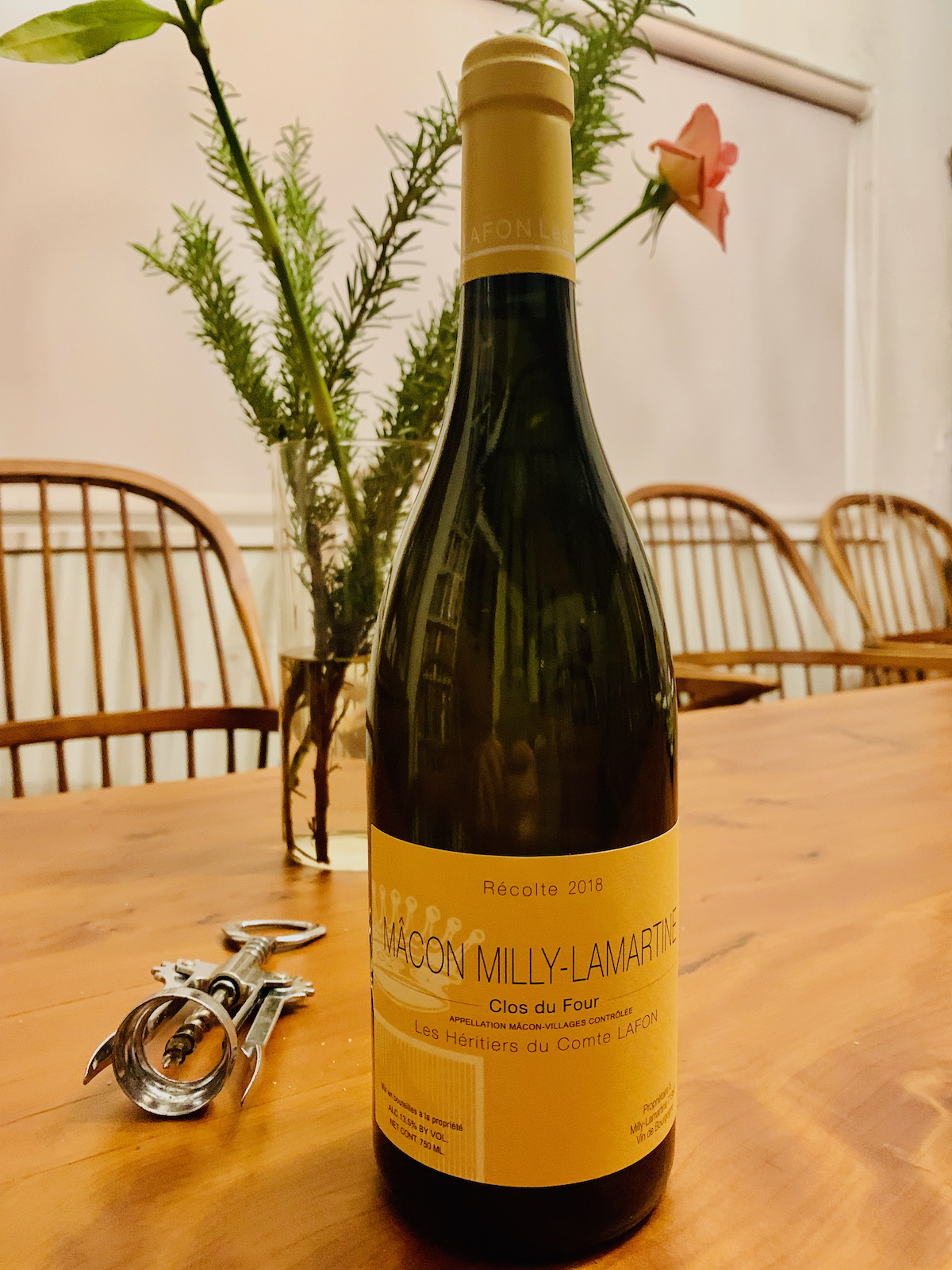
Other Mâconnais appellations to look out for include Saint-Véran, Viré-Clessé and Milly-Lamartine which is where our final wine Les Heritiers du Comte Lafon Macon Milly Lamartine Clos du Four 2018 (£27.85) is from. The Lafon family make very fine Meursault wines at Domaine des Comtes Lafon and that expertise has been brought to bear upon Les Heritiers. This single-vineyard, organic and biodynamic wine with its apple, honey and lime notes works well with creamy fish dishes or roast chicken.
I’m with Julia Child. I can’t think of any better way to go than glugging on a bottle of Meursault! The variety and quality of white Burgundy wines gives both the keen and casual imbiber huge scope for exploration and pleasure. If you don’t know these wines you should explore them.
All our wines were sourced from https://8wines.com/ , an online wine supplier with an excellent range of wines from around the world with over 250 quality wines from France and with tasting selections if you prefer some help exploring!
About Dr Adrian York
Dr Adrian York is a musician, academic and writer specialising in opera, theatre and restaurant reviews as well as writing and broadcasting about popular culture. He studied music under Jonathan Harvey at the University of Sussex and then at the Guildhall School of Music and brings unparalleled expertise to his craft.
With a day job lecturing in music at the University of Westminster and playing the piano at night at London’s Groucho Club, Dr York is a prize-winning writer with many articles published in London Unattached, The Independent, The Huffington Post and The Conversation as well as being a regular interviewee on the BBC.
Contact Adrian@London-Unattached.com
Comments
Claire Driversays
Some of my favourite wines but never in white, would love to try







Some of my favourite wines but never in white, would love to try
I’ve never tried a white burgundy before, I’m putting one on my shopping list