Last Updated on April 20, 2024
Superb Bertrand de Billy tames Verdi’s challenging masterpiece
Don Carlo is a complicated beast. There are multiple versions (in both French and Italian), a turbulent historical setting and many meaty themes to navigate, not to mention a complex score and a pretty long run time. Despite, or perhaps because of the above, this opera in five acts packs a punch.
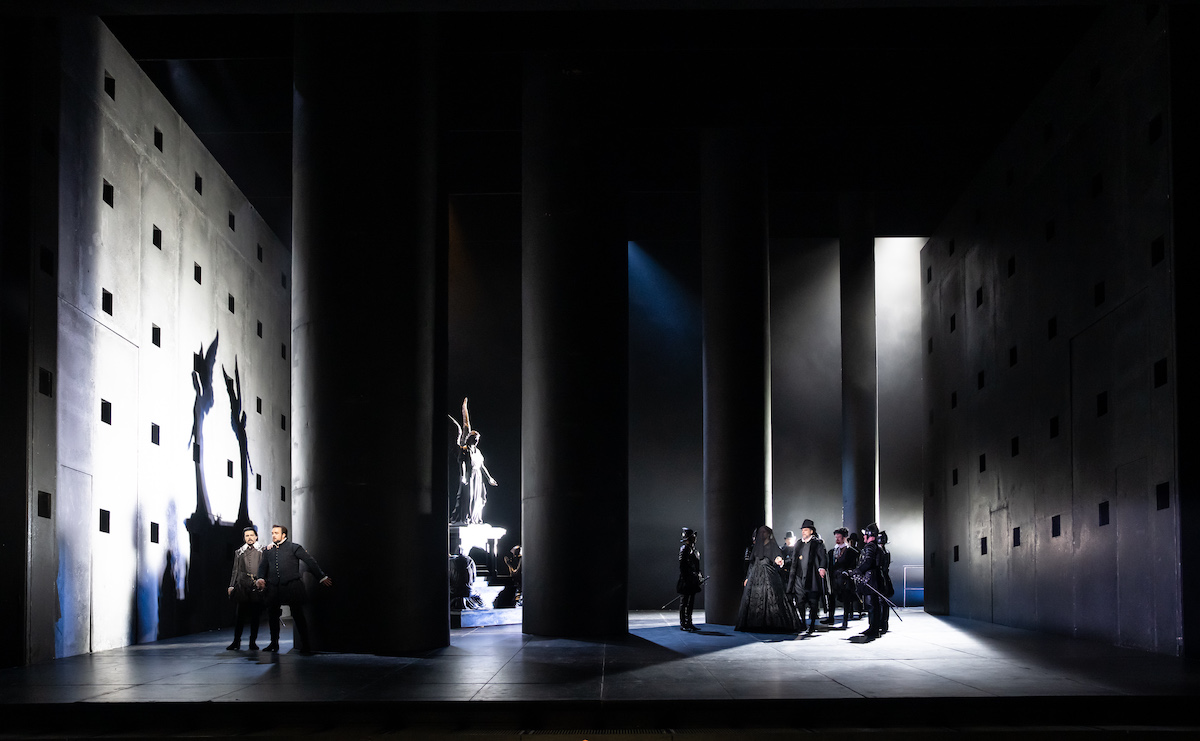
Confusingly, there is no definitive version of Don Carlo. This is Verdi’s 1886 ‘Moderna’ version, the last he worked on, and reintroduces some previously cut material. Sung in Italian (hence Don Carlo, rather than Don Carlos), the plot begins with Don Carlos and Elizabeth falling in love before Carlos’s father, King Philip, takes Elizabeth as his own bride. Carlos struggles with this blow whilst also trying to advocate for the oppressed people of Flanders with his childhood friend Rodrigo, which brings both of them under the suspicion of the King and the Grand Inquisitor.
Conductor Bertrand de Billy has masterful control over the Opera House orchestra and a very full stage. His experienced hand is cool as a cucumber during some potentially very difficult rhythmic sections and exposing orchestral solos. Almost too many moments are worth mentioning. Don Carlos is exquisitely embodied by a solitary clarinet at the start of Act I. French horns play wonderfully in unison in the second, not a note out of place and with a lovely tone. In Act III, a separate brass section plays off stage first on their own and then in unison with the orchestra, seamlessly. There are fantastic dynamics throughout, but especially in the final act. The cello solo in Act IV is haunting, illustrating the painful loneliness of the King. The terrifying Grand Inquisitor is accompanied by double basses and double bassoon with thundering timps as he proves the church’s dominance over the throne.

The singers rise to de Billy’s high standard. Lise Davidsen (Elizabeth) gives a powerful performance, her dramatic soprano voice cutting through with ease. She is able to tackle the (albeit short-lived) lighthearted romantic passages as capably as the later heartbroken, duty-bound ones.

Brian Jagde’s Don Carlos has a lovely rich voice that takes a little warming up but is worth the wait. Jagde’s Carlos keeps his sanity more than some portrayals, under the pressure of a tyrannical father who steals his bride-to-be and his duty to the people of Flanders for whom he feels responsible. There are particularly lovely moments with his confident Rodrigo (Luca Micheletti): heartfelt duets that foreshadow Rodrigo’s possible later betrayal. Rodrigo is a sort of will-he-won’t-he character, making the audience second guess his motives and where his heart lies.
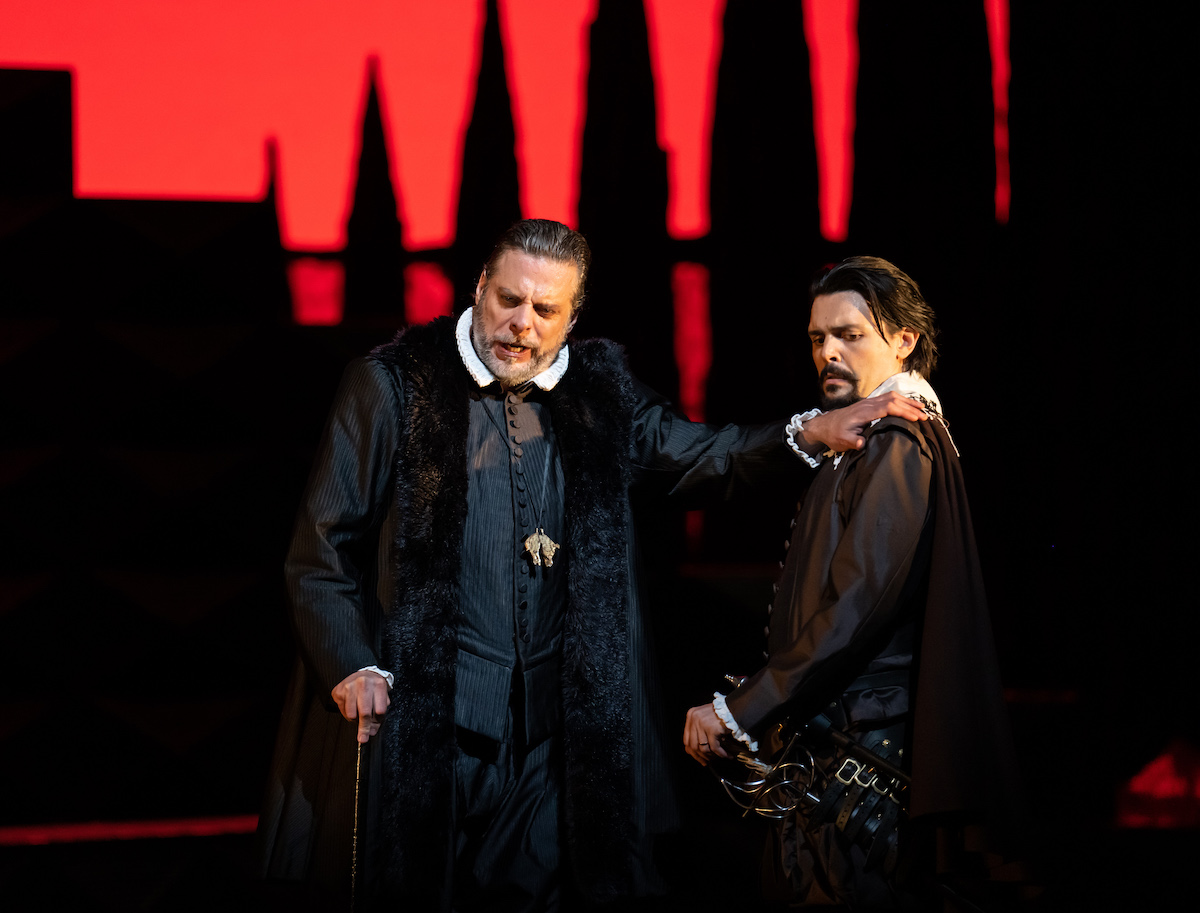
King Philip, played by John Relyea has great depth, with moments of tyrannical fury contrasting with an intimate portrayal of loneliness. Taras Shtonda’s Grand Inquisitor is unrelenting. Princess Eboli, Yulia Matochkina, ably tackles the character arc from lovesick to vengeful to repentant. Spritely Ella Taylor (Tebaldo) flits protectively around Elizabeth, their tone positively birdlike. The chorus gives a strong performance to match, amping up the drama.
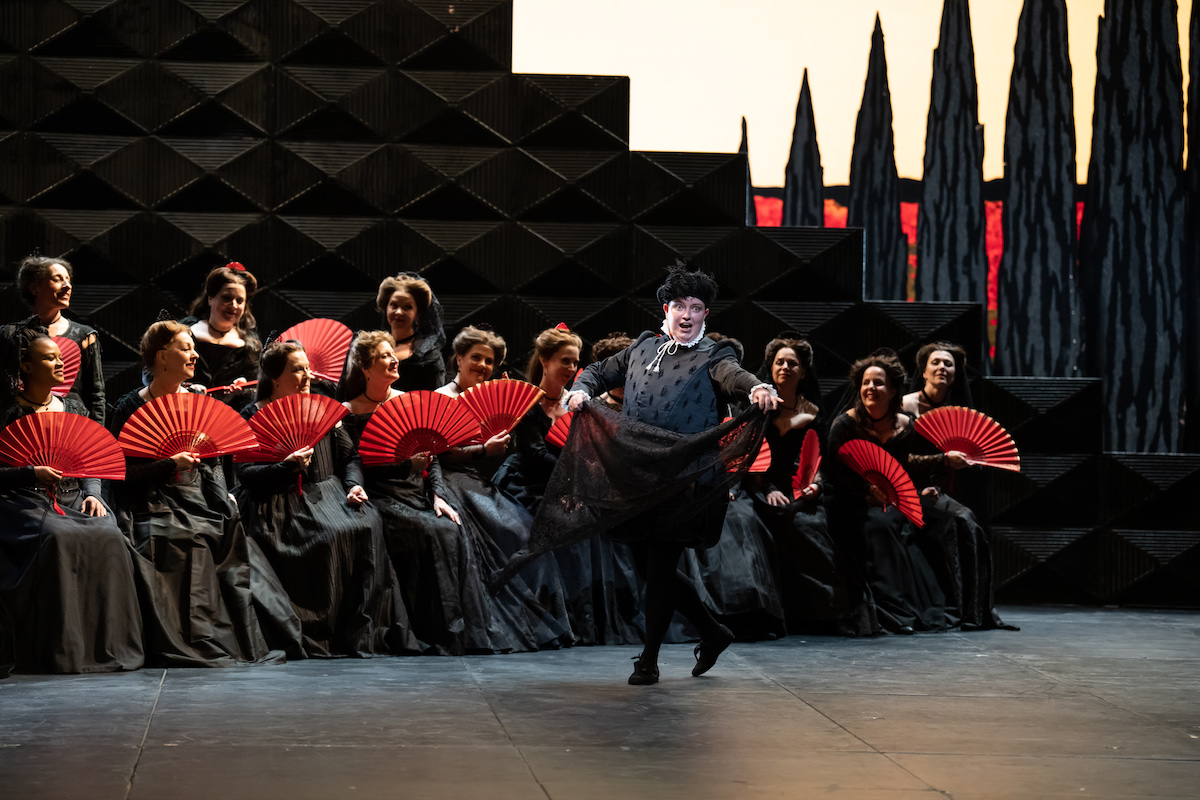
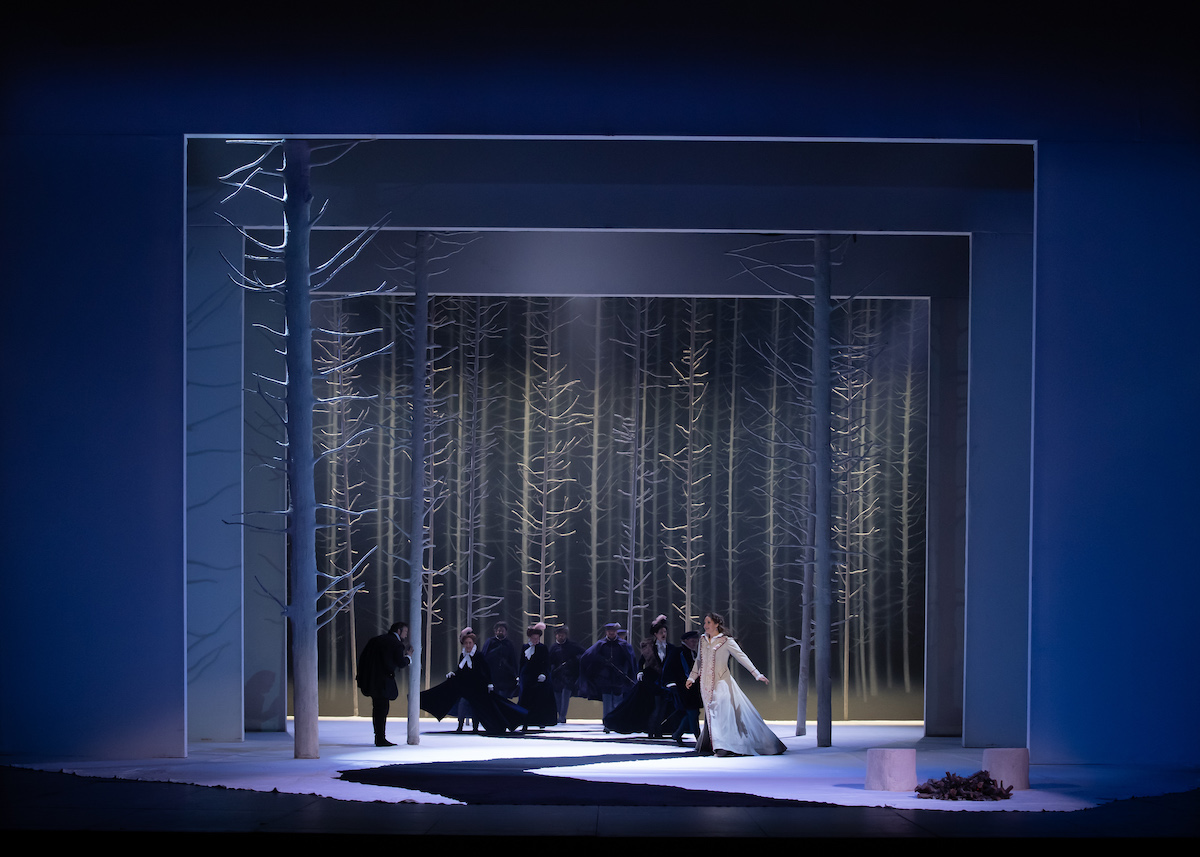
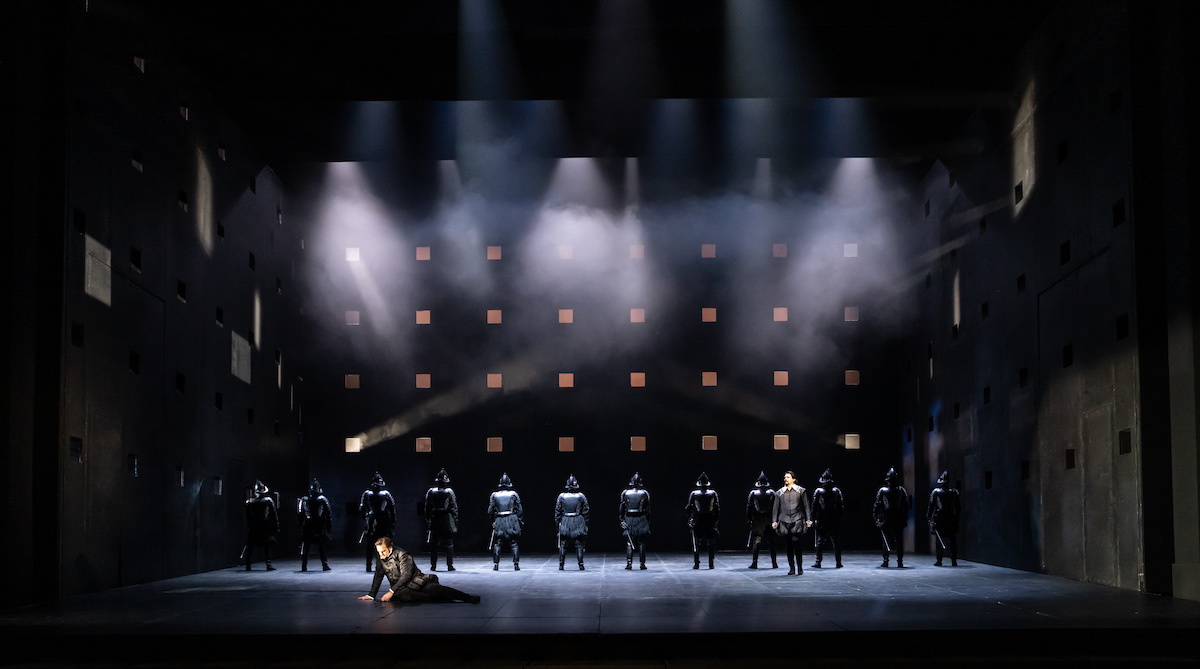
Nick Hytner’s 2008 production holds up, cutting through the busy stage and clarifying a convoluted plot. Designer Bob Crowley somehow marries a modern, geometric set with period costumes without looking farcical. The set features a lot of diagonals or bisections – perhaps drawing from the thematic dichotomies of church vs state, and free will vs duty to name but two. The rich colours: black, crimson and gold, along with chiaroscuro lighting from Mark Henderson do justice to the dramatic storyline and music.
Don Carlo has the potential to be impenetrable but is opened up by strong performances and staging. It is the orchestra that really shines under Bertrand de Billy, whose confidence pays off with a powerhouse performance that leaves the audience gasping for breath.
30 June – 15 July 2023
Royal Opera House
Bow St
London WC2E 9DD
Leave a Reply