Last Updated on June 1, 2026
Beethoven’s Cry for Liberation Impresses at Garsington
5.0 out of 5.0 stars
It is always a great pleasure to zip down the M40 to the glorious Wormsley Estate, the setting for Garsington Opera. With glorious weather, red kites wheeling in the sky and an opera house that feels at one with the landscape, it’s an extraordinary space to experience the most immersive of art forms.
Ludwig van Beethoven’s sole opera, Fidelio, which premiered in 1805, is a powerful testament to human resilience and the quest for justice.
The timely 2025 revival at Garsington Opera (June 27–July 22) reimagines John Cox’s iconic 2009 production, with Jamie Manton as revival director, while Douglas Boyd conducts Baroque specialists The English Concert. With Fidelio, there is often a tension between the lighter elements of the plot and the composer’s lofty concerns regarding humanity. Cox’s original production was criticised in some quarters for focusing too much on the comedic aspects of the plot, so I’m interested to see if this revival shifts the focus.
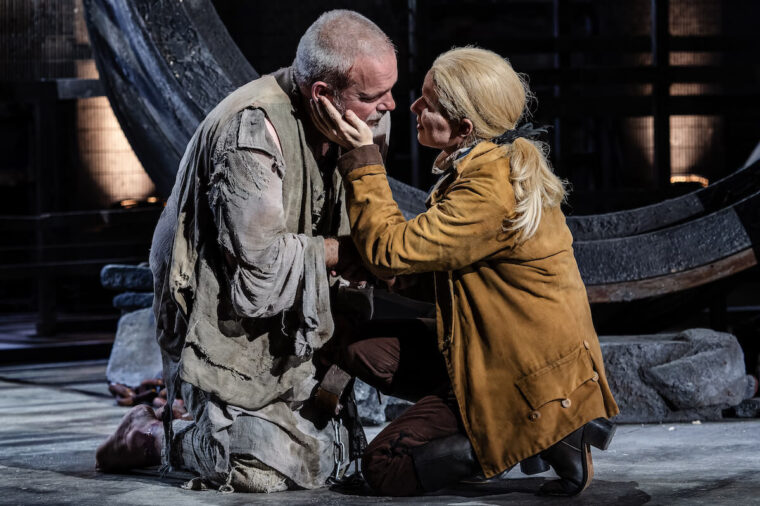
Fidelio endured a fraught creation process with Beethoven revising the opera three times (1805, 1806, 1814). The work, initially titled Leonore before the composer settled on Fidelio, has a libretto adapted from Jean-Nicolas Bouilly’s French text by Joseph Sonnleithner and then streamlined by Stephan von Breuning and Georg Treitschke. Set against the backdrop of Napoleonic-era turmoil, the opera reflects the composer’s belief in justice, liberty, and human dignity. Premiering in occupied Vienna in 1805, the production didn’t go down too well with the occupying French officers who made up the audience. Still, the opera has since become a mainstay of the repertoire. Beethoven’s struggles with the score were so intense that he abandoned the operatic form permanently.
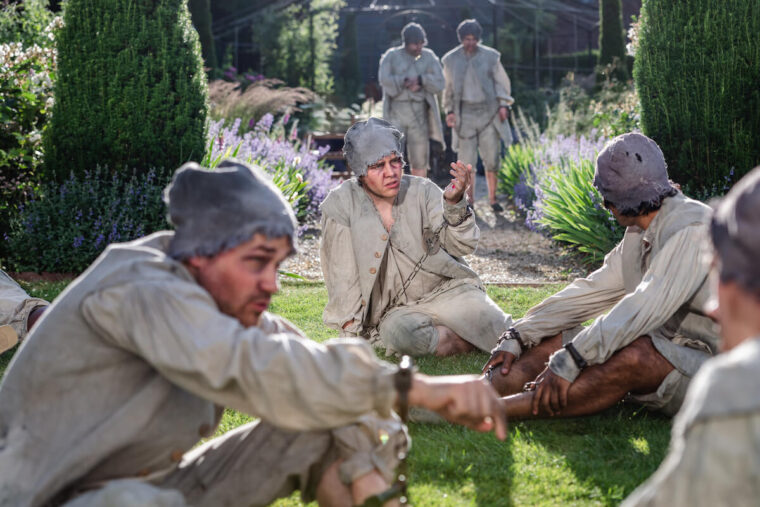
The two-act Fidelio is constructed in the form of a German Singspiel, a usually light-hearted or romantic operatic genre that integrates spoken word with musical material. The narrative is set in a Spanish prison near Seville, where Leonore disguises herself as the male guard Fidelio to rescue her husband, Florestan, who the tyrannical Don Pizarro has unjustly imprisoned. She gains the trust of jailer Rocco and his daughter Marzelline, who falls for Fidelio at the expense of her previous suitor, the hapless Jaquino. When Pizarro orders Florestan’s murder upon learning of an impending inspection, Leonore persuades Rocco to let prisoners briefly taste freedom, emerging in a haze of smoke from their subterranean incarceration.
In the second act, Florestan, starved and chained in a dungeon, laments his fate. As Pizarro attempts to kill him, Leonore intervenes, revealing her identity and brandishing a pistol. A trumpet call heralds the arrival of Minister Don Fernando, who frees Florestan, arrests Pizarro, and hails Leonore’s bravery. The finale celebrates marital fidelity and justice.
Gary McCann’s design features a rusty metal framework with a silo-shaped spiral staircase and an underground cistern where the imprisoned Florestan is kept. Grim and unrelenting and contrasting with Garsington’s verdant garden greenery, the metalwork is lit with the glint of natural sunlight, which hints at a better future.
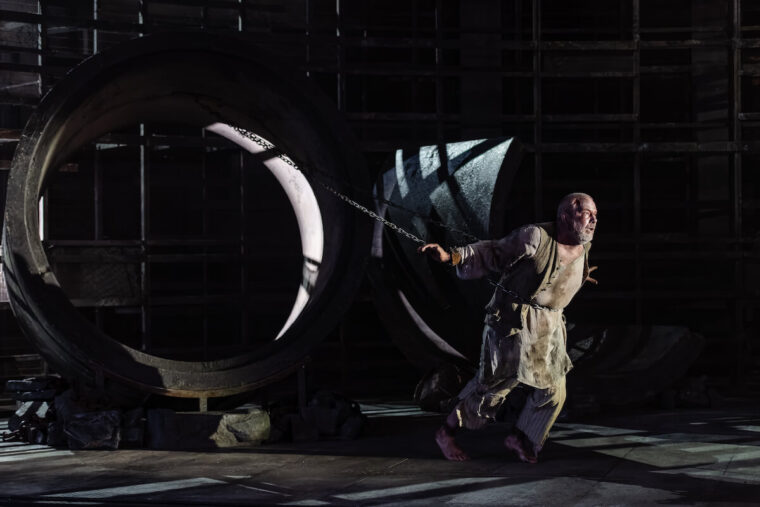
Florestan is played by the great tenor Robert Murray. Convincingly grizzled and deluded as Mitridate at Garsington and deliciously evil as Peter Quint in The Turn of the Screw at the ENO, he emerges at the start of the second act looking like a grizzled Old Testament prophet, his rags draped in Caravaggio-esque chiaroscuro, to deliver an impassioned Gott! Welch Dunkel hier! (“God! What darkness here!”). The long crescendo of the opening note is one of the great operatic aria openings, and Murray’s rendition is both moving and dramatic. His characterisation is impassioned, driven by a quest for justice and his love for Leonora in a way that makes Florestan feel like a flesh-and-blood character rather than a vehicle for Beethoven’s noble sentiments.
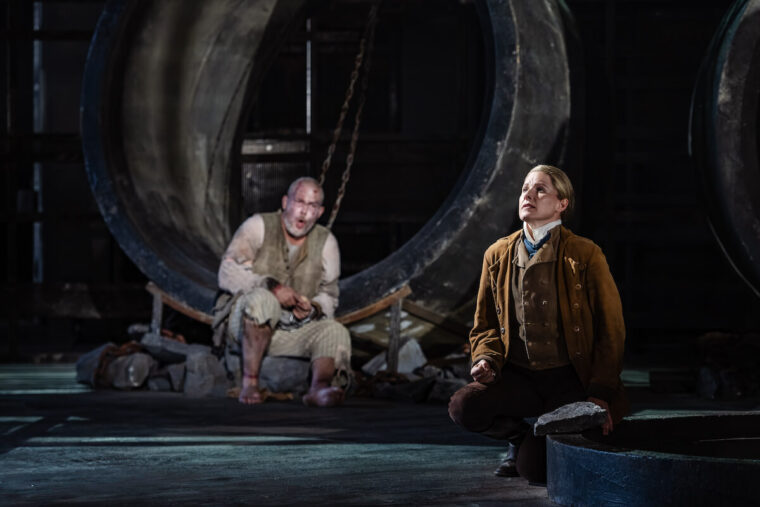
The tricky trouser role of Leonore/Fidelio is taken by lyric soprano Sally Matthews, who initially comes over dramatically as something of a panto leading boy but whose singing is powerful and dynamic. This Act I aria, “Abscheulicher! Wo eilst du hin?”, brings together moral fury, determination, and lyrical tenderness, culminating in a coloratura passage symbolising her courage. The scenes with Florestan are credible and touching, and Matthews does a sterling job balancing the complex emotional journey of the character.
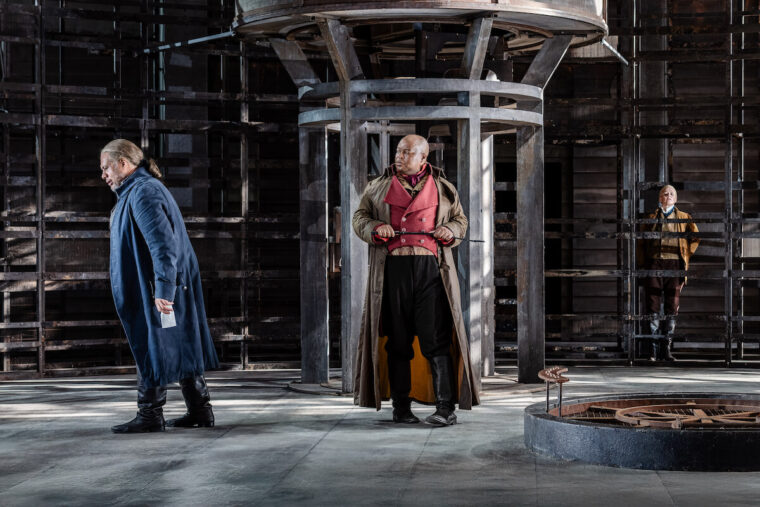
Every opera needs a convincing baddie. South African bass-baritone Musa Ngqungwana is an imposing Don Pizarro strutting around the stage in a maroon waistcoat, and his “Ha! Welch ein Augenblick!” is a thunderous showcase for his talents.
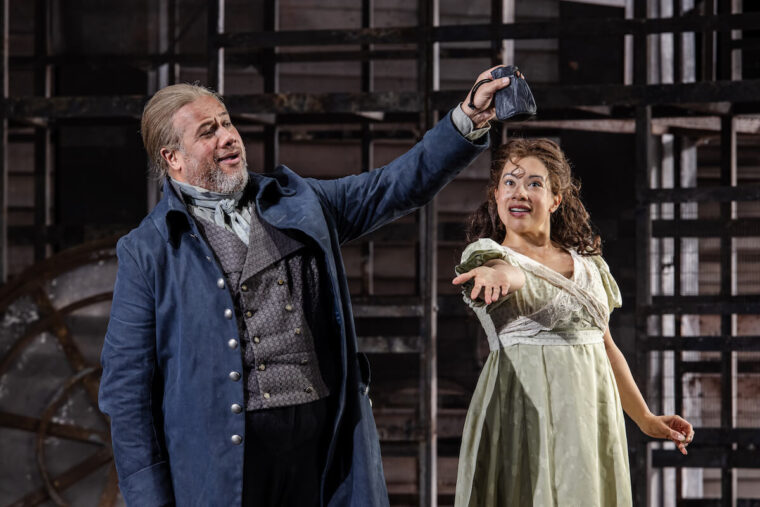
New Zealand bass Jonathan Lemalu delivers a nuanced performance in the role of the jailor Rocco, juggling his own sense of mortality, his paternalistic love for his daughter and moral and practical obligations. “Hat man nicht auch Gold beineben” is his pragmatic meditation on greed, delivered with a restrained warmth and charm.
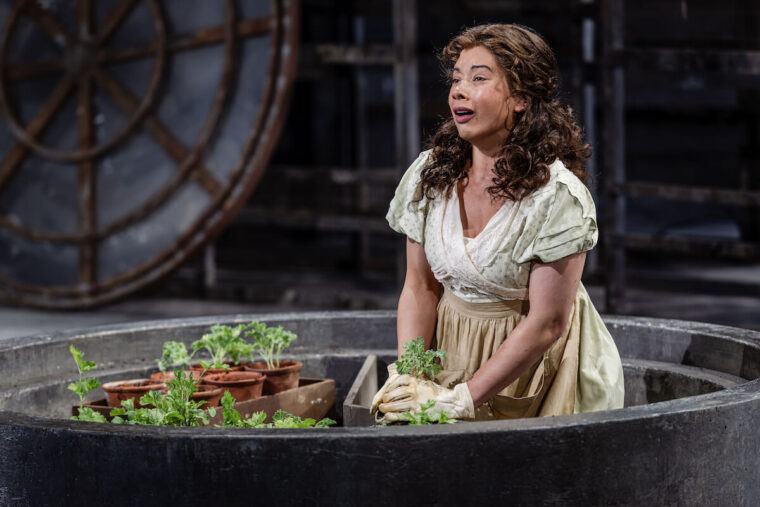
As the ingenue Marzelline, British soprano Isabelle Peters is light and charming, with a honeyed lyrical vocal tone and is decked out in a fetching Empire-line dress. I’d love to hear her singing some of the romantic Mozart roles.

A ponytailed and bearded tenor, Oliver Johnston, plays Marzelline’s jilted lover, Jaquino, as an exercise in frustration. As Jeník in Garsington’s The Bartered Bride, he showed a lyric romanticism, but here there was a more aggressive edge and tone to his voice and acting.
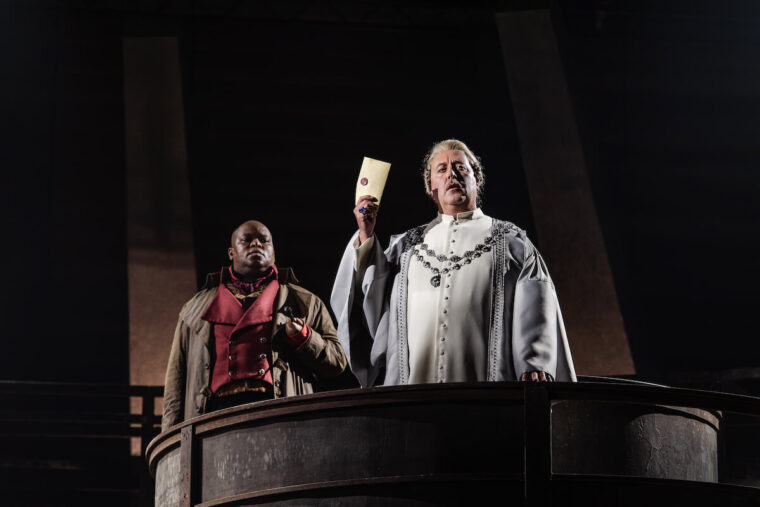
Splendid as a full-voiced Bottom in Britten’s A Midsummer Night’s Dream at Garsington, Anglo-Swiss baritone Richard Burkhard’s Don Fernando is both pious and authoritative, embodying the righteous power of the state but also very human in his response to seeing his friend Florestan imprisoned and in chains.
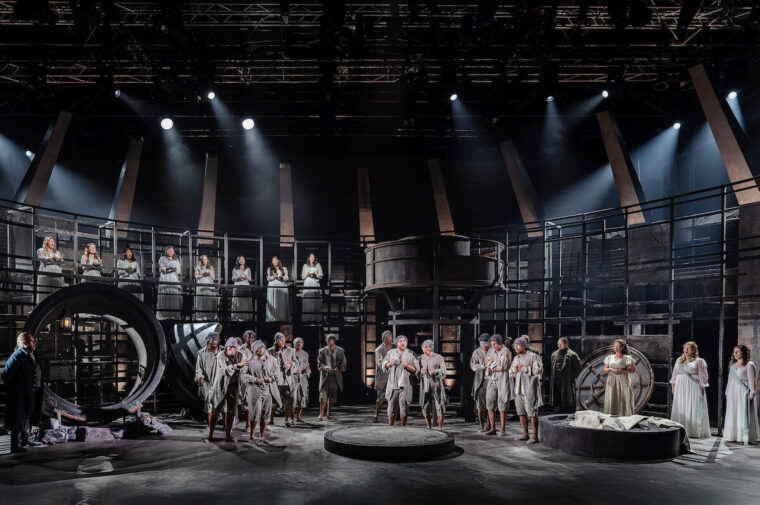
Revival Director Jamie Manton’s production brings out the human drama at the centre of Fidelio, rather than projecting idealistic sentiments or taking a comedic approach, which is dramatically compelling and makes sense of the sometimes conflicting elements that comprise the work. Douglas Boyd brings out crisp string articulations and plangent woodwind tones from The English Concert’s period instruments from the outset of the overture, highlighting Beethoven’s revolutionary dramatic and muscular orchestration. The band and chorus were let off their leash to thrilling effect in an electrifying finale with the “Prisoners’ Chorus” (O welche Lust) building to a radiant C-major climax.
I enjoyed this production of Fidelio much more than I thought I would. If you can get to Garsington and experience Beethoven’s cry for freedom embedded in a visceral score, you should go.
Fidelio
June 27–July 22
Garsington Opera
Wormsley Estate
Stokenchurch
Buckinghamshire
HP14 3YG

Leave a Reply