Last Updated on June 1, 2026
A Searing, Emotionally Charged Evening of Opera
4.5 out of 5.0 starsAfter a triumphant season-opening performance of Donizetti’s L’elisir d’amore, I’m back at Garsington tonight for The Queen of Spades, the 2nd production of their 2025 season. Reuniting the creative team of director Jack Furness, designer Tom Piper and conductor Douglas Boyd, from 2022’s well-received production of Dvorák’s Rusalka, Pyotr Ilyich Tchaikovsky’s The Queen of Spades with its themes of obsession, fate, and madness is a far cry from the frothy Italian romance of Donizetti’s opera. However, both works are thematically linked with a narrative framework of an outsider character in love with a seemingly unattainable social superior, but with predictably different outcomes. For designer Tom Piper, it’s a return to the St Petersburg world he created in the 2016 production of Tchaikovsky’s Eugene Onegin.

With a story based on Alexander Pushkin’s 1834 novella, The Queen of Spades is in three acts with a libretto by the composer’s brother, Modest Tchaikovsky. The composer Tchaikovsky created the opera’s score in just 44 days while in Florence between January and March 1890. The world premiere took place at the Mariinsky Theatre in Saint Petersburg on December 19, 1890, and the opera was met with both immediate critical acclaim and public enthusiasm that soon spread internationally.
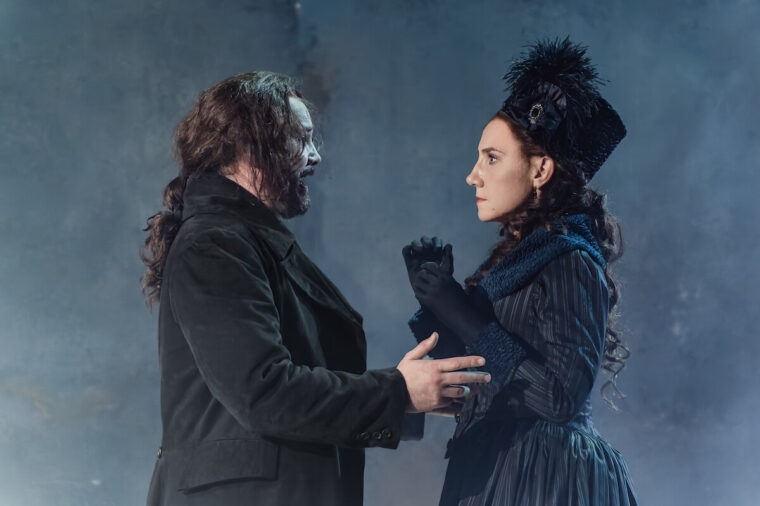
Set in the opulent world of late 18th-century St Petersburg, The Queen of Spades tells the story of Hermann, a soldier whose outsider status and obsessive nature isolate him from his peers. Hermann is consumed by two passions: his love for Lisa, the granddaughter of the enigmatic old Countess, and his obsessional fixation with the Countess’s closely guarded secret—a winning combination of three cards that promises fortune at the gambling table.
Lisa, engaged to the noble Prince Yeletsky, is drawn to Hermann’s intensity but soon finds herself caught in a web of manipulation and despair. The Countess, who in her youth had been the celebrated “Muscovite Venus” of Parisian society, is haunted by a prophecy; if she reveals the secret of the cards to a third suitor, she will die at their hand. Hermann’s relentless pursuit of the secret leads to tragedy, as love, greed, and dark psychological forces collide in a tragedy driven by the remorseless nature of fate.
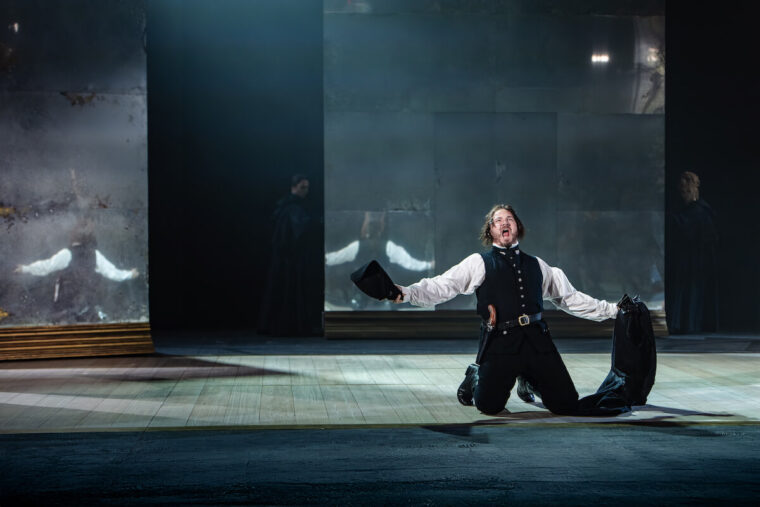
The Queen of Spades opens with a grey-black backdrop with four large mobile stage dividers that pivot, spin and slide to create new zones where the drama can unfold. One side of the dividers is mirrored, creating a world of reflections in which everyone is looking at everyone else and at one point turning into a wall of mirrors. At the centre back of the stage are two doors through which emerges a moving platform on which various sets are placed. It’s a clever use of the depth of the Garsington stage by director Jack Furness and designer Tom Piper that always creates a magical surprise when new elements emerge.
Herman, the antihero, is very much an outsider looking in at this society of privilege in which gambling is a necessary release from societal pressures. It’s a world which is as hierarchical as it is glamorous, as realised with the production’s gorgeous period costuming.

Germany-based Heldentenor Aaron Cawley, a fine actor and singer dressed in black with a tricorn hat, brings out the character’s tortured self-aware descent into madness with a voice that is expressive, dynamic and with a dark, thick-toned timbre that is forcefully projected. His aria ‘I don’t even know her name’ introduces his obsessive fascination with Lisa, setting the stage for his psychological unravelling and the irrational intensity of his feelings. With ‘Forgive me, celestial creature’, Cawley reveals his vulnerability and longing, while in Act 3 of The Queen of Spades, the aria ‘What is our life? A game!’ encapsulates his descent into madness and fatalism.
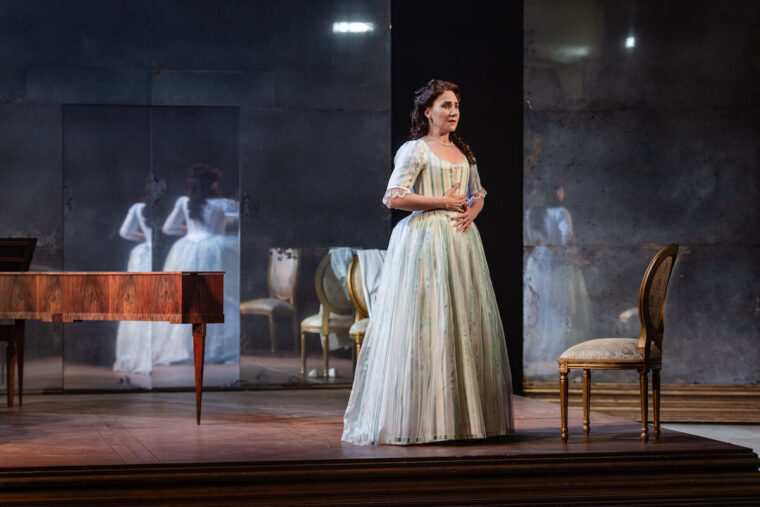
American soprano Laura Wilde as the opera’s love object Lisa first appears bathed in light, floating in a diaphanous blue outfit with a blue-feathered hat. Wilde’s silky voice is crystalline in its upper register but still has plenty of power. Her character is unable to resist the sheer intensity of Herman’s desire, eventually submitting to him. Wilde navigates the high-octane drama with aplomb, with her Act 1 arioso ‘Why these tears’ expressing her emotional turmoil and in Act 3, her arioso ‘I am worn out by grief’ capturing her despair as she is inevitably abandoned by Herman.
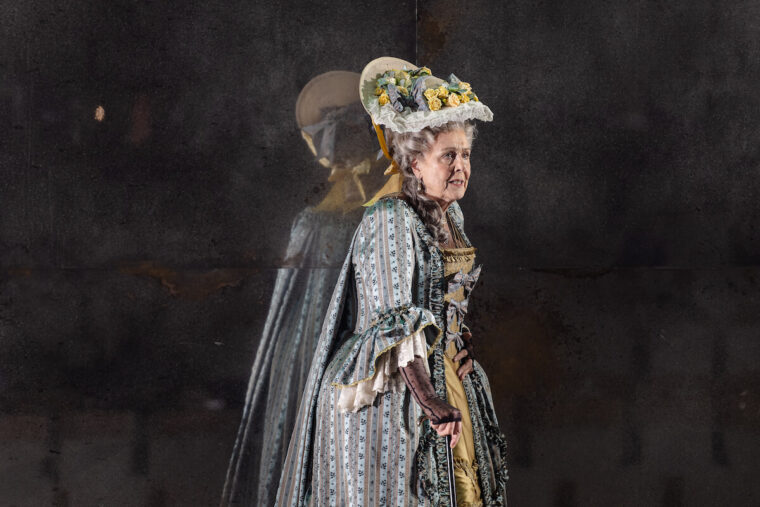
Veteran English mezzo-soprano Diana Montague is imperious as the Countess, with her highlight being the Act 2 aria sung in French ‘Je crains de lui parler la nuit’ (‘I fear to talk with him at night’) that reaches back to her past glories at the court of Versailles. If the voice has lost a little of its Wagnerian heft, it’s more than made up for by a fine sense of characterisation.
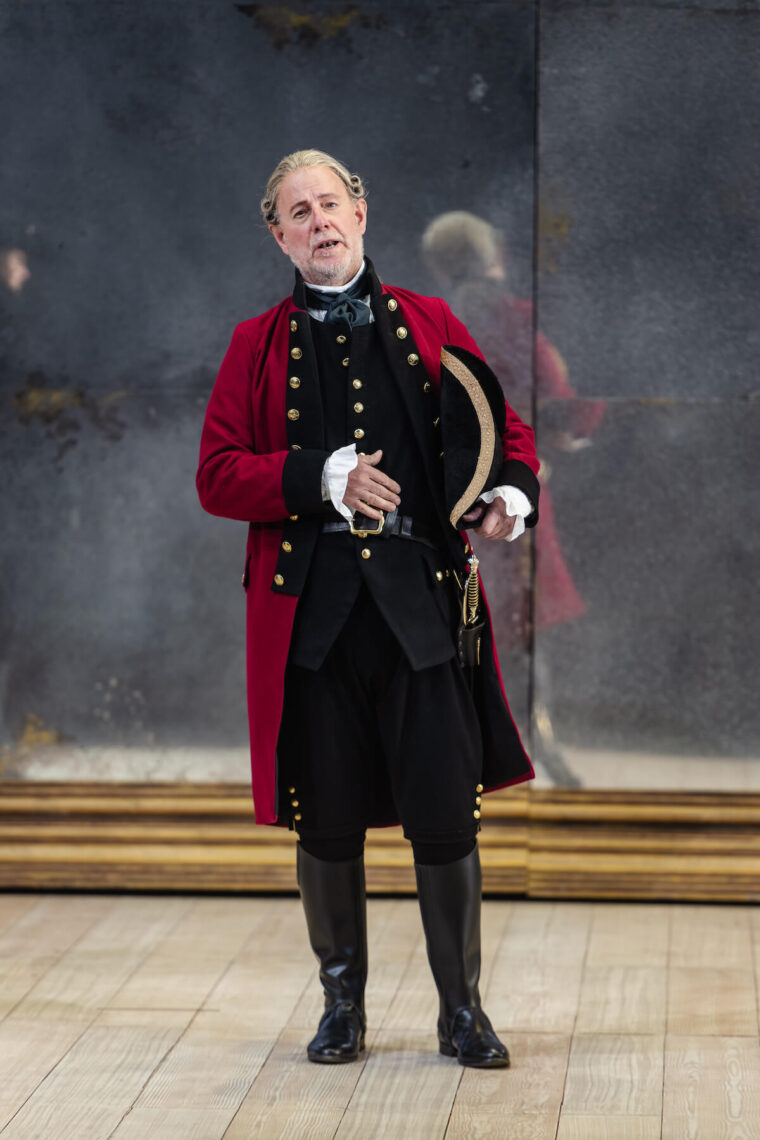
In an evening of big voices, the most dominant was that of bass-baritone Robert Hayward as Count Tomsky, whose infertile, unfaithful and corrupt Commander in the ENO’s The Handmaid’s Tale I had particularly enjoyed. In a maroon coat, Hayward’s powerful, resonant voice filled the opera house with the aria ‘Once in Versailles (Three Cards)’, introducing the fateful legend of the three cards, providing both narrative exposition and a recurring musical motif that haunts Herman throughout The Queen of Spades.

British baritone Roderick Williams brings a more lyric vocal approach to his performance as Lisa’s fiancé, Prince Yeletsky. Elegant and noble, Yeletsky is the polar opposite of Herman. Williams delivers the Act 2 aria ‘I love you beyond measure’ with an unbridled romanticism that will have increased his fanbase amongst the Garsington audience.

In the smaller roles, Stephanie Wake-Edwards, such a warm-toned Hermia in Garsington’s A Midsummer Night’s Dream, impressed as the maid Polina; and Welsh lyric tenor Sam Furness, such a good Andres in the Royal Opera House’s Wozzeck, sang beautifully as Tchekalinsky.
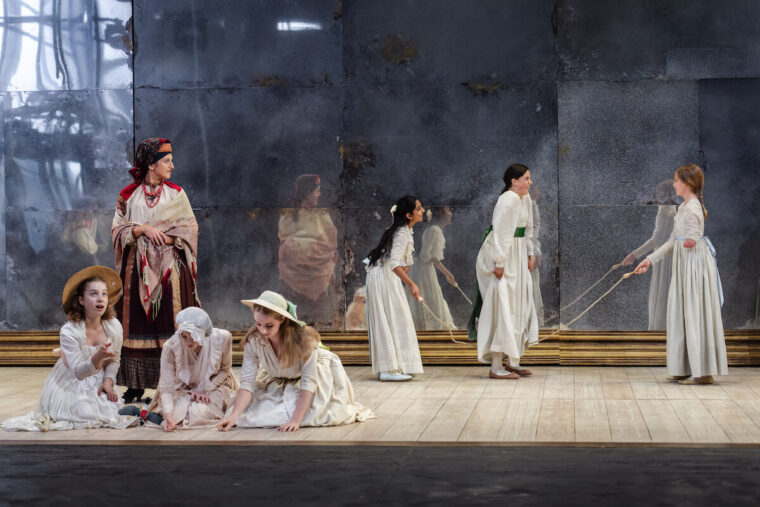
Garsington’s Artistic Director and tonight’s conductor, Douglas Boyd, brings a deep understanding of Tchaikovsky’s sweeping, emotionally charged score for The Queen of Spades, leading the Philharmonia Orchestra and the Garsington Opera Chorus to create a thrilling collective sound. From the plangent, lush strings and woodwind opening, Boyd controls the emotional dynamics shaping the musical phrases to tell their own story.
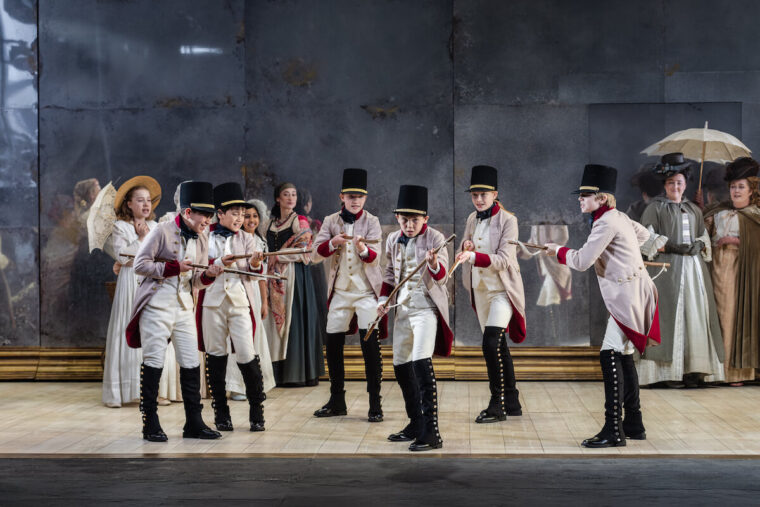
Garsington Opera Youth Company are charming as children dressed in folk costumes playing in the sunshine. The boys are dressed as soldiers singing ‘We are here to make Russia’s foes tremble with fear’, a Russian nationalist sentiment that is slightly uncomfortable given the present circumstances, albeit unsurprising given that The Queen of Spades was a court commission.

Movement Director Lucy Burge does a wonderful job of choreographing the dancers and singers. There is bloomer flashing folk dancing, and the charming pastorale ‘The Faithful Shepherdess’ with humans as puppet dancers dressed as sheep. The final gambling scene is brilliantly put together with dancers and singers creating a riotous energy and spectacle.,
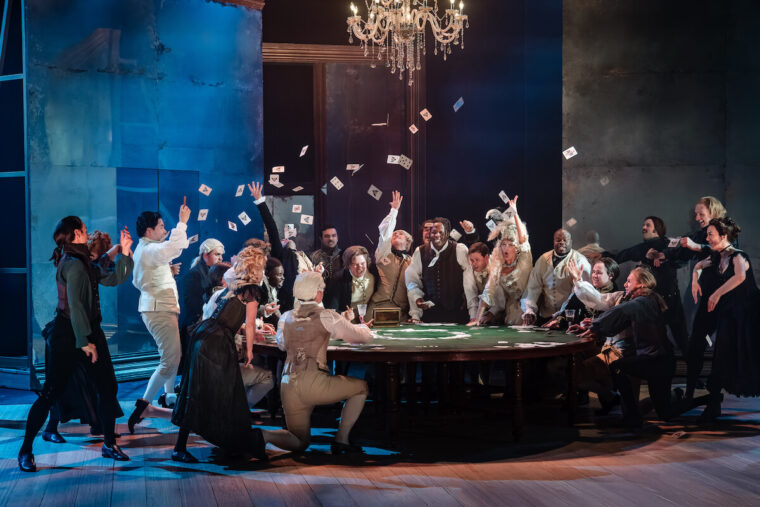
Inevitably, there were a few opening night glitches: a door that wouldn’t open, the chorus rushed at one point, and Herman’s tuning was occasionally approximate. But there’s an attention to detail at Garsington that elevates the productions into another sphere. Set in the enchanting surroundings of the Getty family’s Wormsley Estate, you are encased in a huge valley set in the chalk downlands of the Chiltern Hills, entering an exclusive, magical world of music. If you can go, you should.
The Queen of Spades
May 29th to July 4th
Garsington Opera
Wormsley Estate
Stokenchurch
Buckinghamshire
HP14 3YG
Check our review of L’elisir d’amore, also currently showing at Garsington

Leave a Reply