Last Updated on June 16, 2026
A poetic image of hope at The Hayward
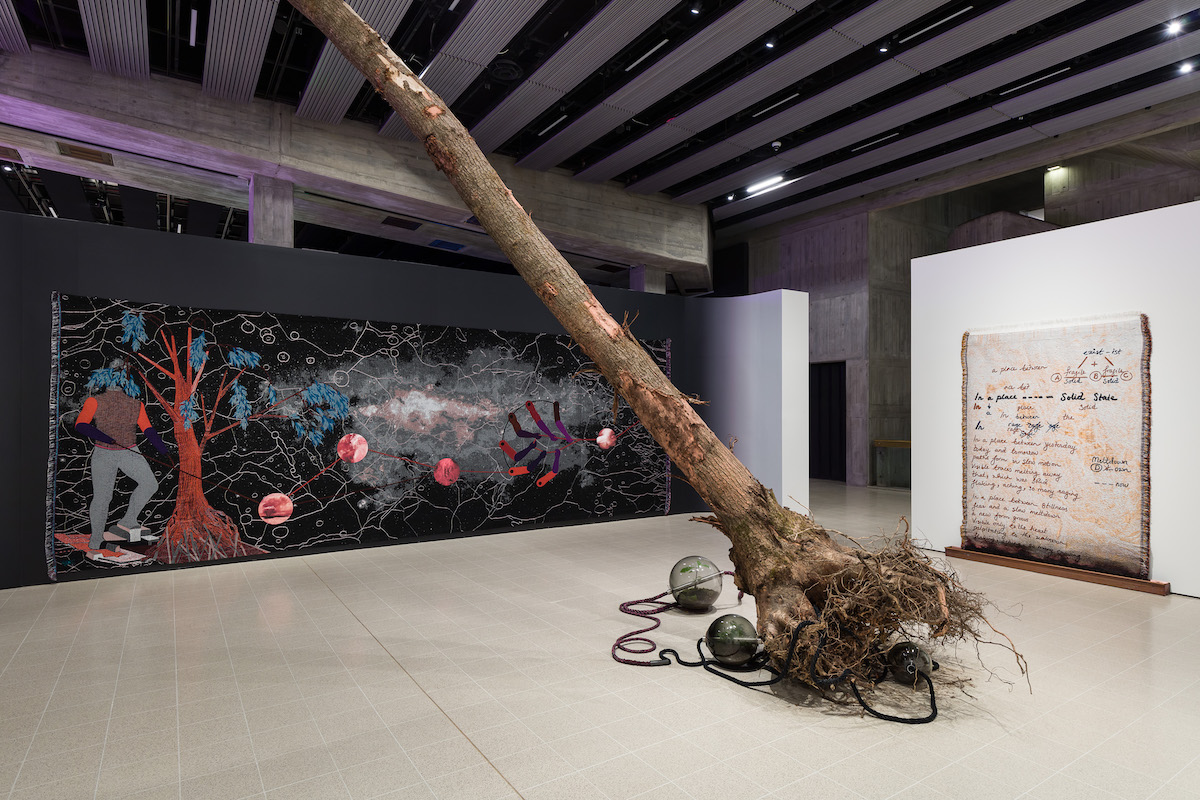
Dear Earth: Art and Hope in a Time of Crisis opens tomorrow at The Hayward Gallery, part of the Southbank Centre’s Planet Summer festival. Featuring fifteen artists from a wide range of backgrounds, some big names alongside artists that have not previously shown at a UK institution, tackling various issues around the climate. Rather than fear and dread, the show intends to propagate a sense of hope and resilience.
Chief curator Rachel Thomas has borrowed Otobong Nkanga’s suggestion that “caring is a form of resistance” as a springboard, thinking about care and compassion in an attempt to open up audiences to the subject in a new way. This approach to the climate crisis appeals directly to the heart, focusing on people and stories rather than giving the mind stats and facts to digest.
Whilst Dear Earth is a group show, its curators have prioritised depth as well as breadth, often showing several artworks from a single artist. The show centres on female artists and those from minority backgrounds, but doesn’t feel preachy or forced. There is some really breathtaking work on display.
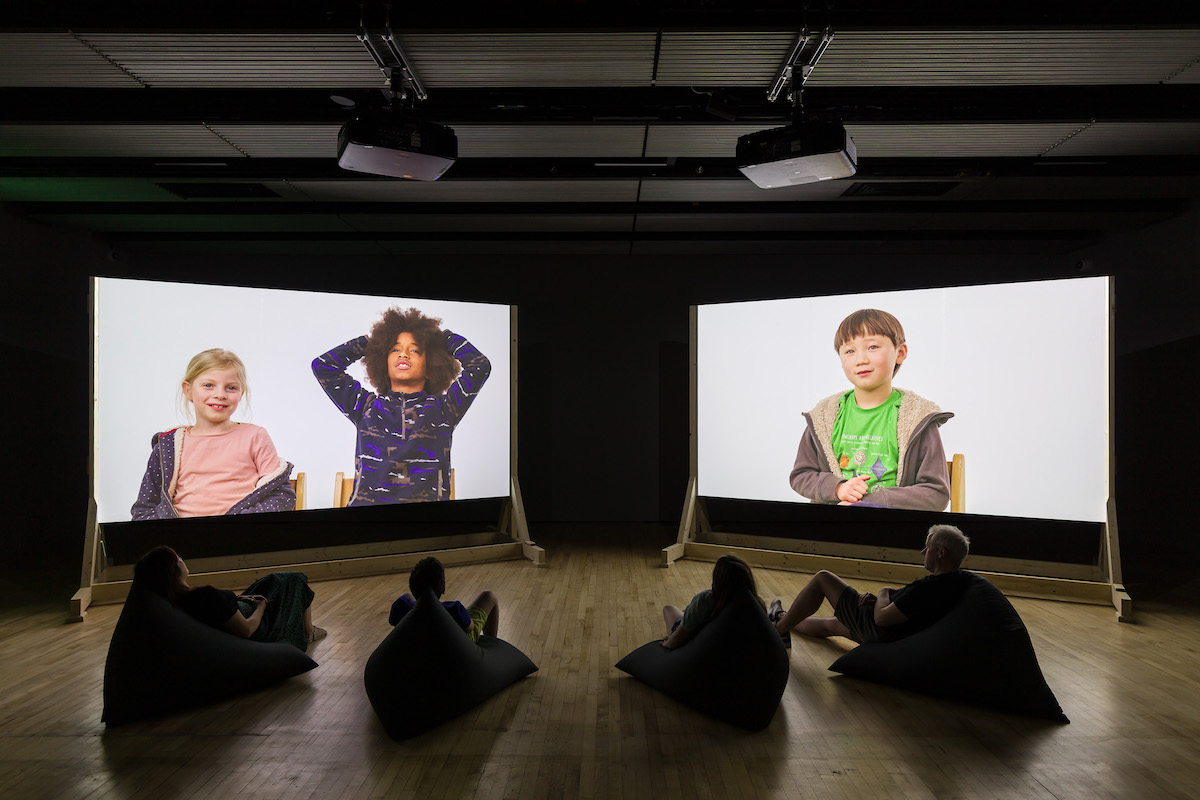
One of seven new commissions for the show is a video work by Cornelia Parker entitled THE FUTURE (Sixes and Sevens) that asks primary school children to imagine their future. Although the children do discuss issues surrounding the climate, Parker is here making the point that their future itself is in jeopardy. It is a very touching film with some surprisingly insightful comments from the children.
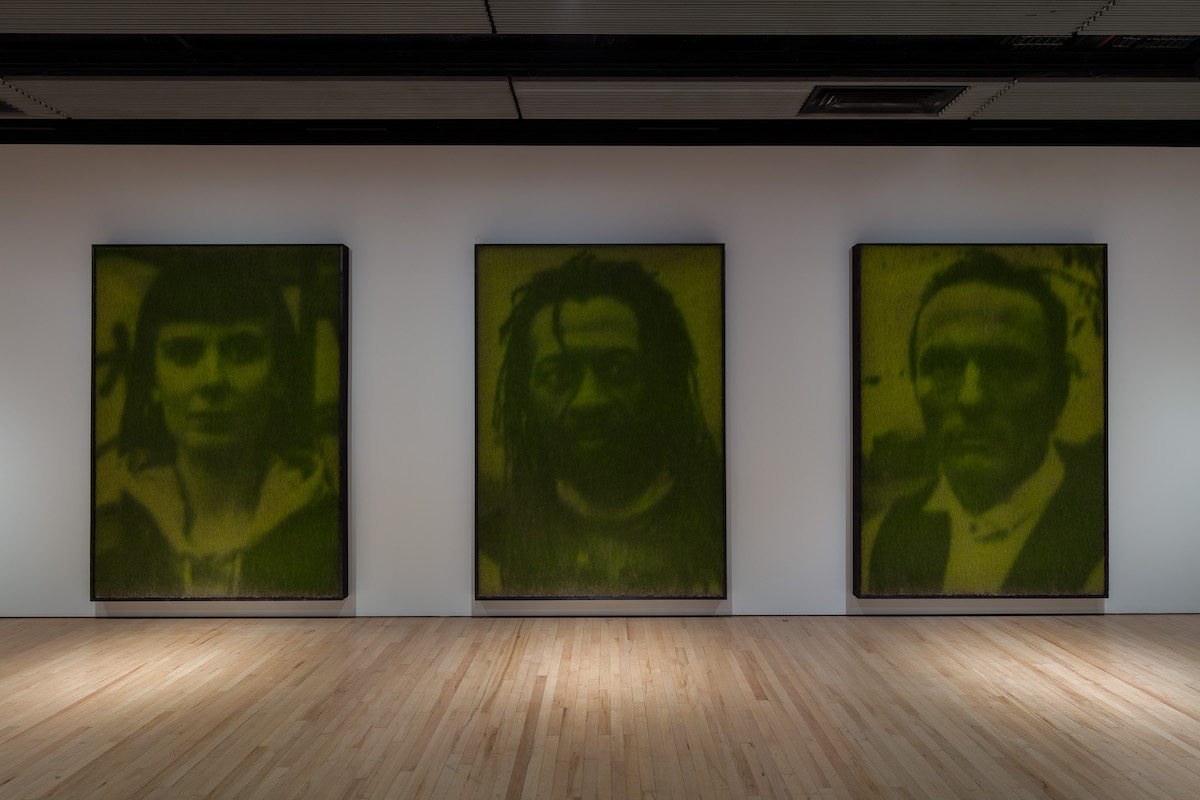
A particular gem downstairs is a series of photographic portraits by Ackroyd & Harvey of London activists focusing on the idea of the commons – soil, seed, water and air – those things that we all need to survive. At first glance, these green-tinged prints look fairly regular, but when you get a little closer you see they are anything but. The image is made from grass, projecting a photographic negative onto the grass seed as it grows. The portraits are shown in dim lighting to protect the grass, the effect is subtle but very beautiful.

Also downstairs is Hito Steyerl’s Green Screen (2023), a large led screen where each pixel is the bottom of a glass bottle stacked on top of each other in crates. The images and accompanying sounds are derived from the bioelectrical signals of plants. Steyerl here draws a connection between the tech world and its large carbon footprint.

On the upper floor is a room dedicated to pioneering environmental conceptual artist Agnes Denes, now in her 90s, including a Living Pyramid in the centre of the room. This planted artwork is over five metres tall and will be shown indoors for the first time. There is a lovely interplay between the artworks and the varying sunlight shining in through the Hayward Gallery glass ceiling. Also on show are drawings and documentation of previous works by Denes, including Wheatfield (1982) which comprised a wheatfield planted in downtown Manhattan. A moving manifesto from 1969 encourages viewers to re-examine the world.
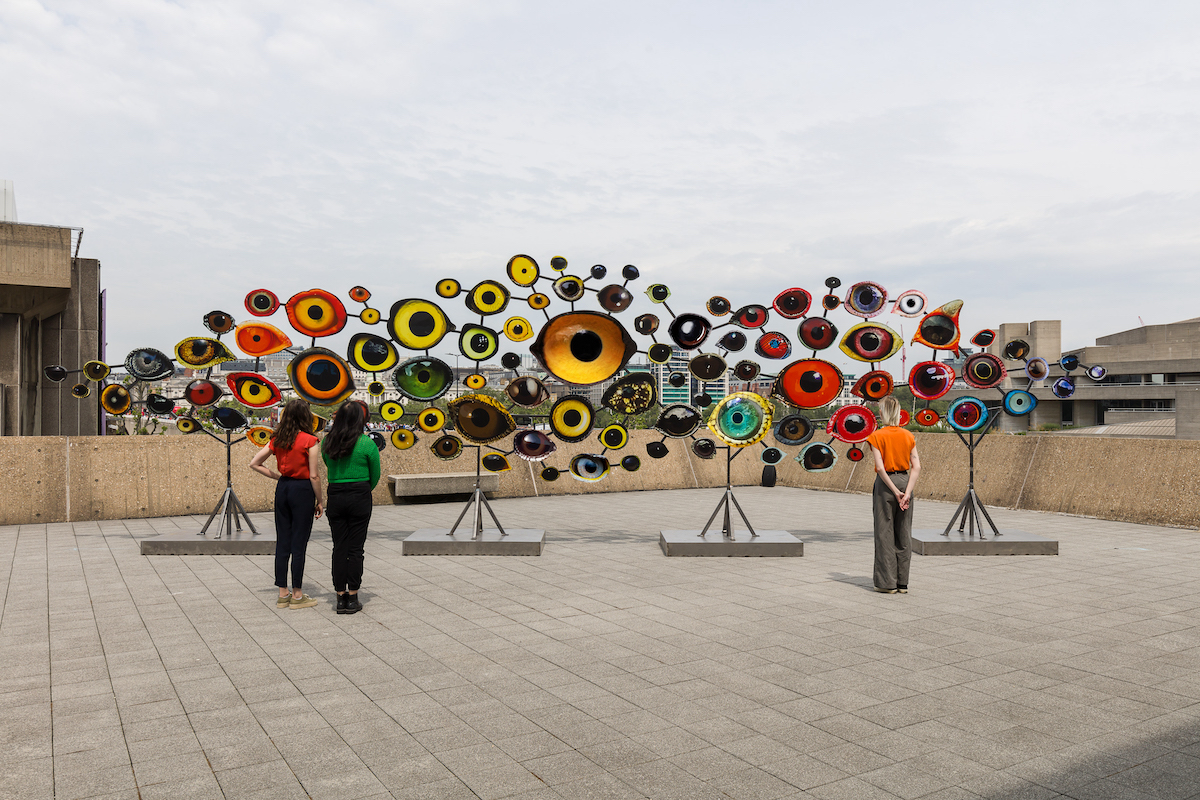
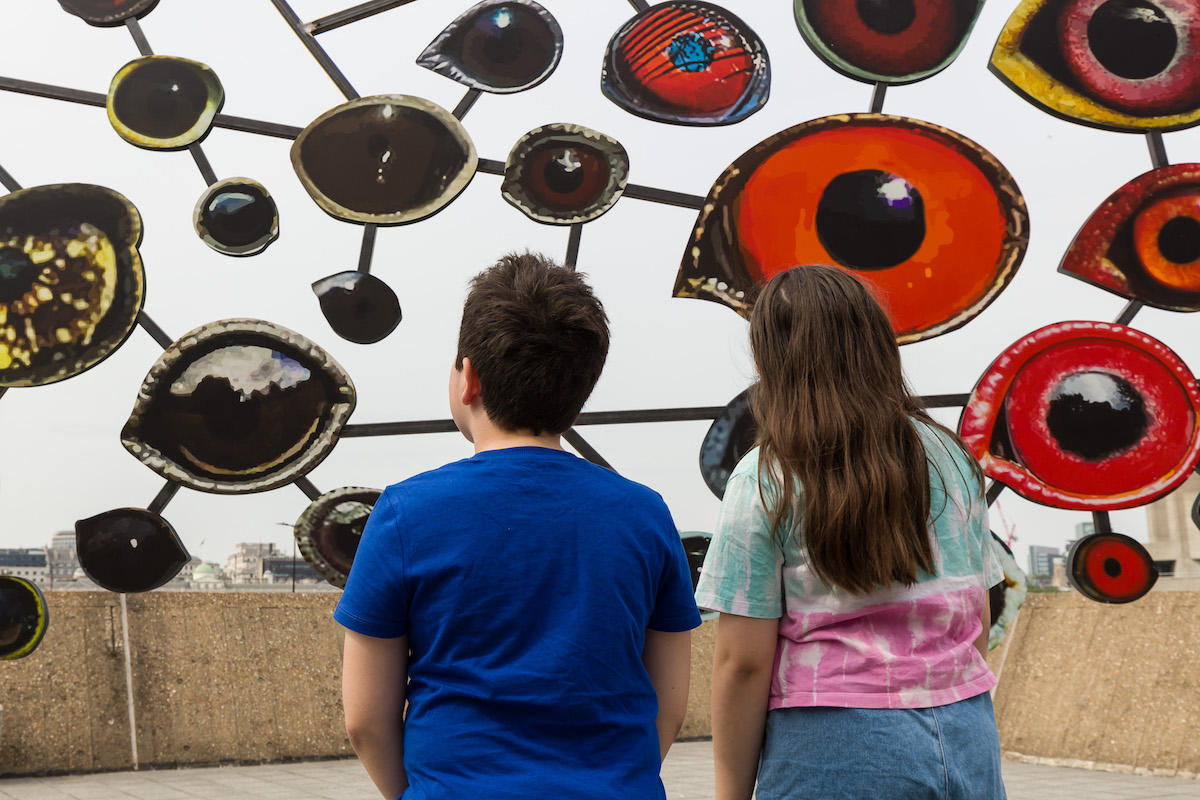
The highlights continue with a commissioned large outdoor sculpture by Jenny Kendler, Birds Watching III that has endangered birds’ eyes looking at us for a change. A new film commission from Richard Mosse features a series of speeches from indigenous people from the Amazon rainforest alongside poignant images of oil spills. Outside and now on permanent display is a pocket forest in collaboration with SUGi nestled next to Waterloo Bridge and made up of almost 400 indigenous plants and trees.
There is a very good balance of artistic mediums: film work, photography, sculpture, painting and drawing. With land art or work that cannot be brought physically inside the gallery, there is a danger that exhibitions are reduced to documentary photography, but not here. The curatorial team has been careful to include important documentation, but there are lots of artworks in the room too. Whilst the works are only tied together thematically, the layout of the Hayward with lots of separate rooms and zones allows each work to breathe and the viewer space to reflect.
Dear Earth also encourages visitors to take a look at a secret gem of the Southbank Centre round the corner from the Hayward: the Queen Elizabeth Roof Garden, organised by Paul Pulford of Grounded Ecotherapy. Their new artwork, Precious Stones, is made of stones collected from around the Southbank Centre by volunteers that have been arranged to help rainwater better permeate the soil and prevent evaporation. The garden houses a cafe, making it the perfect spot for a sit-down pre-show or post-exhibition.
Dear Earth truly presents a thoughtful and hopeful view of the future whilst not being naive. It is hard-hitting without being shouty. Whilst I would highly recommend a visit, if you don’t fancy the ticket prices the works outside provide more than enough to ponder and reflect.
Dear Earth: Art and Hope in a Time of Crisis
21 June – 3 September 2023
Hayward Gallery
Belvedere Rd
South Bank
London
SE1 8XX
Leave a Reply